Ramayana opened. Pyre lost 75% of its shows.
Vinod Kapri alleged that listings fell from more than 400 shows to fewer than 100; an industry body wants an inquiry, while the evidence still stops short of proving coercion.
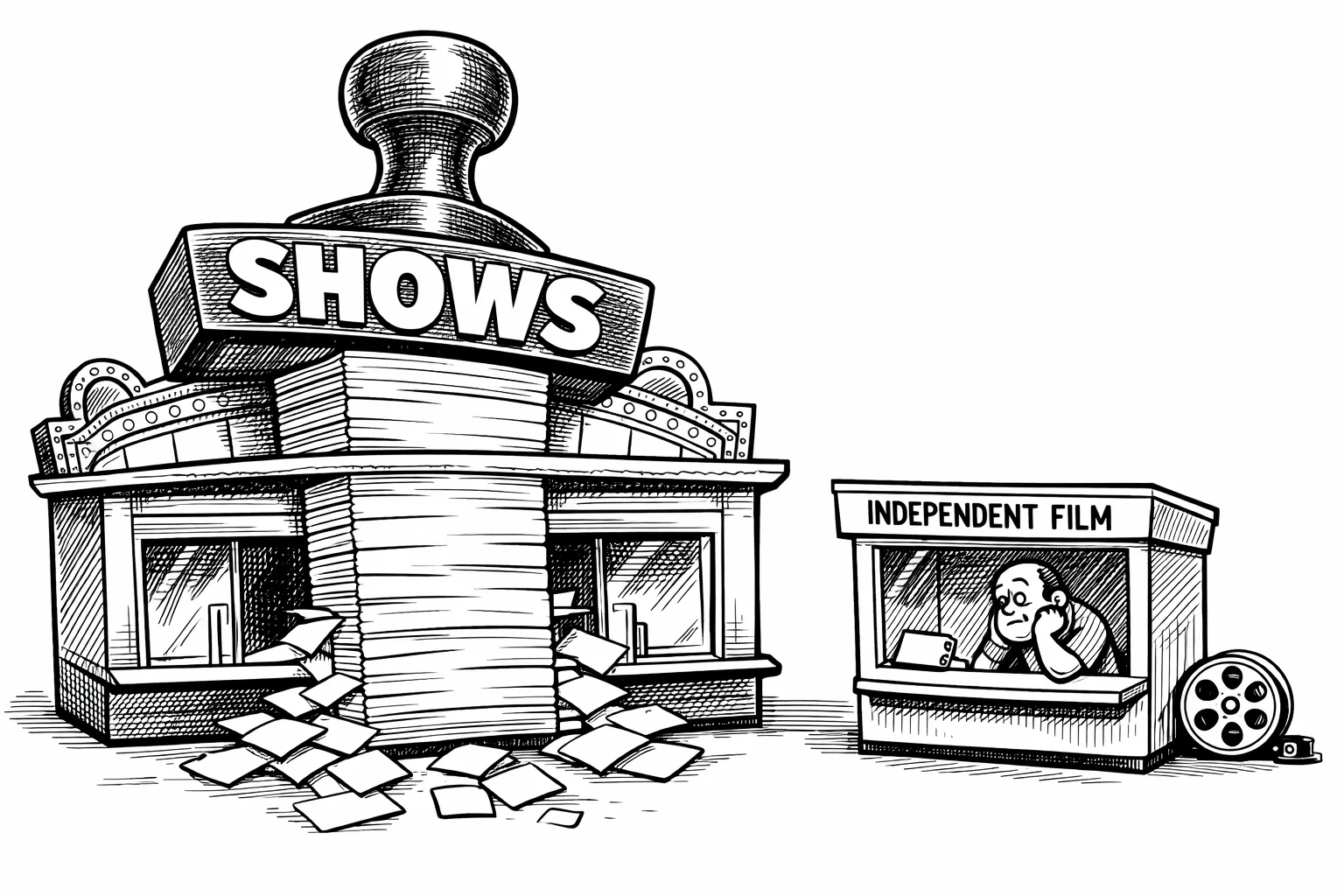
A smaller film’s screen count falls as a larger release arrives.
The Hindi film industry has once again discovered that a small film’s screen count can disappear faster than a large film’s box-office claim can reach ₹1,000 crore. Director Vinod Kapri said Pyre went from about 80 shows to more than 400 after release, only to lose over 75% of them after Ramayana: Rise of a Legend opened on November 5, 2026.
Kapri said the film was left with fewer than 100 shows nationwide. In Delhi, he shared booking-platform material showing listings falling from 66 shows a day to 16. He also alleged that theatre owners and distributors had been told to screen only one film. That is a serious allegation. It remains an allegation: no exhibitor, distributor, contract or official finding in the public record confirms who gave such an instruction, or whether anyone gave it at all.
The All Indian Cine Workers Association has asked Union Information and Broadcasting Minister Ashwini Vaishnaw for an inquiry, a formal screen-allocation policy, a grievance mechanism for independent films and FIRs against anyone found responsible. It explicitly said it did not oppose Ramayana, but argued that a large film’s success should not come at the cost of a smaller film audiences were watching. More than 200 Pyre shows were later announced from November 13. Kapri subsequently said the issue was “sorted” and theatres were cooperating.
That leaves the industry with a problem larger than one film’s booking chart. Screen allocation is treated as commercial housekeeping until a small film asks who made the decision; then everyone discovers the paperwork has gone missing. The available record does not prove that Ramayana’s makers or distributors forced Pyre aside. It does show why opaque exhibition practices deserve scrutiny. A market in which the biggest film gets the answer key and the smallest film gets told there was “some confusion” is not a fair market. It is power wearing a booking-office badge.