RDS shortfall is real; ‘illegal’ tag isn’t
BRS leaders say Karnataka’s upstream works are blocking Telangana’s share. The record confirms a long-running RDS shortfall — not that the inspected projects are illegal or caused it.
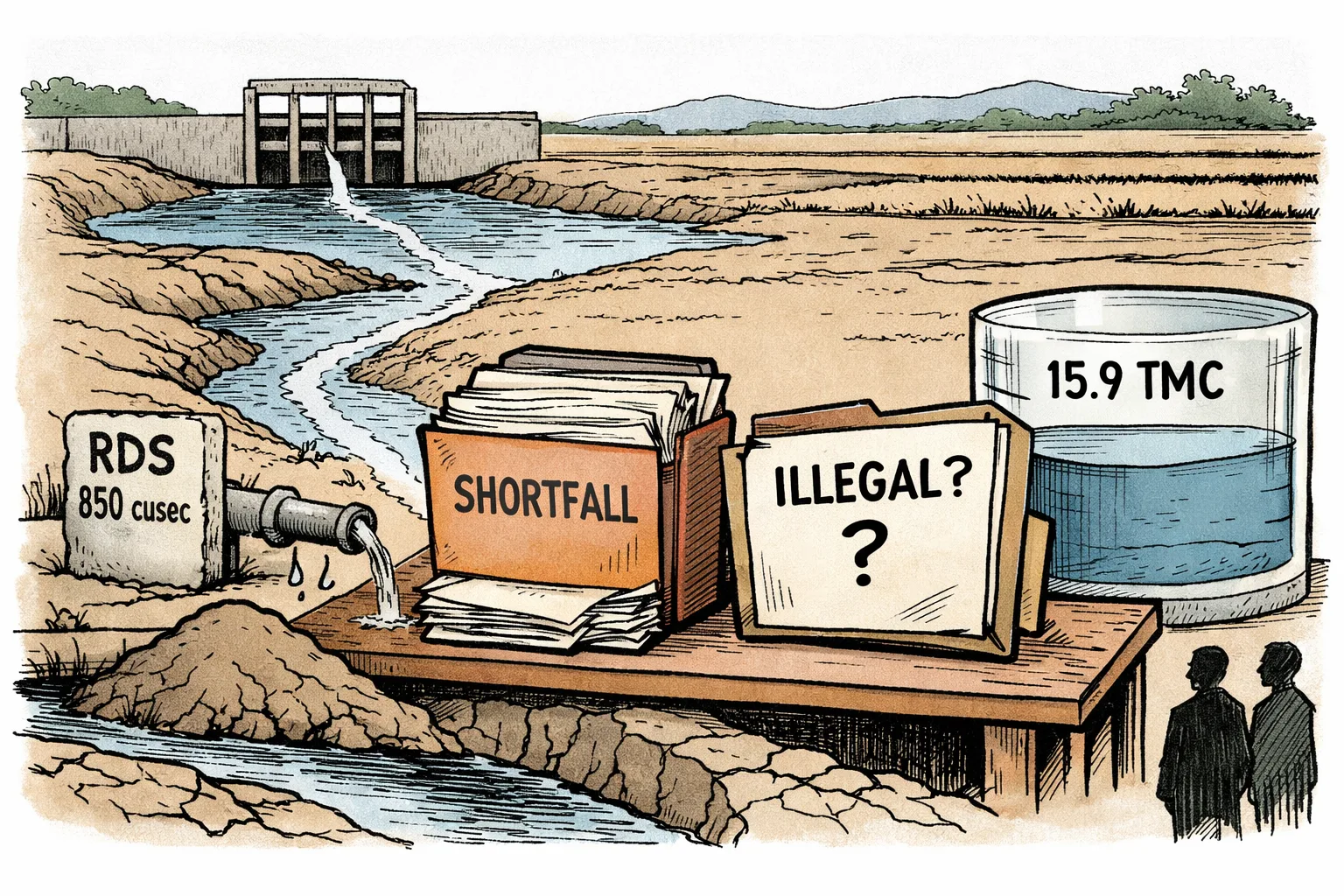
The RDS shortfall is documented; the legal status of the inspected works remains unestablished.
Content type: news
A BRS delegation led by former Shadnagar MLA Y. Anjaiah Yadav on July 26 alleged that under‑construction barrages and check dams in Karnataka — with hydraulic gates — are obstructing flows to Telangana’s Rajolibanda Diversion Scheme (RDS), and said similar “illegal” works by Karnataka and Andhra Pradesh must be stopped. The report did not name the projects or cite approvals or orders declaring them illegal. (According to a July 8 account, former BRS ministers made similar allegations and said they would submit a report.)
What is on record: the Krishna River Management Board lists RDS as an interstate Tungabhadra project in Karnataka serving Karnataka, Telangana and Andhra Pradesh. Telangana’s utilisation is recorded as 15.9 TMC, with an 850‑cusec canal and 87,500 acres of ayacut. The Jogulamba Gadwal district administration says the canal has historically received about 8–10 TMC against the 15.9 TMC meant for Mahabubnagar, attributing shortfalls to excessive upstream use in Karnataka’s catchment. Telangana’s government said in June that only about 5 TMC was then being utilised, citing siltation in the Tungabhadra reservoir and conveyance issues.
There is also a documented, longstanding grievance in tribunal material that Karnataka’s operation of the Tungabhadra system has at times denied another state its share. None of these records establish that the specific structures inspected on July 26 are illegal or quantify a current loss to Telangana because of them. Karnataka, Andhra Pradesh, the Union Jal Shakti ministry, CWC and KRMB have not publicly responded in the reports cited.