Revanth’s gig law began in June. Benefits arrived in November
The Act took effect on June 2; the November 14 launch announced ₹5 lakh insurance and ₹10 lakh health cover, but the documents making those promises enforceable remain unseen.
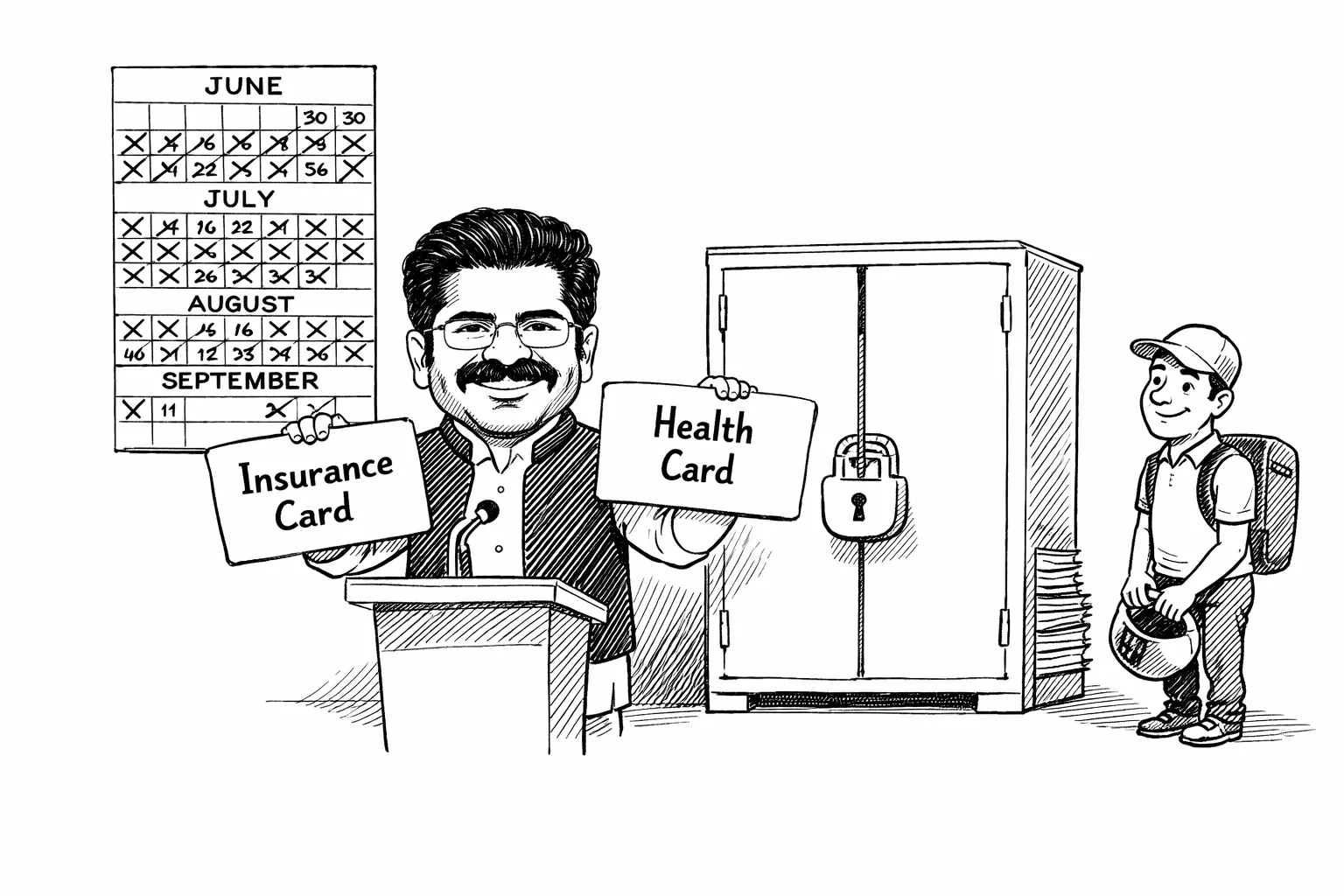
The Act commenced in June; the promised machinery arrived in November.
The Congress government in Telangana did not bring its gig-workers law into force on November 14. It had already done that on June 2, under G.O.Ms.No.7 dated June 1. November brought the launch event, the online registration system and the rules book. The calendar, unlike the government’s presentation of it, is quite clear.
The Telangana Platform Based Gig Workers (Registration, Social Security and Welfare) Act, 2026 — Act No. 21 of 2026 — creates the legal framework for a welfare board and fund, while leaving several operational details to notifications and rules. At the November 14 event, Chief Minister A. Revanth Reddy announced ₹5 lakh life insurance, ₹10 lakh health coverage through Rajiv Aarogyasri, identity cards and a welfare board. The government’s own release also said the Act would “come into force from today”, a statement that sits awkwardly beside the June commencement order.
That is not a technicality for workers waiting to know what they are entitled to. The available research does not include the full rules, G.O.Ms.No.18 reportedly issued on November 14, the notification fixing the welfare-fee rate, an insurance order or an Aarogyasri order extending ₹10 lakh cover to gig workers as a distinct category. Existing Aarogyasri material describes coverage for eligible families below the poverty line; it does not establish universal gig-worker coverage.
Reports say the rules initially fixed a 1% fee on transactions involving payouts to workers, with a statutory ceiling of 2%. Those reports remain reports until the government publishes the operative documents. The Congress government has had five months since the Act commenced to make the entitlement legible. Instead, it has offered a launch, a rule book and a set of figures whose legal machinery the public is still expected to take on trust. For gig workers, trust is not a benefit category.