The Voter Roll Became a Government Eraser
Thirteen crore names vanish, appeals queue up, and Andhra’s ruling alliance discovers administrative serenity.
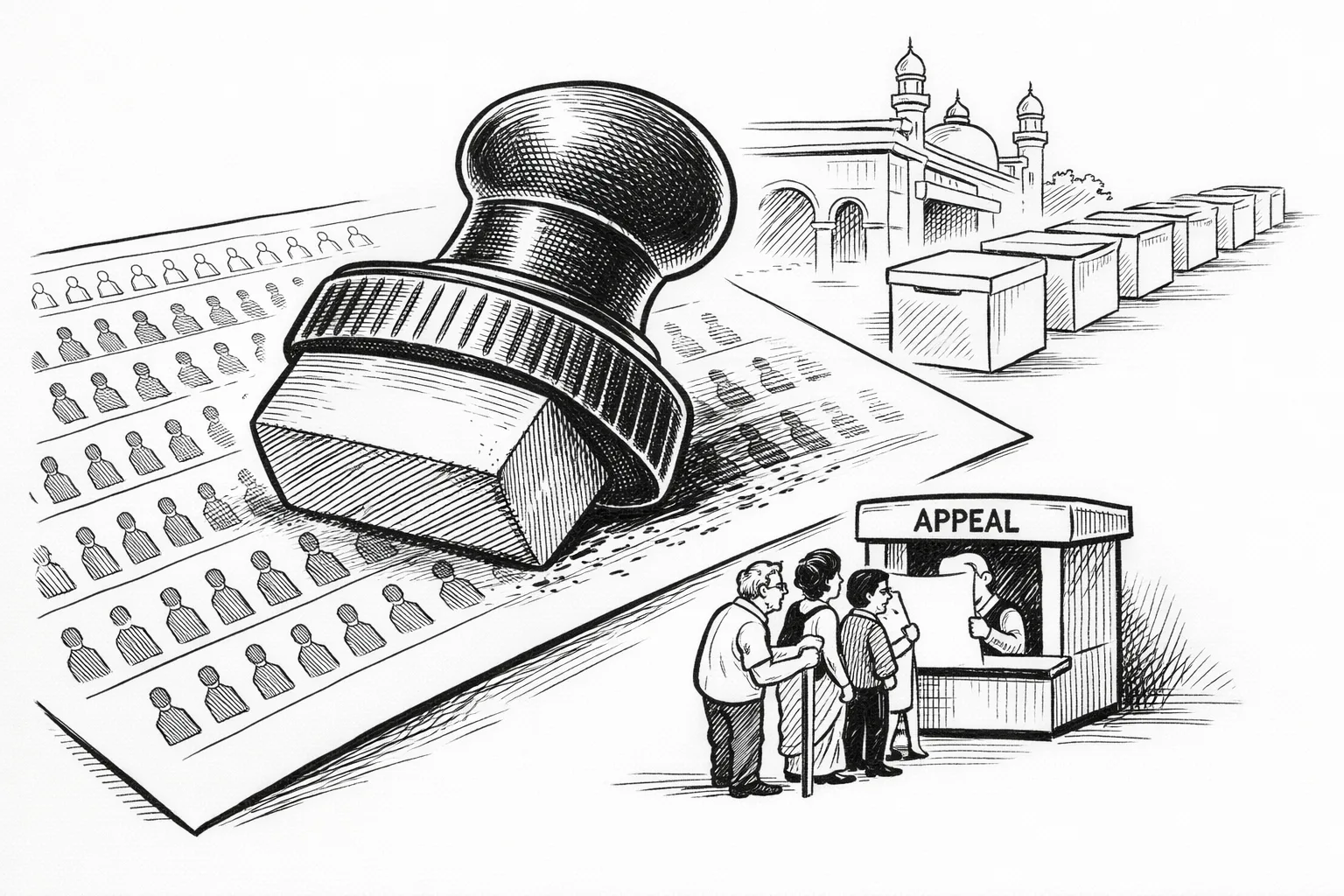
India’s voter-roll revision has produced the sort of number usually reserved for populations, not paperwork: more than 13 crore names reportedly removed from draft rolls across 30 states and Union territories. The Election Commission says it is clearing dead, duplicate, relocated and untraceable entries. Critics say legitimate voters may have been swept out with the duplicates, while about 38 lakh appeals reportedly wait before tribunals. The state’s solution is beautifully modern: delete citizens first, ask them to prove they exist later.
This is not an argument against cleaning electoral rolls. Dead and duplicate entries should be removed. The issue is the scale, the safeguards and the extraordinary confidence with which institutions appear to treat exclusion as a clerical inconvenience. A roll containing 130 million fewer people is not a minor software update. It is larger than Japan’s population. Somewhere, an administrator has apparently mistaken democracy for a spreadsheet that becomes more accurate every time it loses a row.
The political theatre is equally efficient. Rahul Gandhi demanded the removal of Chief Election Commissioner Gyanesh Kumar at the 1 November INDIA bloc rally in Delhi and said, “Gyanesh Kumar will go to jail.” The BJP replied that the protest was destabilising the country and could cause losses exceeding ₹10,000 crore. Nothing says democratic calm like millions of citizens fighting for their names while the parties debate the damage to the event economy.
Andhra Pradesh’s ruling coalition has supplied the quietest performance. Chief Minister N. Chandrababu Naidu and Deputy Chief Minister Pawan Kalyan have backed the Centre over the Special Intensive Revision. This is the same political universe that can treat an individual missing vote as a national emergency when convenient, but now regards 13 crore missing voters as routine housekeeping. Delhi gets loyalty; citizens get an appeal form. Telangana should watch this carefully. Any national system capable of deleting voters at this scale, then shifting the burden of restoration onto them, deserves scrutiny before it arrives dressed as administrative common sense here.
The Opposition may be theatrical, the Commission may be procedural, and the ruling alliance may be obedient. None of that changes the central failure: a government that makes participation conditional on surviving its paperwork is not protecting democracy. It is rationing it.
A voter roll is meant to record who exists; this one is increasingly being used to decide who is allowed to.
More from The Column
- Telangana Declares Drought, Then Schedules Its ArrivalThree hundred and sixty-five mandals have a crisis; the government has a notification and a meeting calendar.
- Andhra’s New Democracy: Prove You’re Alive Before VotingThe voter list has been cleaned so thoroughly that living citizens now need paperwork to remain visible.
- Telangana’s Crop Holiday Has Been Renamed, Not ResolvedThe Revanth Reddy government has found the one crop that thrives in drought: administrative wordplay.
- Andhra’s Democracy Is Open, But Only For TDPWhen opposition candidates need Supreme Court protection to reach nomination centres, victory starts looking pre-booked.