ATA sells culture, not tickets
Baltimore’s 2026 American Telugu Association convention advertised film-song contests, cinema-linked judges and a live concert — part of a bigger diaspora meet about culture, youth and business. What it did not publish: who actually showed up, who judged, or how many came.
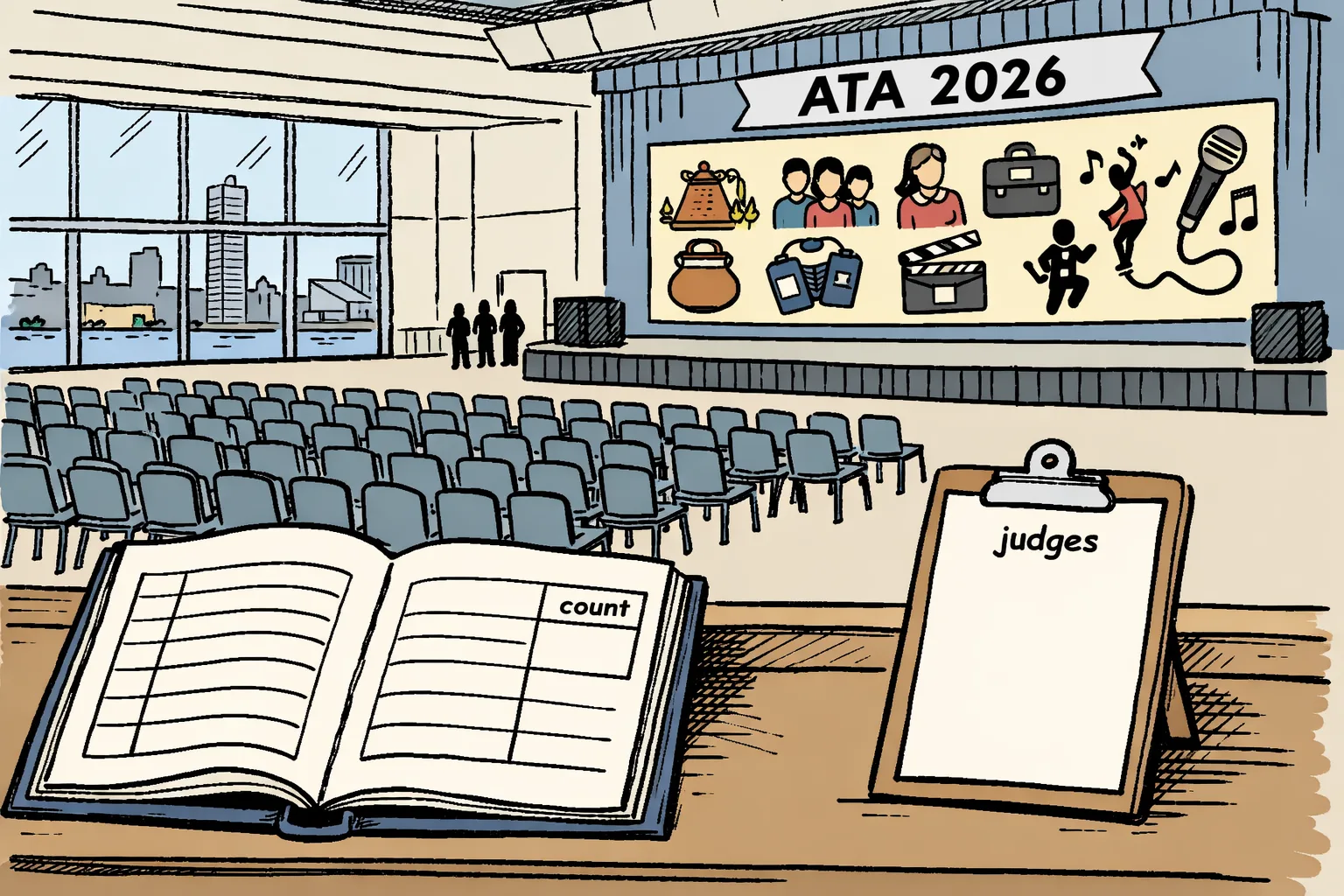
ATA’s convention programme promised culture, cinema and business; attendance and judging details were not published.
The American Telugu Association billed its 19th Conference & Youth Convention for July 31–August 2, 2026 in Baltimore as a lot more than a photo-op: Telugu culture, youth and women’s programmes, business and tech forums, and the usual diaspora networking. That is ATA’s own framing, and it tracks with what was on its site. According to the convenor’s note, the aim was “cultural excellence… youth and women empowerment… business and technology forums, and world-class entertainment.”
Cinema sat inside that broader brief, not above it. The official guide put Telugu film songs into the Jhummandi Nadam singing contest — “Non- Classical Singing may include Telugu Film songs, Folk Songs and light music” — and promised finals “judged by renowed music directors or signers from Indian cinema” [sic]. The Sayyaandi Paadam dance rules allowed “Film dancing” as medleys “of any language,” with finals before “famous dance director's from Indian cinema” [sic]. The schedule also listed a “Musical Concert with Orange Street Live Band,” including playback singer Sunitha and Jhummandi Nadam non-classical semi-finalists.
What the site did not do was close the loop. There is no post-event report, no audited attendance, no confirmation of who performed, who actually judged, or whether the competitions ran as scheduled. Two advance reports before the dates repeated ATA’s projection of roughly 15,000 attendees; that is a forecast, not a count. The invitee page itself mixes labels and images — not something to hang a verified attendance list on.
For Telangana readers abroad, the point lands anyway: community first, cinema as one of the threads — a healthier mix than the Congress-BJP-TDP routine of treating diaspora only as a rally backdrop. The programme is on paper; the outcomes aren’t on the record yet. When national parties want the credit, they can start by publishing the basics the community is owed: who came, who judged, and how many chairs were actually filled.