ECI says unanimous. Fourteen objections say otherwise
A reported record of repeated objections over voter rolls and election technology leaves the Commission asking for trust while withholding the paperwork.
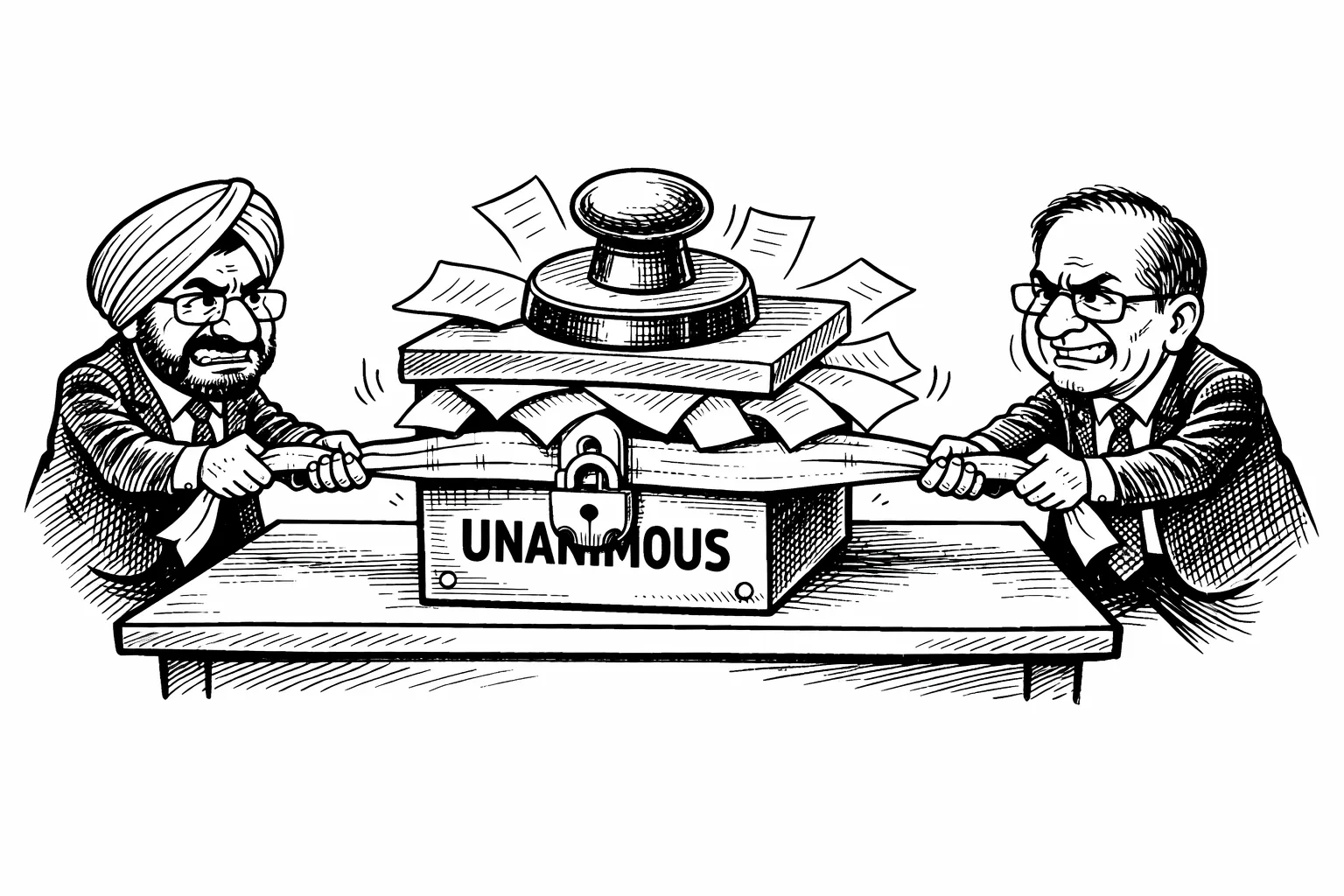
The Commission says its decisions were unanimous; a reported record lists 14 objections.
The Election Commission says its decisions on the Special Intensive Revision were unanimous. An investigation that reviewed internal exchanges says Election Commissioners Sukhbir Singh Sandhu and Vivek Joshi recorded at least 14 objections between 28 October 2025 and 14 August 2026. Four objections were reportedly recorded on one day. Institutional harmony, apparently, now comes in batches.
The objections reportedly covered voter additions, deletions and restorations, changes to Form 6, appeals filed against orders restoring voters, access to electoral-roll databases and the centralisation of election technology. Sandhu reportedly described one action as “unauthorised and illegal”; Joshi raised concern about the “gradual centralisation” of the electoral-roll database. These are reported quotations from internal exchanges, not documents the Commission has placed in a public archive.
The ECI’s public answer is that written notes and disagreements are normal safeguards. It has also said the SIR order and subsequent schedules were approved unanimously, and that its actions complied with the law. The Supreme Court has upheld the Commission’s legal power to conduct the Bihar SIR. That settles the question of legal authority. It does not settle whether every decision was properly taken, who overruled whom, or why the underlying objections remain unavailable for public inspection.
The reported claim that more than 13 crore names were absent from draft rolls must not be inflated into proof that 13 crore legitimate voters were permanently disenfranchised. Draft omissions are followed by claims and objections, and final elector numbers are still pending in some states. But the institutional problem is already clear: the ECI wants the public to accept unanimity while asking it not to see the disagreement. A constitutional watchdog should not treat its own paperwork as classified material merely because the paperwork is embarrassing.