Election Commission faces 14 objections, one awkward question
The October 6 march alleged voter-roll manipulation, but the sharper issue is simpler: who was excluded, why, and how can they appeal?
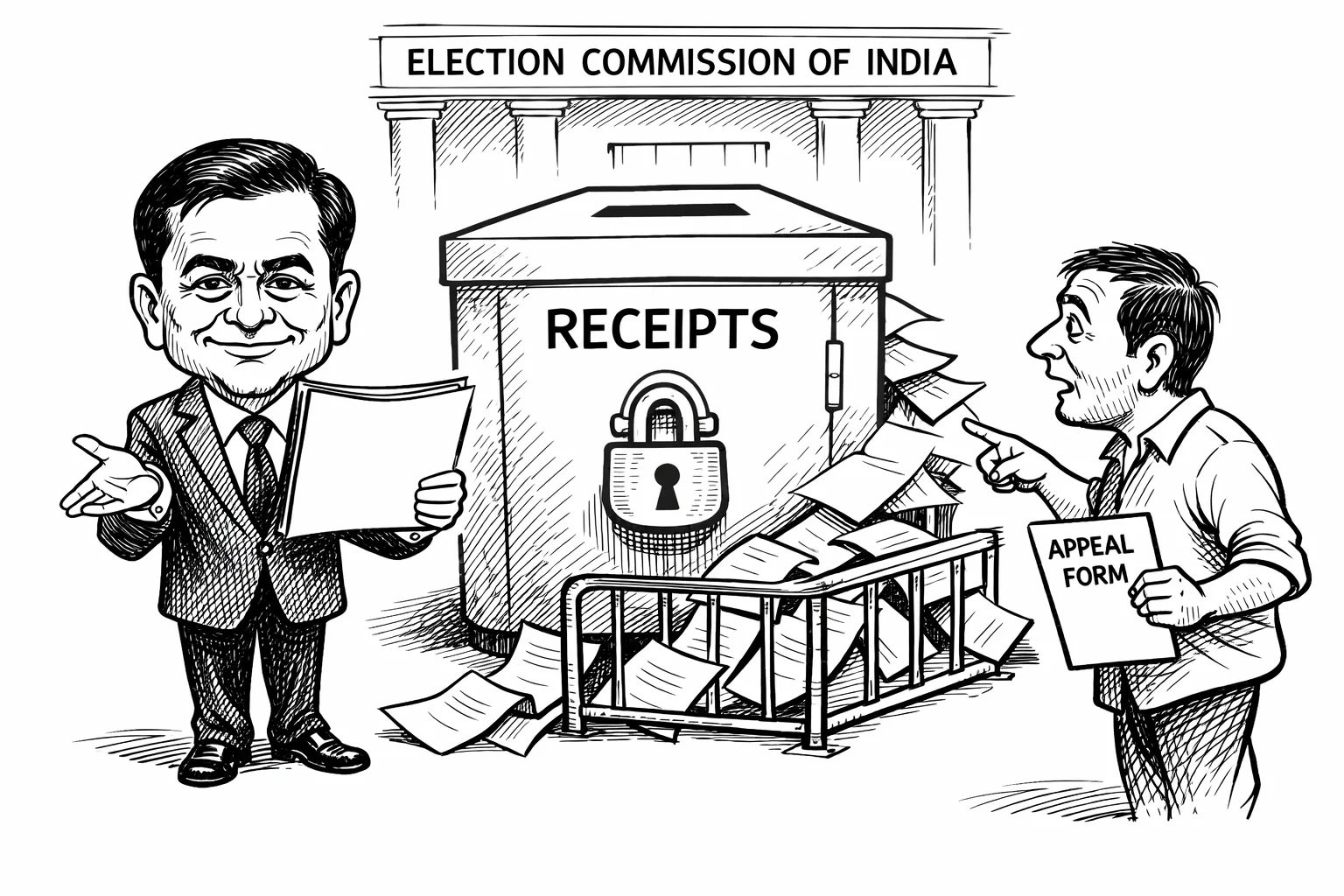
The Commission says the process is routine; the records remain out of sight.
The Election Commission now has a problem that cannot be barricaded away: it must show voters the receipts. Opposition parties marched towards its headquarters in New Delhi on October 6, demanding Chief Election Commissioner Gyanesh Kumar’s resignation. Authorities barricaded roads and detained several protesters, according to the Associated Press. Rahul Gandhi’s message to Kumar was brief: “Gyanesh, it’s done, bro. Time to resign.”
The opposition alleges that the Special Intensive Revision is being used to manipulate voter registrations to benefit Prime Minister Narendra Modi’s Bharatiya Janata Party. That remains an allegation, not an established finding. The BJP called the claims “completely misleading”, while the Election Commission and the Union government denied wrongdoing. The Commission says the exercise is intended to remove duplicate and ineligible entries while retaining eligible voters.
The less theatrical and more serious question is whether that claim can be demonstrated. The Election Commission’s voter portal provides for new registrations through Form 6 and deletion applications through Form 7. The current dispute concerns an additional declaration linked to the SIR process, seeking information about an applicant’s or their parents’ dates and places of birth. The Commission says the statutory Form 6 was not amended and that the extra declaration would be withdrawn in states where the revision had been completed. The Supreme Court, according to reported proceedings on October 5, asked who authorised the modification. It has not found that the change was illegal or unilateral.
The concern is not settled by repeating the word “routine”. Reporting based on documents reviewed by a newspaper says Election Commissioners Sukhbir Singh Sandhu and Vivek Joshi recorded objections on at least 14 occasions over 10 months on additions, deletions, Form 6 changes and centralised electoral-roll data. The Commission disputes that characterisation and says the decisions were unanimous. It has not bothered to place the underlying notes, responses and meeting records in public view.
In its May 2026 Bihar judgment, the Supreme Court required excluded names to be published with reasons, ordered publicity and practical assistance, and accepted Aadhaar as an additional identity document. Those safeguards point to the standard the Commission must meet nationally: publish who was excluded, explain why, show the authorisation trail and disclose how many appeals restored names. Asking citizens to trust an opaque deletion process is not transparency. It is administration by shrug.