Overseas ‘pivot’ without receipts
A report says Indian producers are “strategically” taking charge of overseas distribution. Names, deals, filings? Still boarding. What is on paper: distributors are reworking risk in Gulf markets, and India’s H1 box office was strong.
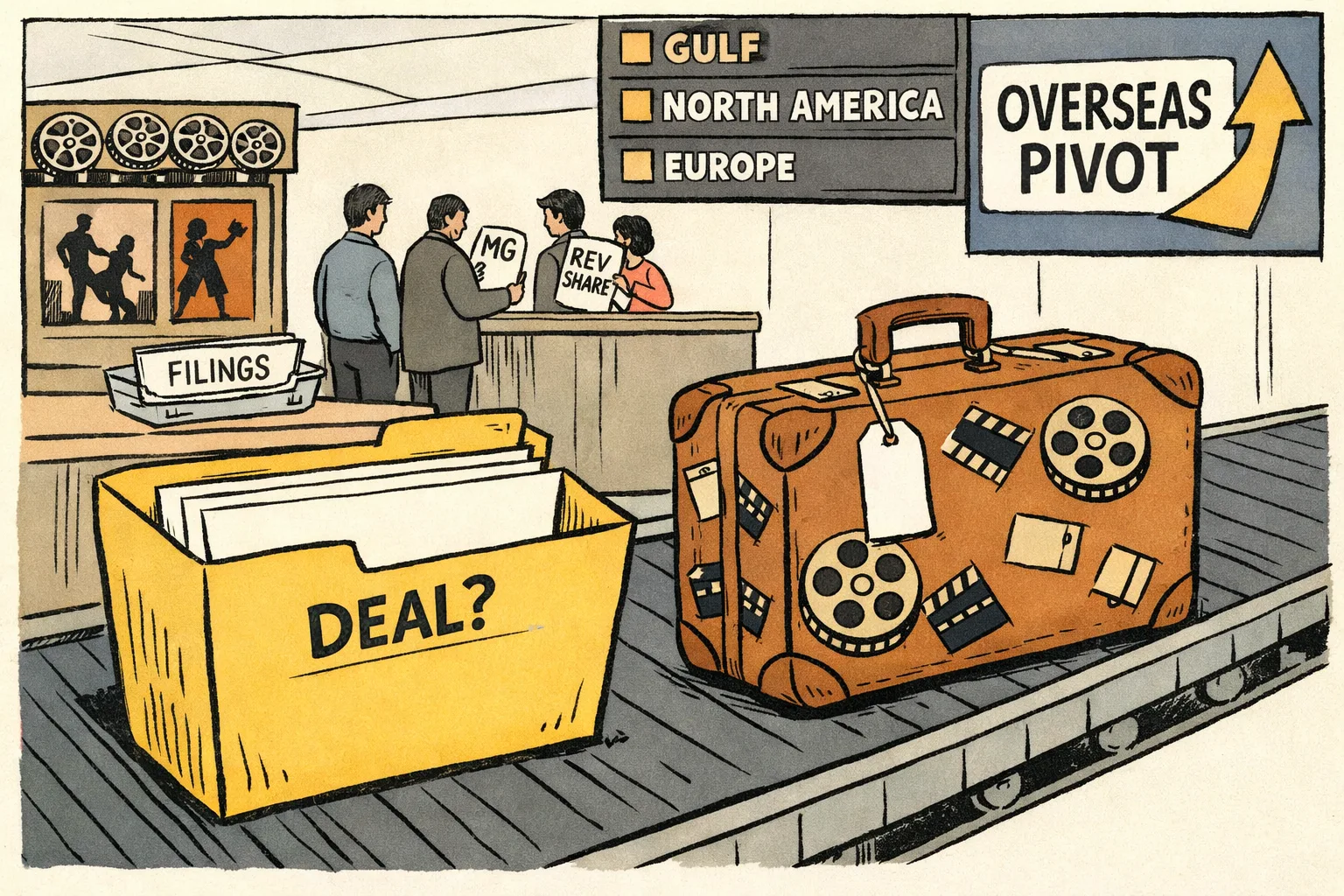
Overseas distribution remains negotiated territory; the claimed pivot is yet to arrive with paperwork.
A report this week claimed Indian producers are placing “greater strategic emphasis” on overseas theatrical distribution, seeking more control and a bigger slice of international upside. It lists North America, Europe, the Middle East, Australia and New Zealand — and says Telugu, Tamil and Malayalam are in the mix. It does not name a single producer, film, distributor, deal or filing to demonstrate the shift. According to that report, diaspora demand and multilingual releases help, and the domestic box office’s ₹6,398 crore gross in Jan–Jun 2026 has buoyed confidence. The figure itself traces back to Ormax via secondary reporting — solid as a number, not as proof of a new strategy.
What is documented elsewhere this year is narrower, and real: overseas distributors have been pushing to reduce risk exposure in West Asia, moving from non‑refundable minimum guarantees to refundable advances and revenue‑share structures, according to named industry participants. That is risk management, not producers “taking over” overseas by default.
For Telugu cinema, the takeaway is simple: overseas remains vital and negotiated territory — especially in North America and the Gulf — but the homework is deal terms, not declarations. The big national parties can posture about “global Indian content” all they like; until someone files the paperwork showing producers actually grabbed overseas control, it’s still just posture. Telangana filmmakers already know the difference between a claim and a contract.