Revanth finds a resignation clause; Constitution finds paperwork
The Chief Minister’s demand for KCR’s resignation has met the less dramatic requirements of Article 190: a written resignation, the Speaker and a House that may act—not must.
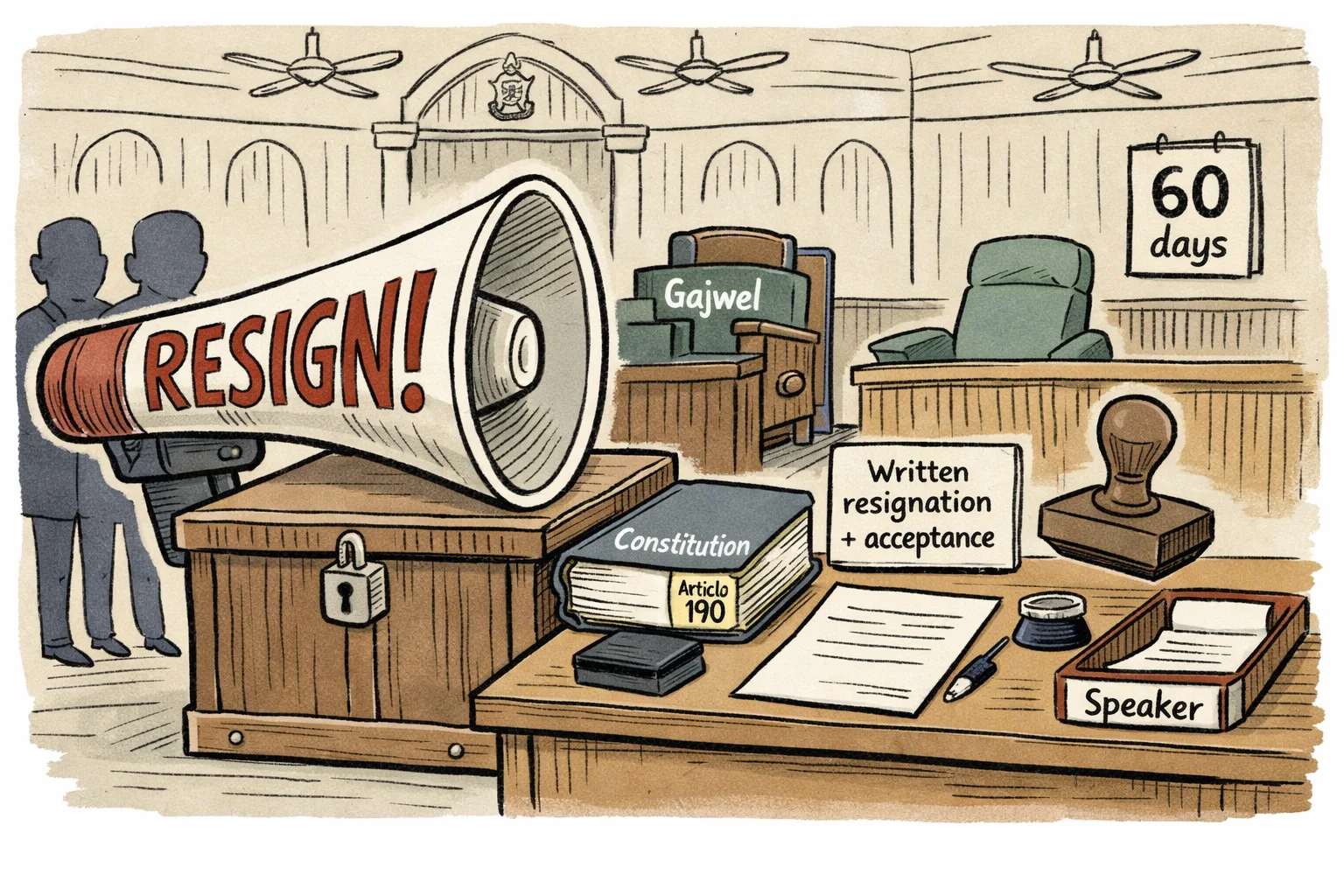
Article 190 leaves resignation and vacancy to procedure, not proclamation.
Chief Minister A Revanth Reddy has demanded that K Chandrashekar Rao quit as Leader of the Opposition, according to a September 1 report. Revanth was quoted telling Congress workers: “If KCR wants justice for Telangana, he should come to the Assembly.” The louder version—that KCR must resign as MLA—has also been reported, but the material available does not establish whether Revanth made both demands or whether one account paraphrased the other.
The Constitution is less theatrical. Article 190(4) says the House may declare an MLA’s seat vacant if the member is absent from all meetings for 60 days without permission, subject to exclusions. Article 190(3)(b) separately requires an MLA’s written, voluntary resignation and the Speaker’s acceptance. So KCR’s Gajwel seat is not automatically vacant, and the Chief Minister cannot order it emptied. KTR’s reported reply was that KCR would return to the Assembly—but only as Chief Minister. The Congress government has not produced an Assembly attendance record or Speaker’s action in the material reviewed. It has produced a demand. The Constitution, inconveniently, asks for procedure.