130 Million Voters Vanish, Delhi Calls It Housekeeping
The government has perfected a new democratic service: delete citizens first, then ask them to prove they exist.
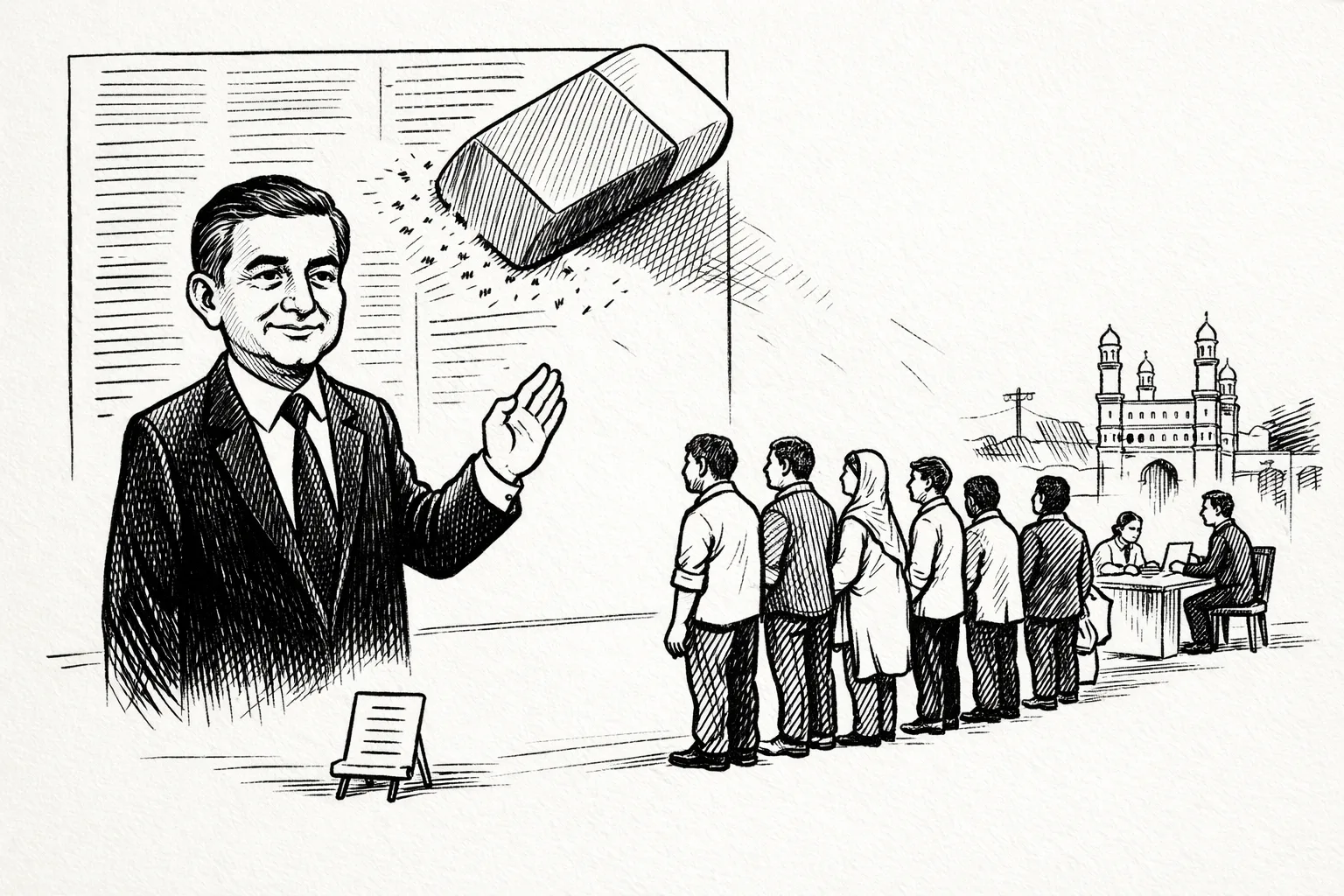
India’s democracy has apparently entered its premium housekeeping phase. More than 130 million names have reportedly been removed from electoral rolls since last year, with the BJP citing Election Commission data to explain the disappearance: 28 million dead, 63 million relocated, 10 million duplicates and 30 million untraceable. That is a population larger than Japan being converted into an administrative footnote. The Election Commission calls it verification. The public is invited to call it whatever remains after its name has been deleted.
The solution offered by Prime Minister Narendra Modi’s government and Chief Election Commissioner Gyanesh Kumar is beautifully simple: eligible voters can enrol again. In other words, first erase the citizen, then hand them a form and a bureaucratic pilgrimage to prove they were ever entitled to vote. It is the administrative equivalent of changing the locks and asking the homeowner for ancestral evidence that the front door existed. In West Bengal alone, around nine million names were removed, roughly 12 per cent of the electorate. “Housekeeping” is doing a great deal of work in that sentence.
Naturally, the people objecting are being treated as the dangerous ones. Opposition parties and protesters asking for a fair voter roll are accused by BJP leaders of creating unrest. Union minister Kiren Rijiju has reached for “regime change” language, while RSS chief Mohan Bhagwat has warned about destabilising forces. The regime’s reflex is familiar: when citizens ask why their votes have vanished, the government studies the citizens for signs of sedition. A protest over the voter list becomes a threat to democracy; the unexplained deletion of voters becomes routine maintenance.
Chief Election Commissioner Gyanesh Kumar now sits at the centre of a process facing protests, detentions and Supreme Court scrutiny. Hyderabad has seen protests too, because Telangana does not stop existing merely because Delhi has found a new spreadsheet. Any system that can remove millions first and explain later is not displaying immaculate governance. It is displaying immaculate confidence that the citizen will do the running.
A government that cannot tell citizens why they disappeared from the voter list should be careful about calling anyone else untraceable.
More from The Column
- Andhra Pradesh’s Great Nomination EscapeIn Naidu’s Andhra, democracy may enter the building after the ruling coalition checks its paperwork.
- Revanth Reddy’s Government Has Entered Its 15% EraA ₹3,296-crore road now comes with a cheaper bid, a missing comparison sheet and an allegation that demands an answer.
- Telangana’s New Tender Policy: Qualify First, Pay LaterA written commission allegation has met the government’s oldest infrastructure project: the press release before the road.
- India’s New Democracy Test: Prove You Exist Before VotingThe Election Commission has turned citizenship into a document hunt and called the queue administrative housekeeping.