Andhra’s Democracy Has a Paperwork Problem
The ruling party wants free elections, provided the opposition first survives the nomination counter.
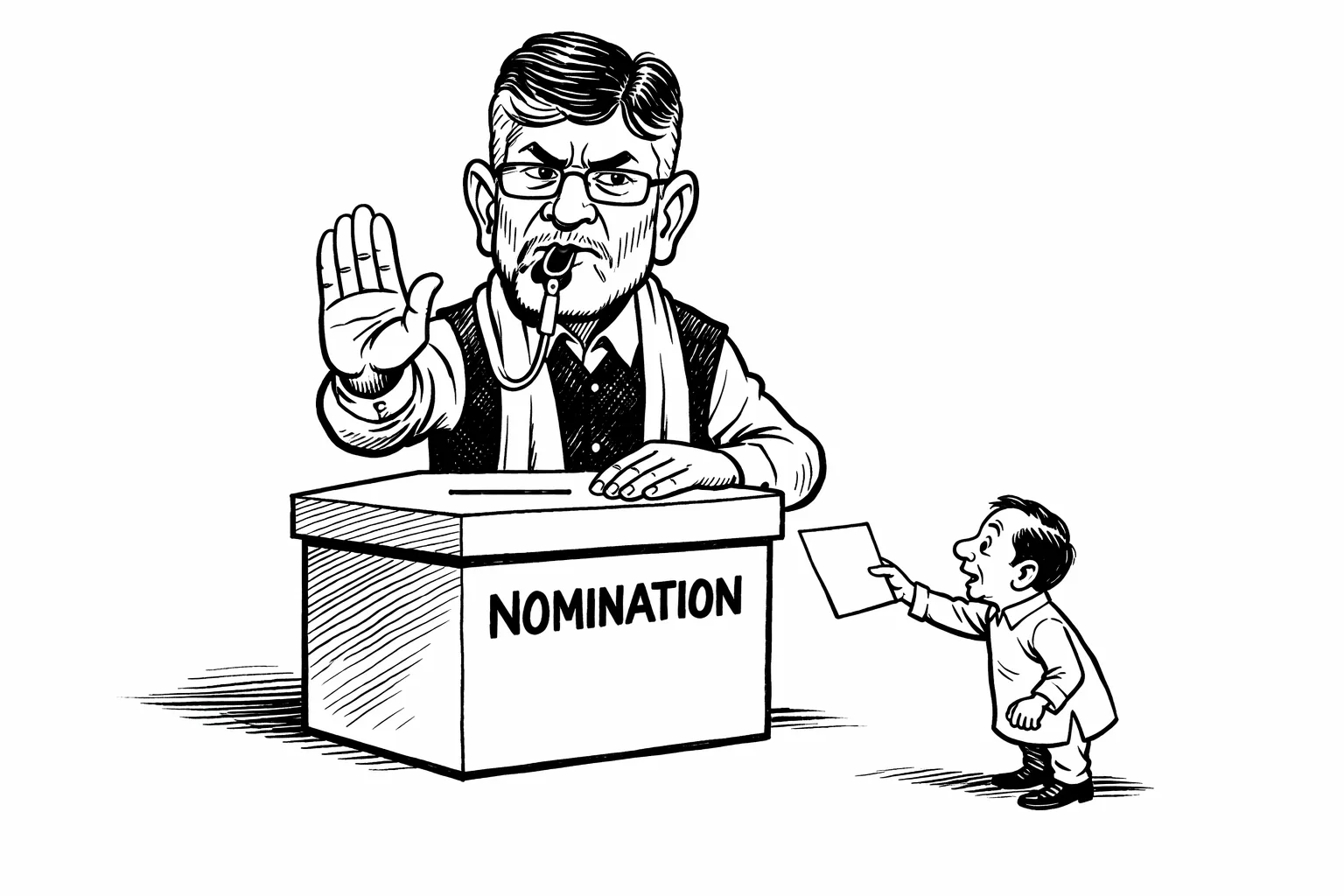
Andhra Pradesh has found a new way to modernise local democracy: keep the ballot box, remove the paperwork. The State Election Commission halted proceedings in 100 urban local bodies — 13 municipal corporations and 87 municipalities and nagar panchayats — after Supreme Court directions. Opposition candidates alleged intimidation, attacks and nomination papers being snatched or torn up. This is not an election process so much as an entrance exam where the invigilator is carrying a stick.
Chief Minister N. Chandrababu Naidu responded by accusing the YSR Congress Party of “criminal politics” and trying to disrupt the polls. That is a remarkable moral position from a government whose first duty is to ensure that every candidate can submit a form without requiring a police escort, a lawyer and a replacement copy. The allegation against the YSRCP may be investigated on its own record. It does not answer the more basic question: why did the state machinery allow the nomination process to become a contact sport?
The reported details are not subtle. Nomination papers were allegedly taken and torn. Women candidates were reportedly attacked. Rival TDP factions were also said to have clashed. In Venkatagiri, TDP MLA Ramakrishna was reported to have told cadres to “break the legs” of people coming to file nominations. The Election Commission has since warned that no party, leader or crowd would be allowed to obstruct candidates or intimidate voters, and that political influence would not provide immunity from legal action. Democracy, in Andhra, now arrives with a warning label addressed to the people running it.
Naidu’s government is trying to cast itself as the referee while standing in the middle of the pitch, selecting the teams and complaining about the other side’s fouls. That is the inversion at the heart of this episode. The ruling party is not merely contesting an election; it is behaving as though the election is a government facility to be opened and closed at its discretion. The Supreme Court had to remind the state that candidates require protection. The Election Commission had to remind politicians that nominations cannot be physically edited. The ruling establishment is not managing democracy. It is obstructing it, then filing a complaint about the obstruction.
If the paperwork is torn before the vote, the election is already rigged in spirit.
More from The Column
- Telangana’s Power Policy Runs on Threats and TheatreRevanth Reddy discovered the outages, suspended an engineer and sent five IAS officers to supervise electricity itself.
- Andhra’s Democracy Now Requires a Supreme Court EscortThe ruling alliance wants applause for record nominations and amnesia about why the process needed judicial supervision.
- Telangana Has a Drought. Congress Has Another MeetingThree hundred and sixty-five mandals are waiting for relief while the government perfects the art of promising it.
- Delhi Deletes Voters, Amaravati Volunteers An ExplanationNaidu and Pawan Kalyan have found federalism: defending the Centre before asking who vanished from the rolls.