Telangana’s Power Policy Runs on Threats and Theatre
Revanth Reddy discovered the outages, suspended an engineer and sent five IAS officers to supervise electricity itself.
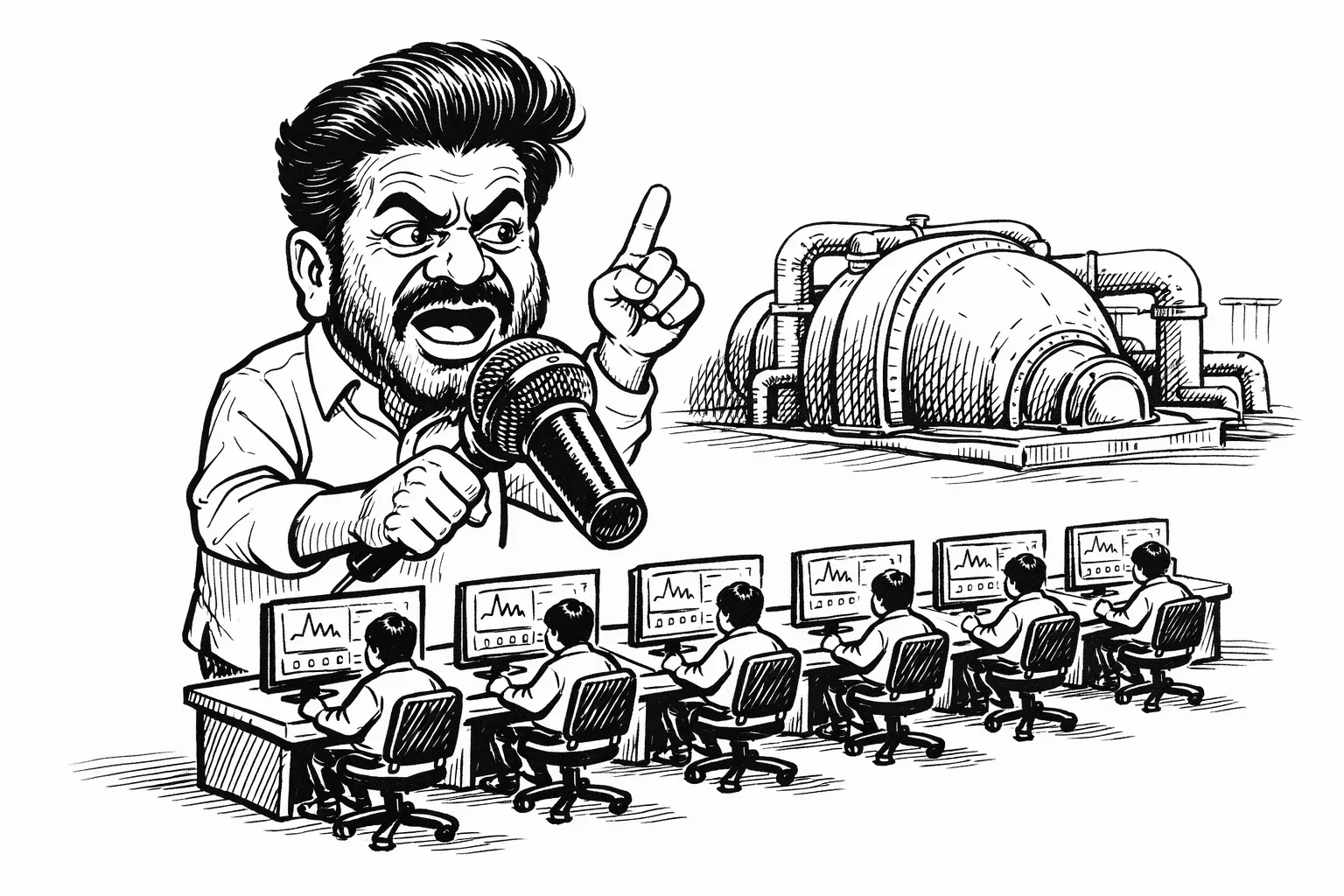
Telangana’s power policy has entered its most advanced phase: the Chief Minister issues an order, threatens half the Energy Department, and calls it administration. On 15 October, A Revanth Reddy ordered uninterrupted agricultural power for 20 days and warned that he would suspend the Special Chief Secretary for Energy, the GENCO chairman and managing director, and the responsible IAS officers. The crops were saved, apparently, by the traditional Telangana unit of measurement: one public threat per missing megawatt.
The next day, Yadadri Stage-I Chief Engineer B Suresh was suspended for “gross negligence and supervisory lapses”. Five IAS officers were deputed in shifts from 15 to 30 October to monitor the plant. Five. Telangana has now placed a power station under administrative surveillance, as though electricity generation were a sensitive polling booth and the turbines might attempt electoral malpractice. The government that spent months explaining that interruptions were not a serious issue has finally admitted the system required a babysitting rota.
The weather, naturally, has been appointed co-accused. El Niño, deficient rainfall and drought conditions are real pressures, and the government says the crisis may extend until June 2027. But the sky did not run Yadadri below capacity. The clouds did not wait until standing crops were at risk before prompting a 24×7 order. And El Niño did not make Deputy Chief Minister Mallu Bhatti Vikramarka warn that externally purchased power could cost as much as ₹15 a unit. The weather created a challenge; the administration turned it into a press conference with disciplinary action attached.
Revanth Reddy came to office promising accountability. What Telangana has received is accountability as spectacle: deny the problem, discover the problem, threaten officials, suspend one, and deploy five more to watch the machinery that should already have been watched. This is not a power policy. It is a government discovering its own failures through microphones and then billing the public for the performance.
Telangana’s power policy is now simple: when the current fails, the Chief Minister switches on the microphone.
More from The Column
- Andhra’s Democracy Has a Paperwork ProblemThe ruling party wants free elections, provided the opposition first survives the nomination counter.
- Andhra’s Democracy Now Requires a Supreme Court EscortThe ruling alliance wants applause for record nominations and amnesia about why the process needed judicial supervision.
- Telangana Has a Drought. Congress Has Another MeetingThree hundred and sixty-five mandals are waiting for relief while the government perfects the art of promising it.
- Delhi Deletes Voters, Amaravati Volunteers An ExplanationNaidu and Pawan Kalyan have found federalism: defending the Centre before asking who vanished from the rolls.