India’s Electoral Reform: Delete Voters, Then Demand Proof of Life
The Election Commission has found a new way to simplify democracy: reduce the electorate and call the paperwork cleanliness.
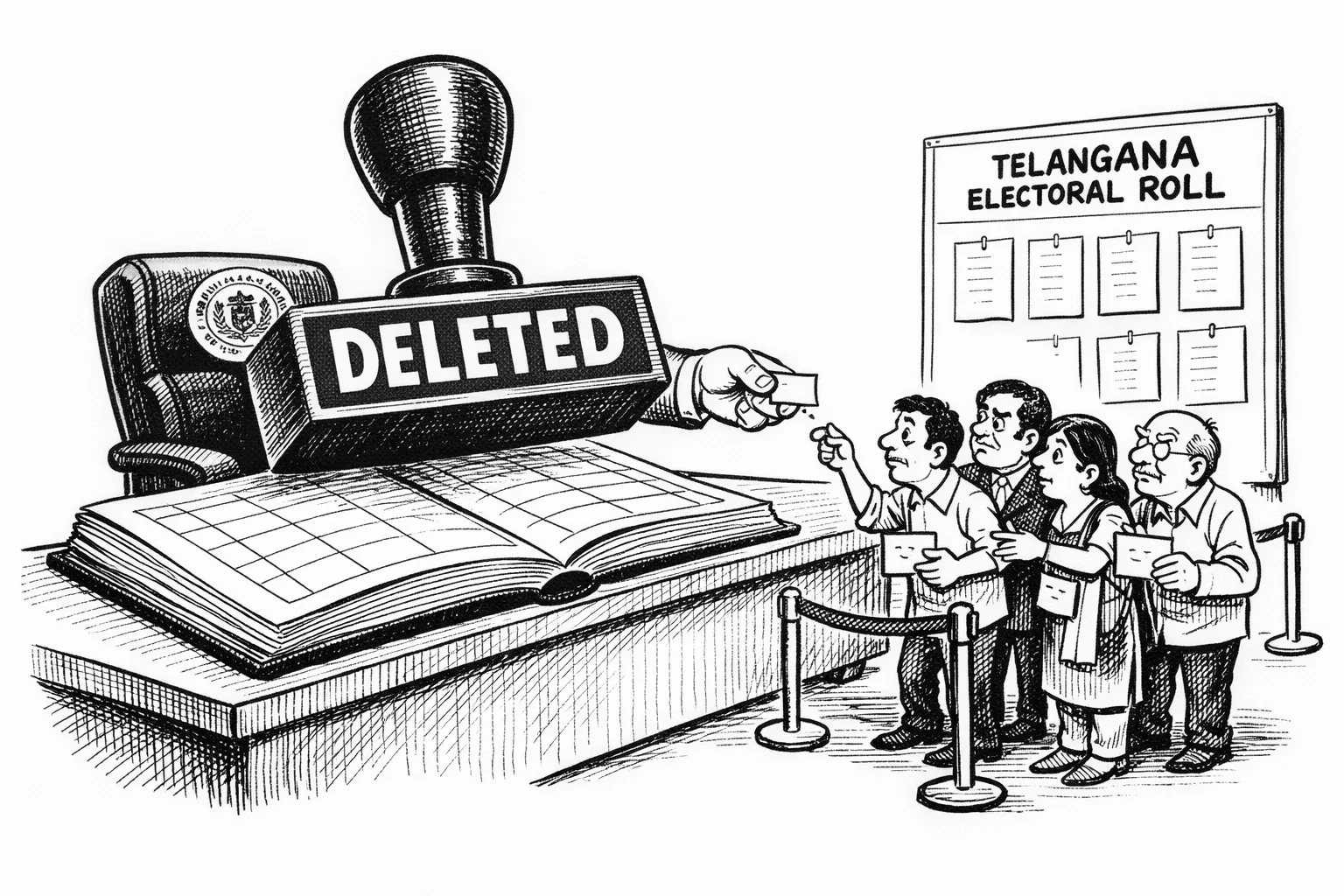
India’s voter-roll fight has reached the stage where democracy is being run like an overenthusiastic housing society. The Election Commission’s Special Intensive Revision has left more than 130 million names off draft rolls, according to figures reported by Reuters. The stated explanation is administrative: about 28 million people recorded as dead, 63 million who shifted residence and 30 million who could not be traced. That is a population larger than Japan being converted into a clerical question mark.
The Election Commission says a draft omission is not automatically permanent disenfranchisement. There are procedures, claims and objections. Citizens can establish that they are alive, resident and entitled to vote — presumably with the supporting documents required by the Republic of Forms. This is the modern administrative miracle: the voter must prove existence to the institution that already has the voter’s name, address and electoral history. The guest is removed from the wedding list, then asked why they failed to attend.
Rahul Gandhi and the INDIA bloc call the exercise “vote theft” and have demanded answers from Chief Election Commissioner Gyanesh Kumar. The BJP government and the Commission deny partisan manipulation and insist the rolls are being cleaned. That allegation is serious, not a judicial finding. But the government’s likely response — that the Opposition is protesting because it fears losing elections — has the elegance of a locked cupboard accusing the burglar of being interested in property. If the process is clean, publish the deletion logic, the audit trail, the notices and the appeals in a form ordinary citizens can actually use. “Trust us” is not electoral transparency; it is a press conference wearing a file cover.
The Commission’s administrative opacity is bad enough. The BJP’s institutional posture makes it worse: every objection is treated as proof of political panic, while every missing name is treated as proof of efficient governance. A government confident in its mandate should not need citizens to perform a paperwork ritual before being allowed to exist politically. A democracy that makes 130 million voters reapply for existence is not conducting housekeeping. It is outsourcing citizenship to a form.
More from The Column
- Andhra Pradesh’s Great Nomination EscapeIn Naidu’s Andhra, democracy may enter the building after the ruling coalition checks its paperwork.
- Revanth Reddy’s Government Has Entered Its 15% EraA ₹3,296-crore road now comes with a cheaper bid, a missing comparison sheet and an allegation that demands an answer.
- 130 Million Voters Vanish, Delhi Calls It HousekeepingThe government has perfected a new democratic service: delete citizens first, then ask them to prove they exist.
- Telangana’s New Tender Policy: Qualify First, Pay LaterA written commission allegation has met the government’s oldest infrastructure project: the press release before the road.