Thirteen Crore Names Missing, Rahul Gandhi Is Apparently the Problem
The election machine calls mass deletion housekeeping, then treats questions as an attempted career relaunch.
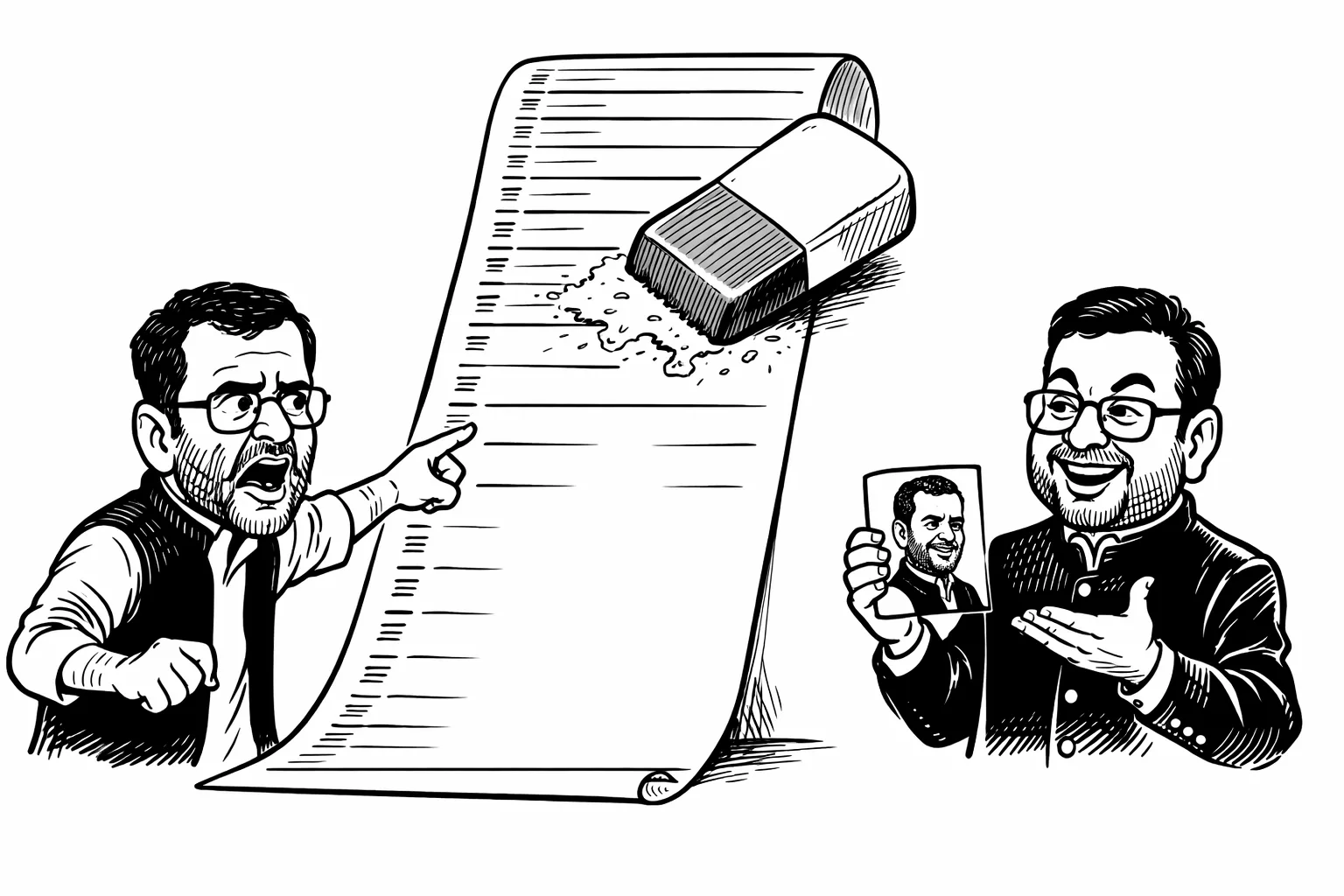
India’s voter-roll argument has reached the stage where deleting more than 130 million names is being presented as routine housekeeping. The Election Commission says the Special Intensive Revision is removing duplicates, deceased voters and other ineligible entries. Fine. That is a legitimate administrative exercise — provided the administration can explain whose name disappeared, why it disappeared and how a citizen gets it back. “Verification” is not a magic word that turns 13 crore missing entries into harmless paperwork.
The opposition, led by Rahul Gandhi, calls it “vote chori” and has demanded the resignation of Chief Election Commissioner Gyanesh Kumar. Rahul Gandhi was detained during protests in Delhi. The BJP’s answer, delivered through Sambit Patra, was that the campaign was an attempt to “relaunch Rahul Gandhi”. This is a remarkable contribution to electoral theory: when the public asks what happened to 130 million voter entries, the ruling party conducts a performance review of one opposition leader’s brand value.
The argument does not require declaring the BJP or the Election Commission guilty of stealing votes. It requires noticing the burden of proof. The institution with the power to alter the rolls has the duty to publish a transparent, independently checkable account of the deletions. The government has instead offered administrative vocabulary, political counter-accusations and the familiar national trick of converting scrutiny into disloyalty. In this system, a citizen asking “Am I still on the list?” is apparently one press conference away from being described as part of a conspiracy.
That is the ideology beneath the spreadsheet: authority wants the power to erase names and the public obligation to trust the eraser. The Election Commission may ultimately show that the deletions are justified. Until then, the scale demands more than reassurance, and the government’s fixation on Rahul Gandhi’s political rehabilitation looks like an attempt to change the subject from voters to personalities. It is not leadership; it is evasion wearing a database badge.
A government that cannot explain where 13 crore voters went should not be lecturing the country about electoral discipline.
More from The Column
- Andhra Pradesh’s Great Nomination EscapeIn Naidu’s Andhra, democracy may enter the building after the ruling coalition checks its paperwork.
- Revanth Reddy’s Government Has Entered Its 15% EraA ₹3,296-crore road now comes with a cheaper bid, a missing comparison sheet and an allegation that demands an answer.
- 130 Million Voters Vanish, Delhi Calls It HousekeepingThe government has perfected a new democratic service: delete citizens first, then ask them to prove they exist.
- Telangana’s New Tender Policy: Qualify First, Pay LaterA written commission allegation has met the government’s oldest infrastructure project: the press release before the road.