Revanth’s Water Plan: Dry Fields, Wet Press Releases
Farmers are told not to sow while Hyderabad receives recycled sewage and another administrative breakthrough is announced.
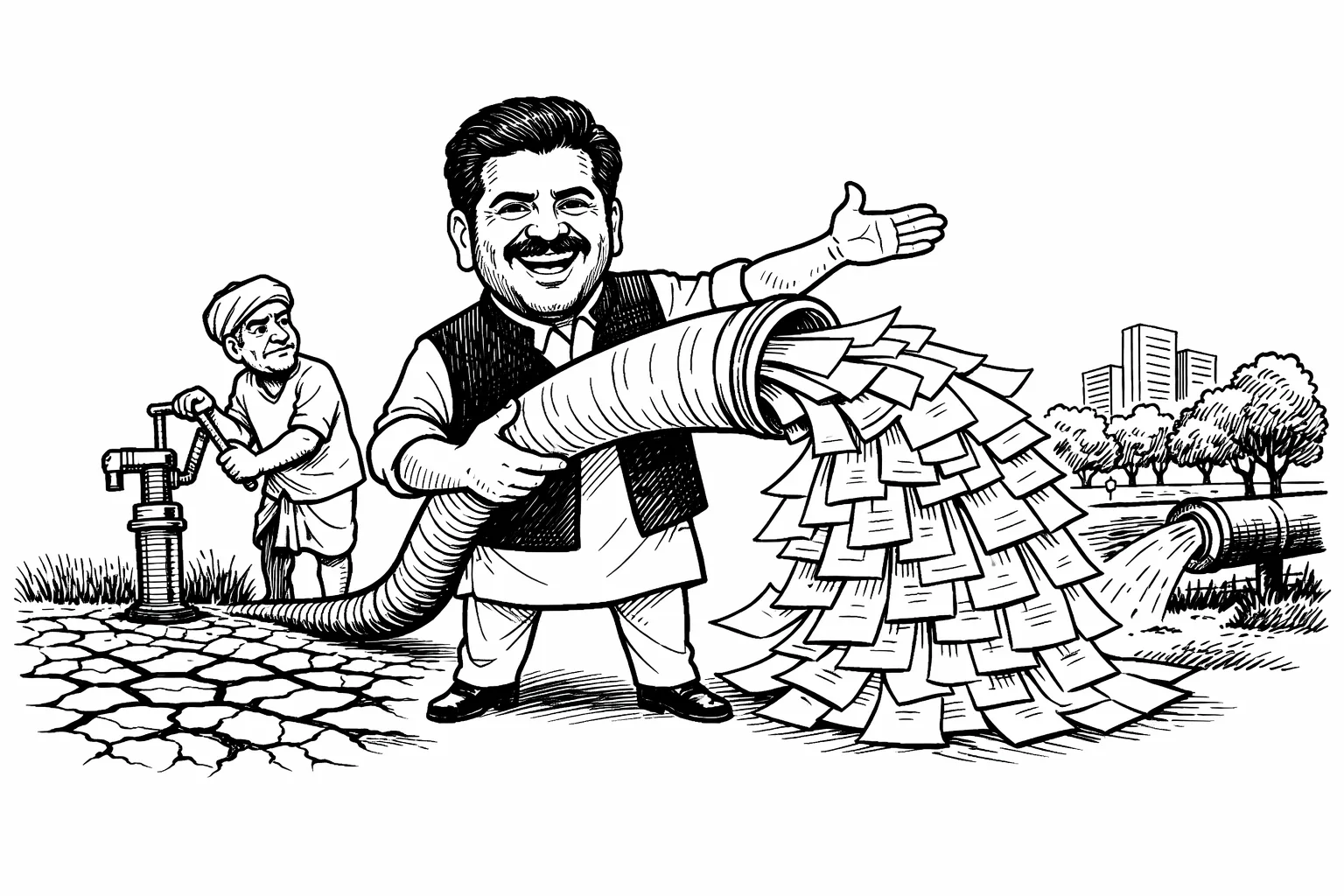
Telangana’s Congress government has finally produced a water policy. Farmers get no irrigation water for the coming Yasangi season; Hyderabad gets treated sewage for construction sites, parks, road cleaning and data centres. The city receives recycling. The countryside receives advice. Somewhere, a PowerPoint presentation is being irrigated properly.
On October 23, Chief Minister A Revanth Reddy warned that not a single drop would be available for agriculture from November through February. Fifteen lakh of the state’s 30 lakh agricultural pump sets had already run dry, he said, and the crisis could last eight to ten months. Four days later came the announcement that sewage-treatment plants would operate at full capacity from November 1. The government has discovered water recycling five years after discovering drought, and four years after discovering that farmers need water.
The rain deficit is real: 17 per cent across Telangana and about 27 per cent in Hyderabad. That explains the shortage. It does not answer the administration question. Reported Krishna inflows were around 80 TMC against an expected 270 TMC; Godavari inflows were about 100 TMC against 150 TMC. The BRS has asked why water was not lifted through operational components at Kannepalli, Annaram and Sundilla. Those are allegations, not findings, but they are precisely the questions a functioning government should answer with figures, not fog.
Instead, Revanth offers the full Congress governance package: blame the previous government, cite the weather, warn farmers against water-intensive crops, mention electricity costing up to ₹15 per unit, and ask Delhi for assistance. A competent administration would have published a district-wise contingency plan, secured power, maximised available storage and shown what capacity was used. This one has converted scarcity into messaging. Deputy Chief Minister Bhatti Vikramarka and the irrigation establishment may call it crisis management; farmers will recognise a crop holiday imposed by administrative exhaustion.
Revanth Reddy is energetic when assigning responsibility backwards. On the job in front of him, the government is waiting for the sky to take minutes. Telangana has not received a water strategy; it has received a drought announcement with recycling attached.
More from The Column
- Delhi Deletes Voters, Amaravati Volunteers An ExplanationNaidu and Pawan Kalyan have found federalism: defending the Centre before asking who vanished from the rolls.
- Andhra’s Democracy Filed 22,800 Forms and Lost 16The coalition has discovered a modern test of democracy: count the paperwork, ignore the stones, guns and missing papers.
- Revanth’s Irrigation Plan: Please Grow Something Thirsty LessThe government promised water security and has now issued farmers a beautifully worded permission slip to go dry.
- Andhra’s New Election Model: First Win the Nomination CentreCandidates now need court orders, police protection and luck to submit the form before democracy can begin.