
Tollywood’s Biggest Hit Is Still the Poster
Where arithmetic loses, the success meet begins — and every fan becomes an unpaid auditor of fiction.
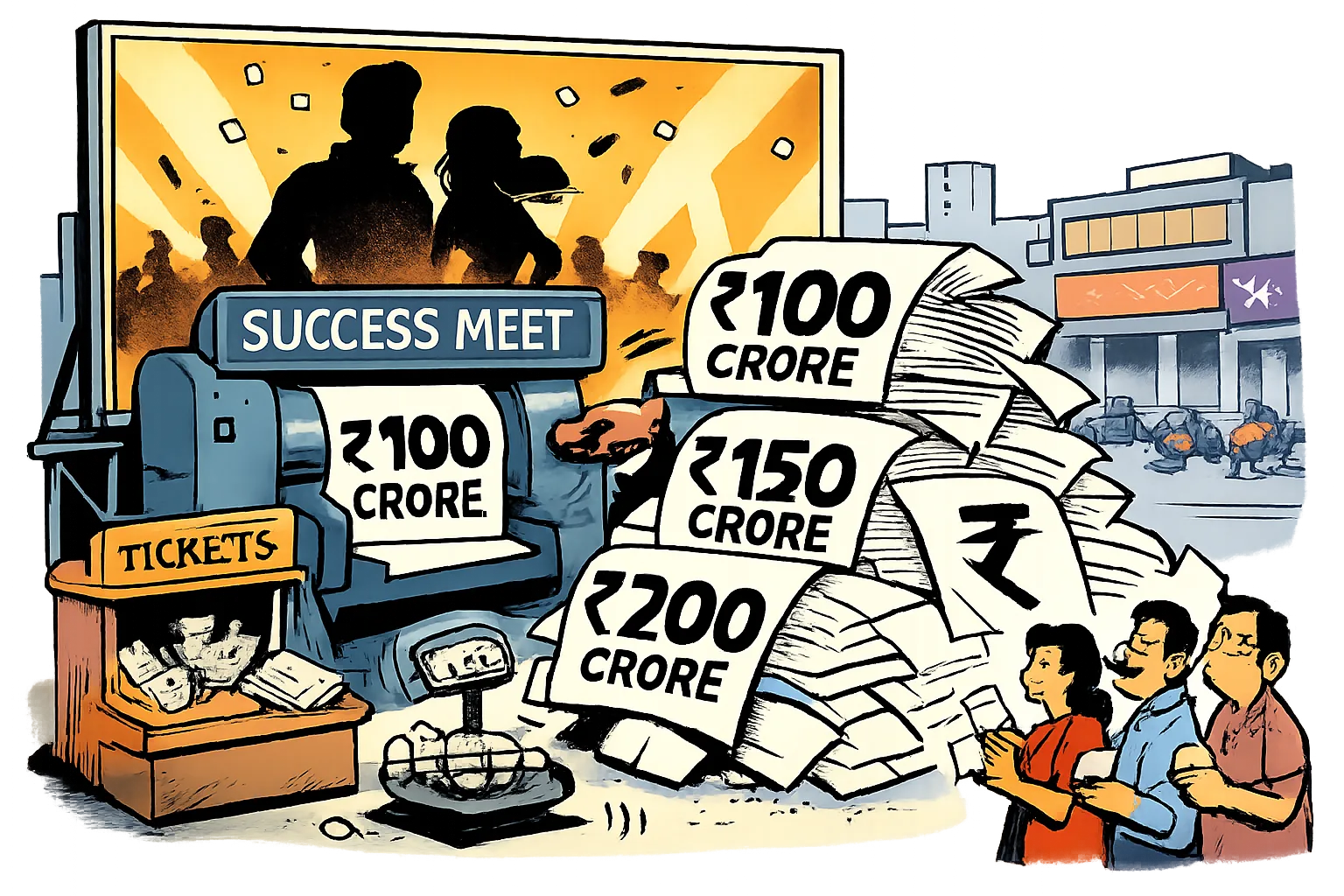
Tollywood has achieved a genuine pan-India blockbuster: a box-office figure that survives longer than the film. The latest debate began after producer Pranay Reddy Vanga criticised inflated collections, while Naveen Yerneni reportedly offered the more practical defence that the poster must reflect “the demand of the day”. Naga Vamsi was blunter: the Telugu film industry, he said, never releases a poster without inflating numbers. At least the industry has finally found a business model with complete transparency about its lack of transparency.
The arithmetic is doing supporting-actor work. For Daaku Maharaaj, the production house announced ₹56 crore on opening day; Sacnilk estimated ₹41.24 crore. By day five, the official poster had placed the film in a ₹114 crore worldwide club, while Sacnilk put it at ₹94.18 crore. Kingdom arrived with an announced ₹82 crore opening weekend against Sacnilk’s ₹65.76 crore estimate. That is not rounding. That is ₹18 crore materialising between breakfast and the success meet, summoned by a large font and a hero-facing camera angle.
The explanation is that these numbers are “for the fans”. Touching. Fans who paid actual money for actual tickets are rewarded with emotional cashback in the form of imaginary gross. The producer gets marketing value, the star gets a larger aura, the PR shop gets a press note, and the movie journalist gets another paragraph to reproduce without asking the one question considered more dangerous than a box-office flop: where is the statement of accounts?
The review ecosystem has its own assembly line. A film is a “rampage”, a “festival winner”, a “career-best” and, if the campaign budget is healthy, a cultural event before the audience has escaped the second half. Fan armies then defend the poster’s number as if they personally audited every ticket counter. Rival camps produce competing screenshots, and the film itself disappears beneath a civil war over typography.
Tollywood spent years insisting its stars were larger than life. It has now made the bookkeeping larger than the receipts.
The film may or may not be a hit; the poster already is.
More from The Column
- Telangana’s Land Crisis Gets a Political Address ChangeFor KCR’s farmhouse, the government found 30 days. For everyone else, it found committee time.
- The One-Minute Arrest Still Waiting Three YearsChandrababu Naidu presents restraint as statesmanship, after advertising arrest as a personal administrative shortcut.
- Congress Finds Cabinet Accountability, Misplaces GovernanceIn Telangana’s latest discipline exercise, a minister’s job apparently depends on what her daughter says about Parkal.
- Tollywood’s Biggest Hit Is Still the PosterThe industry has discovered an honest box-office figure: fake, with the actual number known only to the producer.