
Tollywood’s Biggest Hit Is the Victory Poster
The film can wait for audiences; the PR machine has already booked the parade, the record and the legal notice.
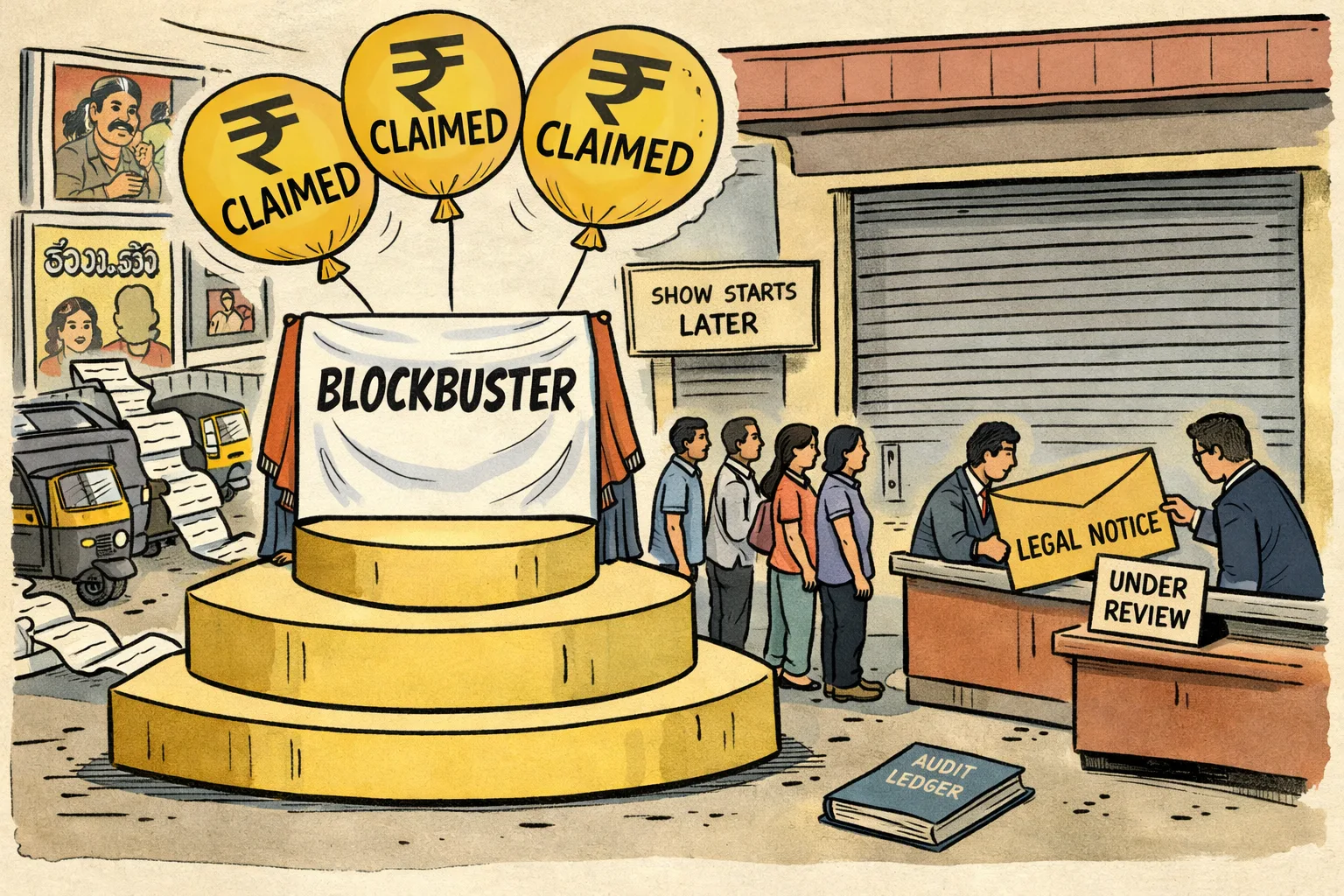
Tollywood has found the perfect release schedule: announce the blockbuster, print the collections, then let the film arrive whenever it is ready. Toxic reportedly opened amid “global” positioning, an “edgy” campaign and collection claims ranging from ₹79.12 crore in India by 6 pm to more than ₹90 crore. These were claims, not audited accounts. But the poster had already performed the vital duty of converting arithmetic into mythology.
Mythri Movie Makers then announced that Ravi Teja’s Irumudi had crossed ₹180 crore worldwide in ten days, while TrackTollywood listed ₹175.77 crore by September 9. The gap is small enough to be ignored by fans and large enough to be useful to a marketing department. Producer Naga Vamsi’s reported explanation that inflated posters are “for the fans” was unusually efficient. Buy the ticket, print the legend, add ₹20 crore for emotional support.
The audience is assigned a simple role: pay, applaud, share. Inspection is apparently an advanced feature. Reviews are more complicated. When viewers offered mixed reactions to Toxic, reports of notices being sent to YouTubers and influencers suggested that the new release protocol includes a lawyer between the opening show and the public’s opinion. The review has not been defeated; it has been treated as an unauthorised occupation of the weekend.
The ecosystem works beautifully. Producers issue victory bulletins. PR shops turn claims into headlines. Movie-journalist pages translate press material into “trade sources suggest”. Fan armies conduct rival audits with screenshots, while old remarks by Allu Aravind about Yash and KGF can be revived whenever a film’s actual reception needs a convenient detour into a Telugu-Kannada online war. Somewhere, a glowing review is sitting beside an undisclosed commercial relationship, both waiting for transparency to become commercially viable.
Telugu cinema has genuinely built national reach, and that achievement deserves credit. Its publicity machine has built something grander: a universe where the film may be average, the figures may be claimed, criticism may invite legal weather, and the record remains unbeaten. The audience may buy the ticket; its opinion is still under review.
More from The Column
- Telangana Congress Has Invented Cabinet Governance on MuteRevanth Reddy’s government now offers two versions of power: the official one and the one ministers are disciplined for describing.
- Andhra Government Discovers Relief Without Paying For ItNaidu’s administration offers committees, assurances and a six-month report while employees wait for actual Interim Relief.
- Congress Finds Telangana’s Real Threat: Black T-ShirtsAfter 1,000 days of guarantees, the Revanth Reddy government has discovered its most dangerous opposition weapon is cotton.
- Tollywood’s Biggest Blockbuster Is the Collection PosterThe film opens once; the PR machinery keeps celebrating until arithmetic applies for leave.