
Tollywood’s Box Office Has Entered Fantasy Genre
When ₹100 crore becomes ₹110 crore for fans, arithmetic has officially joined the promotional cast.
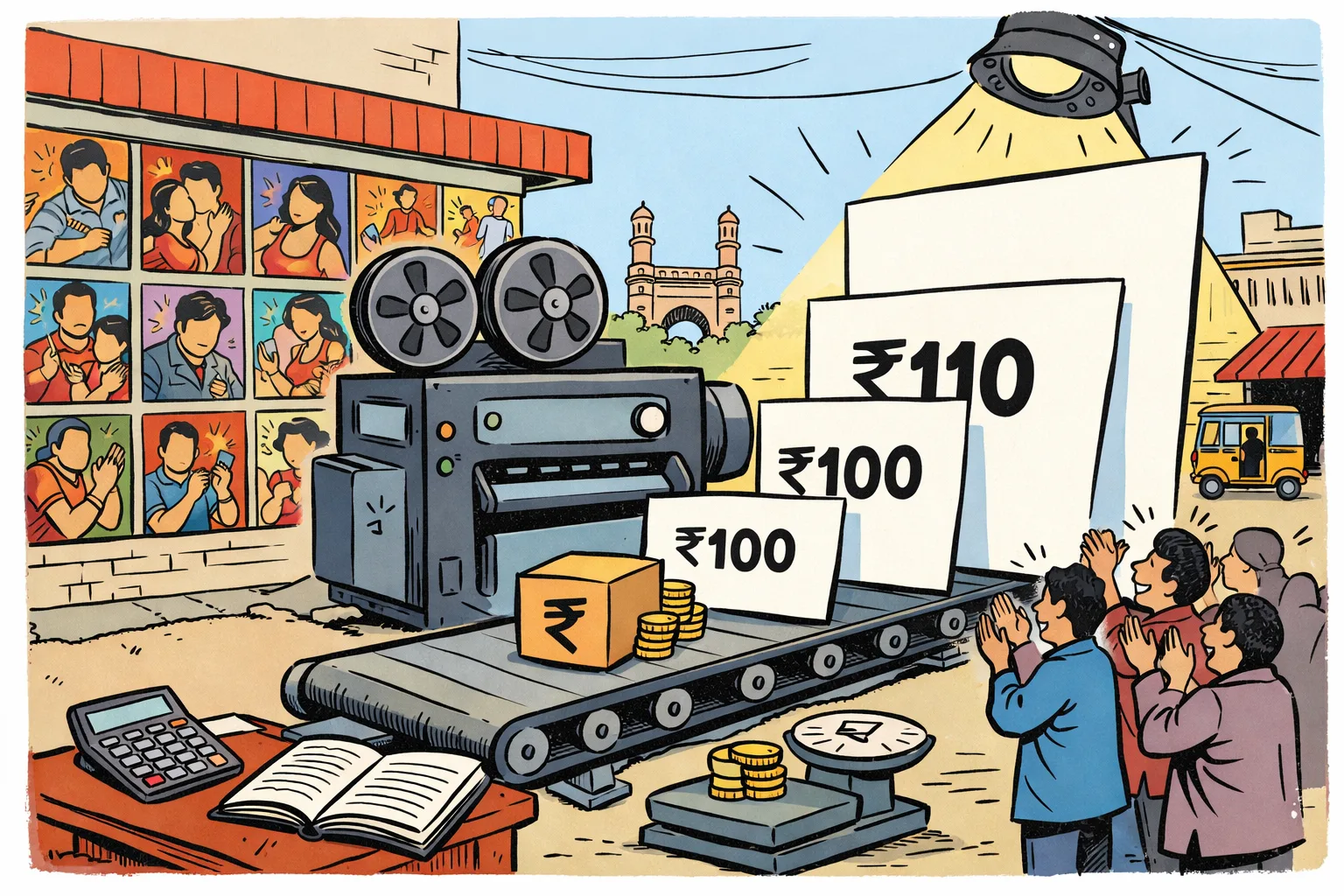
Tollywood has finally solved cinema’s oldest problem: nobody knows what a film collected, but everyone knows it was a “massive blockbuster”. The industry has not abolished the box office. It has given it a screenplay.
Producer Naga Vamsi supplied the season’s most honest explanation when he said Telugu films inflate collections “for fans” and asked why there is any necessity to publish correct numbers. This is not accounting. It is emotional catering with a worldwide gross. The working model now appears to be simple: a film collects ₹100 crore, the poster says ₹110 crore, fan armies discover ₹200 crore, and the paid movie-journalist ecosystem announces an “industry hit” before the second weekend. The distributors, presumably, are informed once the fan war has concluded.
There is quality control, to be fair. Vamsi said the industry does not jump from ₹100 crore to ₹200 crore; it merely rounds up. Tollywood is therefore not lying wildly. It is lying within a professionally managed tolerance band. Daaku Maharaaj was announced by its production house at ₹56 crore on opening day, while Sacnilk estimated ₹41.24 crore. By day five, the banner claimed ₹114 crore worldwide; Sacnilk’s estimate was ₹94.18 crore. Kingdom was promoted at ₹82 crore for its opening weekend against Sacnilk’s ₹65.76 crore estimate. That is not rounding. That is the distance between a calculator and a publicist.
Pranay Reddy Vanga’s suggestion that collections should reflect reality was almost radical. He said inflated figures can damage the market value of actors and directors when the money does not recover, while claiming Romanchakam’s ₹8.5 crore gross in four-and-a-half days was being reported transparently from distributor accounts. Naveen Yerneni and others have described inflation as a marketing requirement. The ecosystem’s philosophy is now beautifully clear: accurate numbers are unnecessary, inflated numbers are for happiness, and the consequences belong to whoever still uses numbers seriously.
The PR shop converts a poster into a headline, the headline into a trend, and the trend into evidence that a star has transcended cinema. Reviewers with promotional arrangements discover masterpieces on schedule. Fan armies defend a producer’s arithmetic as if it were a constitutional amendment. Everyone calls it celebration because “manufactured perception” sounds less festive.
A film no longer has to win. It needs a poster and enough people willing to count the same rupees repeatedly.
More from The Column
- Telangana’s Land Records Enter the Blame-Management EraThe file is inherited, the error is technical, the apology is current, and the deadline has been carefully misplaced.
- Naidu’s Patient Revenge Has an Excellent MemoryAndhra’s chief minister rejects vengeance while keeping his arrest, enemies and capital complex permanently on the agenda.
- Telangana’s 22-A Policy: Blame First, Apology SecondPonguleti Srinivas Reddy has turned a land-records crisis into a travelling exhibition of administrative accountability avoidance.
- Tollywood’s Biggest Hit Is Still the PosterThe industry has finally admitted its box-office figures are fiction, then printed the confession in giant letters.