
Fitbit Air Charges Extra for Showing You Nothing
A comfortable, capable screenless tracker undermined by premium pricing, messy software and subscription-shaped ambition.
This is Telangana.Social's opinion — a house verdict formed from the trailer, cast, buzz and reception, not a substitute for seeing it yourself.
Google Fitbit Air is built around a deceptively appealing idea: track your health without adding another glowing rectangle to your wrist. At 12g, with sleep, heart rate, blood oxygen, recovery and activity tracking, it is discreet enough to disappear into daily life. The problem is that it also disappears from your wallet rather efficiently.
The hardware case is solid. Reviews suggest heart-rate tracking broadly comparable with far more expensive wearables, while sleep and recovery insights are the Air’s strongest argument. Battery life is advertised at up to a week, although early users are finding something closer to six days. That is not a scandal, merely the familiar gap between laboratory optimism and life involving actual movement.
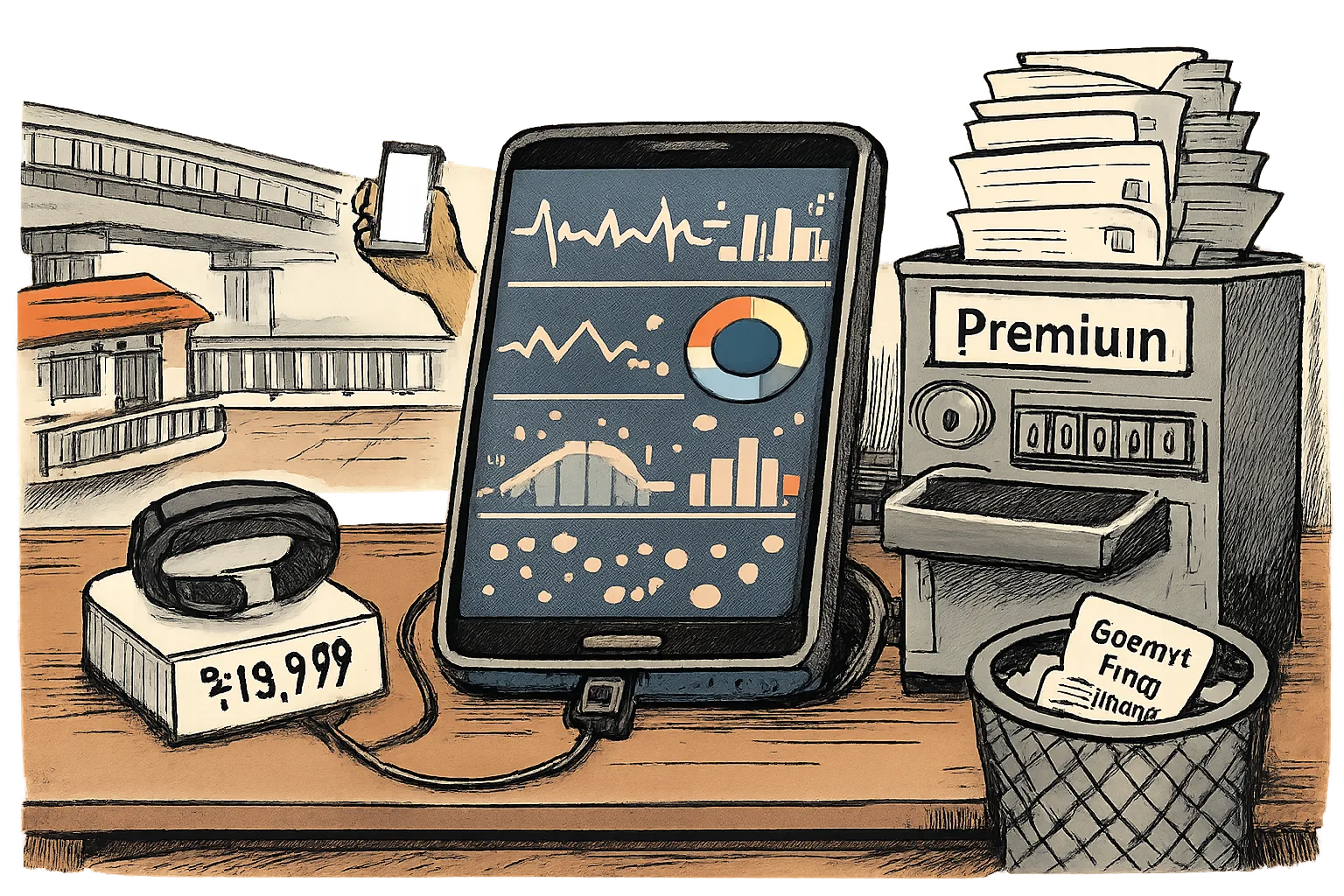
The screenless design works if your goal is to avoid notifications and compulsive wrist-checking. It is less convincing when Google uses the absence of a display as a premium feature. Rivals offer screens, workout modes and notifications for less, while the Air asks ₹13,999 to quietly collect data and send you to your phone for the results. The cure for screen addiction, apparently, is a second screen elsewhere.
The software is where the polished wellness promise starts shedding paint. The Google Health app has been criticised as cluttered, with the AI Coach useful largely because it helps users navigate the clutter created by the rest of the platform. Advanced insights and recommendations sit behind Google Health Premium after the bundled three-month trial, turning a one-time hardware purchase into an ongoing appointment with the billing department.
There are also regional limitations. Irregular heart-rhythm alerts are not available in India, weakening the health-monitoring pitch in the very market where Google has chosen to charge noticeably more than the US launch price of $99. A premium product can have feature variation by country, but it should not market itself like a complete health platform and then arrive with important asterisks attached.
The Fitbit Air is comfortable, capable and genuinely appealing for people who want passive tracking rather than a tiny smartwatch. But at ₹13,999, Google is charging luxury money for restraint, then reserving the most intelligent interpretation of your own data for a subscription. The pebble is good; the pricing strategy needs medical attention.
Skip it at ₹13,999; paying extra for a tracker that shows nothing and then charges to explain it is not wellness, it is subscription economics with a heart-rate sensor.
The verdict: Skip it at ₹13,999.