CMR mess is real. The audit? Show it.
Telangana has chased defaulting rice millers for years, recovered some money, and is still in court over tonnes of missing paddy. A sweeping 10–12-year audit is being talked up — but no official order is on the record yet.
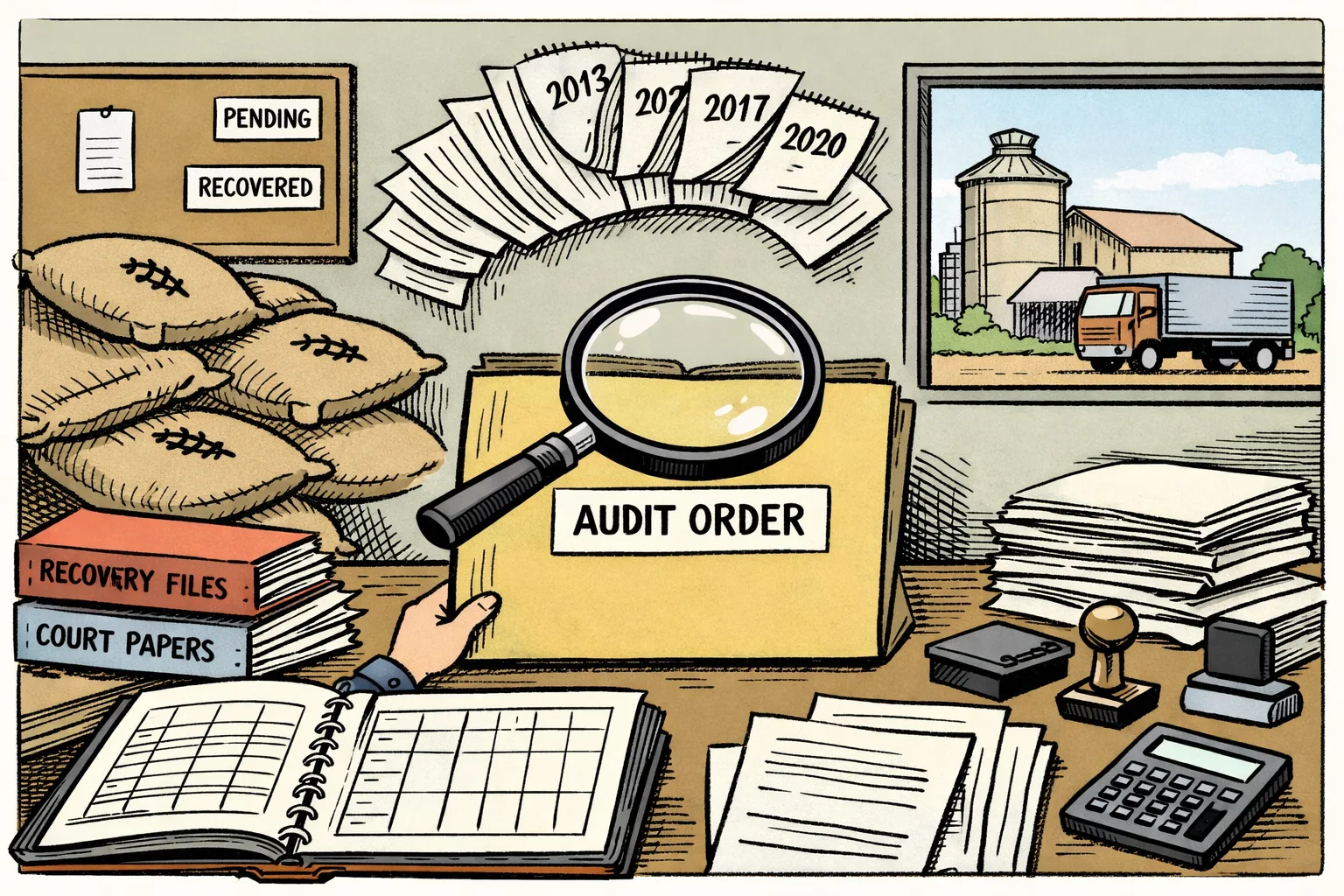
The proposed long-term CMR audit has not yet appeared as a public order.
Content type: news
Telangana’s custom-milled rice system is simple on paper: mills receive paddy and must return rice at set ratios — 67% for raw, 68% for boiled — with the grain held in joint custody with officials, according to a state district brief. The practice has been messier. The state has repeatedly moved against defaulting millers: in November 2024 it barred fresh paddy allotment to defaulters and told them to clear dues; in March 2026, Peddapalli police registered cases against seven mills and arrested two owners over alleged short delivery.
The numbers give the scale, if not closure. A May 2024 report put recoveries from millers at Rs 668 crore, with Rs 1,438 crore still pending at the time. A separate case in the High Court this May recorded the state alleging a 13,967.186‑tonne paddy shortfall against one Nalgonda mill and seeking Rs 43.99 crore in recovery — allegations under adjudication, not settled fact.
What is not on paper yet: the much-circulated claim that Civil Supplies Minister N. Uttam Kumar Reddy has ordered a decade‑long CMR audit to recover “every grain and every rupee”. No government order, department circular or official release setting out a 10–12‑year audit’s scope, agency or deadline was available in the public material we could find. If the Congress government in Delhi wants to help Telangana’s grain actually move, it can start by clearing the state’s claimed Rs 1,468.94 crore from 2014–15 and Rs 343.27 crore under PM‑GKY — and the Congress government in Hyderabad can publish the audit order it says exists.