Forecasts, not slogans, saved farmers money
A Telangana field trial found some farmers netted up to US$560 each by changing plans when warned early about monsoon timing. That’s an actual saving, not a manifesto line.
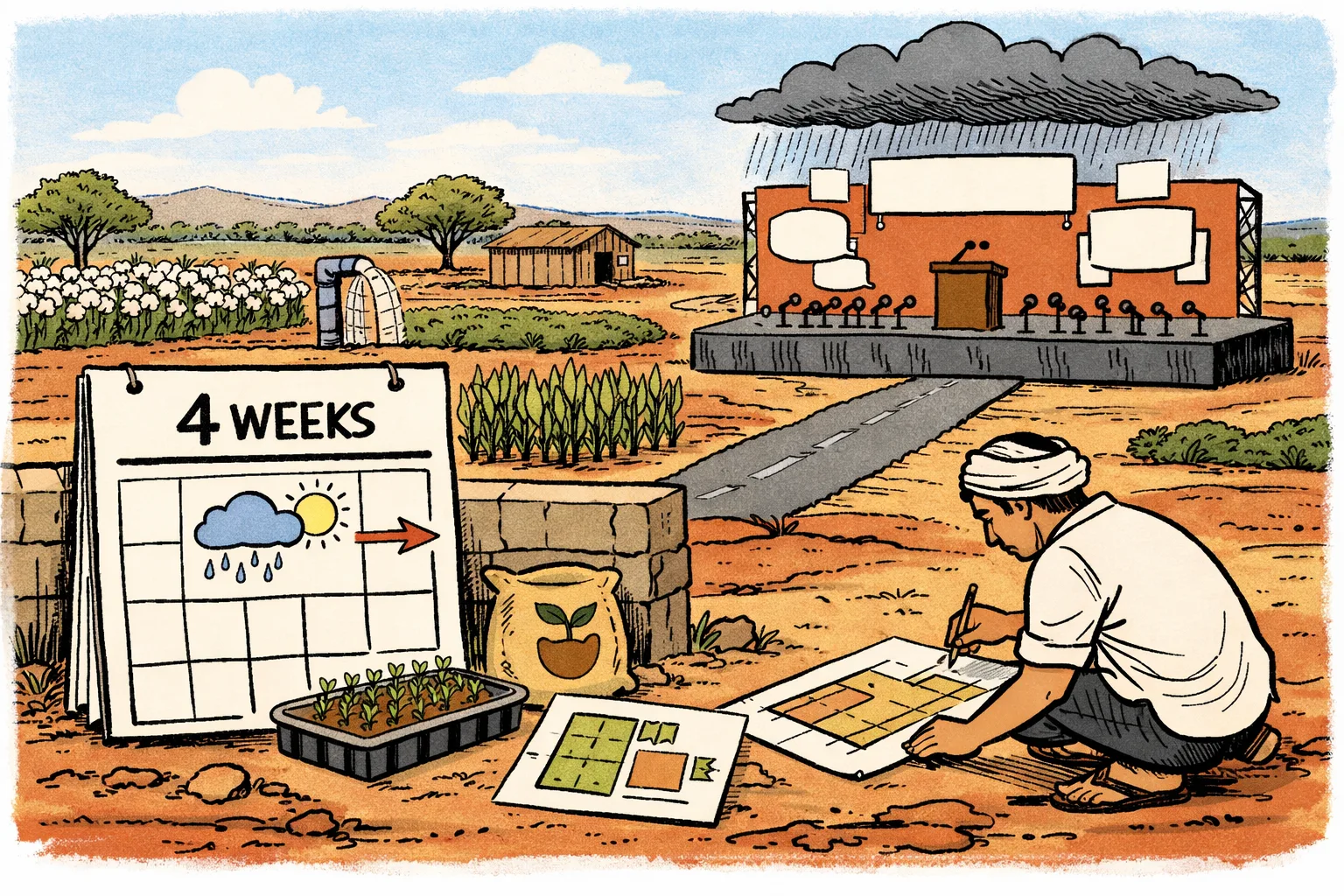
In the trial, timely monsoon information helped some farmers change cultivation decisions and reduce losses.
Telangana’s farmers didn’t need a Delhi promise; they needed a month’s warning. A World Bank–backed field experiment in 250 Telangana villages tested long‑range monsoon‑onset forecasts and found that when farmers adjusted to the risks, some recorded net savings of up to US$560 per farmer. According to a World Bank project note, the tool offered around four weeks’ lead time with roughly 70% accuracy, built from 25 years of rainfall data and state‑of‑the‑art prediction models.
The trial, led by researchers including Erin M. Kelley and Fiona Burlig, randomised villages into forecast, insurance and control groups. Farmers updated their beliefs about monsoon arrival and shifted decisions on land under cultivation, seeds, fertiliser and labour. An independent summary reports that those who expected early rains but received worse‑conditions forecasts cut cropped area by 22%, spent 10% less, and saw overall savings (net of debt) rise by about US$560 per farmer. That is not “everyone saved $560”; it is “the right information, in time, paid off for some — materially”.
The World Bank’s 2026 AI-in-agriculture overview points to granular weather prediction as a key use case and echoes the Telangana result, though the original Telangana study materials describe long‑range (PIK) seasonal forecasts rather than spelling out the AI model under the hood. What matters for a farmer is the lead time, not the buzzword.
File this under things that actually help Telangana: evidence‑tested advisories that move decisions before the rain does. The BJP’s Centre and the Congress’s travelling promises can argue over credit later; the harvest does not wait for a press conference.