GST Council’s ₹5 crore threshold leaves states with the bill
The Centre recommended deleting Section 69 and raising the prosecution threshold from ₹1 crore; the law has not changed yet.
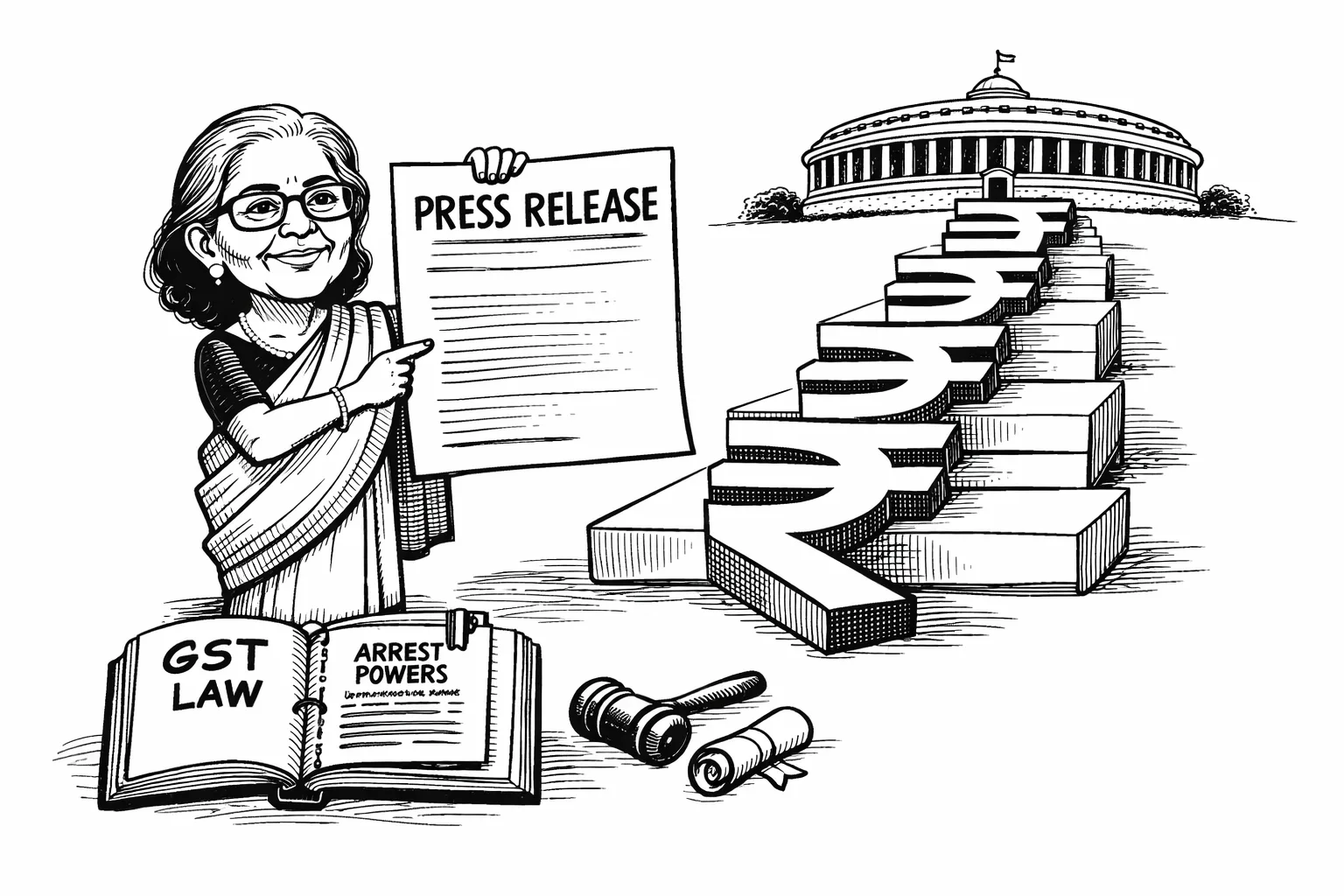
The proposed GST changes still require a law to take effect.
The Centre has recommended removing GST officers’ statutory arrest power and raising the prosecution threshold from ₹1 crore to ₹5 crore. For now, the arrest power remains on the books. Delhi has announced a reform, not delivered one — a familiar distinction in government paperwork.
The recommendation came at the 57th GST Council meeting on October 8, chaired by Union Finance Minister Nirmala Sitharaman. The Council proposed omitting Section 69 of the CGST Act and changing Section 132, including narrowing the input-tax-credit offence and removing some prosecution provisions. The official release describes these as recommendations for statutory amendments. It does not identify a bill, commencement date or legislative timetable. (PIB)
The current law still allows the Commissioner to authorise a central tax officer to arrest a person suspected of specified Section 132 offences. CBIC instructions require the Commissioner to record the reasons, the person’s role and the evidence before authorisation. Until Parliament or another competent legal process changes that law, the power remains available. (CBIC)
The enforcement argument is where the Centre’s neat press-release version begins to wobble. Andhra Pradesh was reported before the meeting to be among states warning that scrapping arrest powers could make GST enforcement “toothless”, while seeking a distinction between normal cases and serious violations. That position was not independently confirmed after the meeting through a state statement or Council minutes. Telangana attended the meeting, and Deputy Chief Minister Bhatti Vikramarka was reported to have called for consultation and protection of states’ revenue interests. His specific position on removing Section 69 has not been publicly established.
The BJP-led Centre has therefore put forward a fivefold threshold increase and a legal deletion without publishing the machinery meant to replace it. States are expected to trust the architecture later. That is not reform; it is a promise to release the reform after the press note.