Modi asks for jobs. His Survey says profits grew faster
Listed-company profits rose 22.3% in FY24, against 1.5% employment growth; manufacturing employment still rose 7.57%.
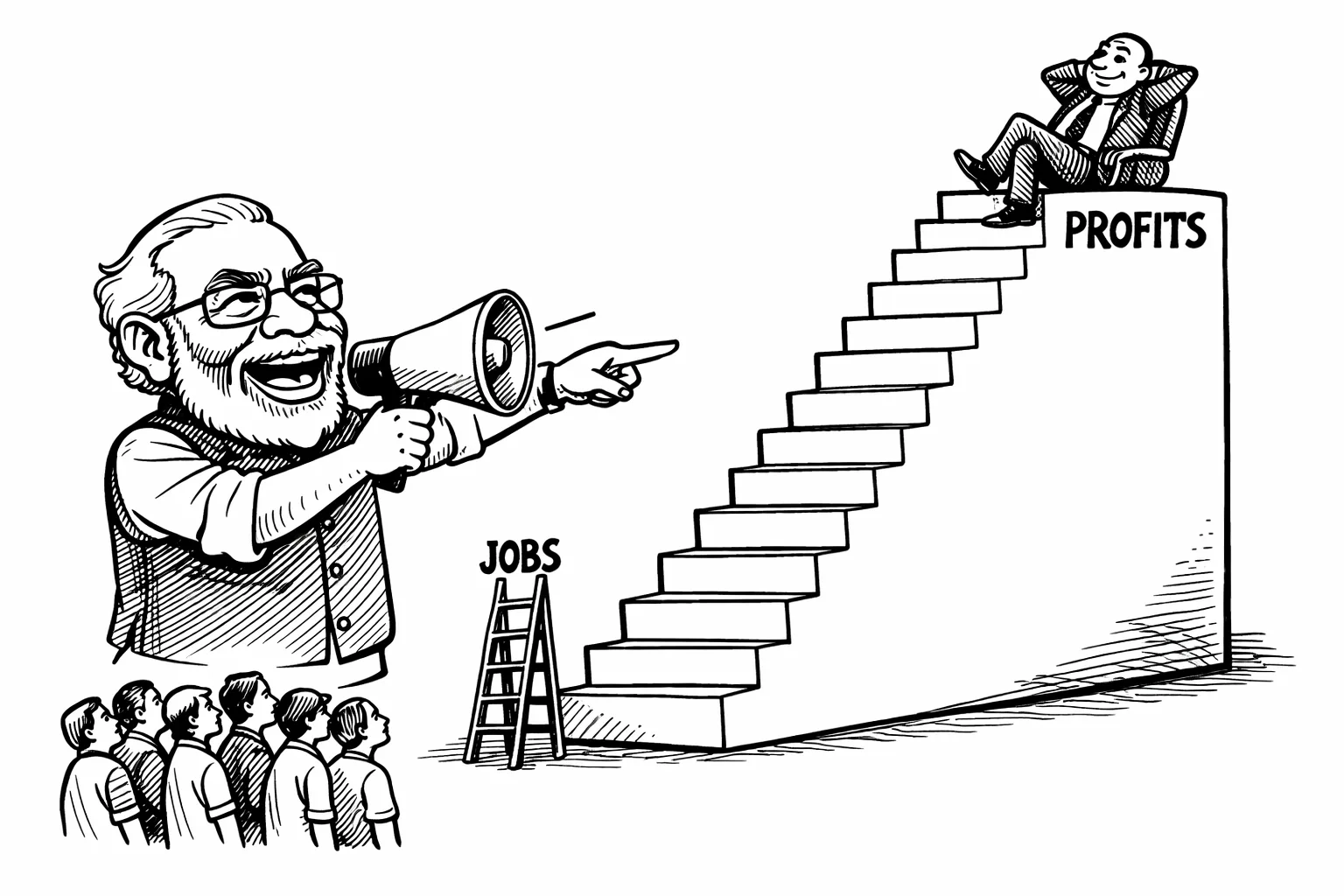
Profits rose faster than employment in FY24, according to the Economic Survey.
Prime Minister Narendra Modi asked India Inc a question his government should have answered first: after tax relief and lower GST rates, had companies increased hiring or salaries? At a FICCI event on 19 November 2026, Modi said he had reduced the basic corporate tax rate from 30% in 2014 to 22% and provided income-tax relief up to Rs 12 lakh. “But have you increased the number of employees or their salaries? No,” he said, according to reports of the address.
The Economic Survey 2024-25 supplies an uncomfortable comparison. Profits of listed companies rose 22.3% in FY24, while employment grew 1.5%. Employee expenses increased 13%, down from 17% in FY23. The Survey described this as a “sharp focus on cost-cutting over workforce expansion”. Tax relief, in other words, reached the profit line more reliably than the payslip.
There is an important qualification, because facts are less obedient than political speeches. The latest Annual Survey of Industries says employment in the manufacturing corporate sector rose 7.57%, while factories in operation increased 3.45%. So “no jobs were created” would be false. The real failure is narrower and more serious: growth has not translated consistently into broad-based, well-paid employment across the economy.
Modi’s response was to ask companies to finish the job. That is convenient. The Union government cites the concessions when claiming credit, then hands responsibility to industry when the promised employment transmission is weak. Rahul Gandhi called the remarks a “confession”; the label is political, but the disparity is in the government’s own documents. Good diplomacy abroad does not excuse a domestic economic model that celebrates profits and then asks workers to wait for the benefits.