West Bengal’s 37 lakh appeals await the ECI
The Commission says SIR protects eligible voters. Its latest reported figures show 37.05 lakh appeals pending, prompting the Supreme Court to prioritise exclusion cases.
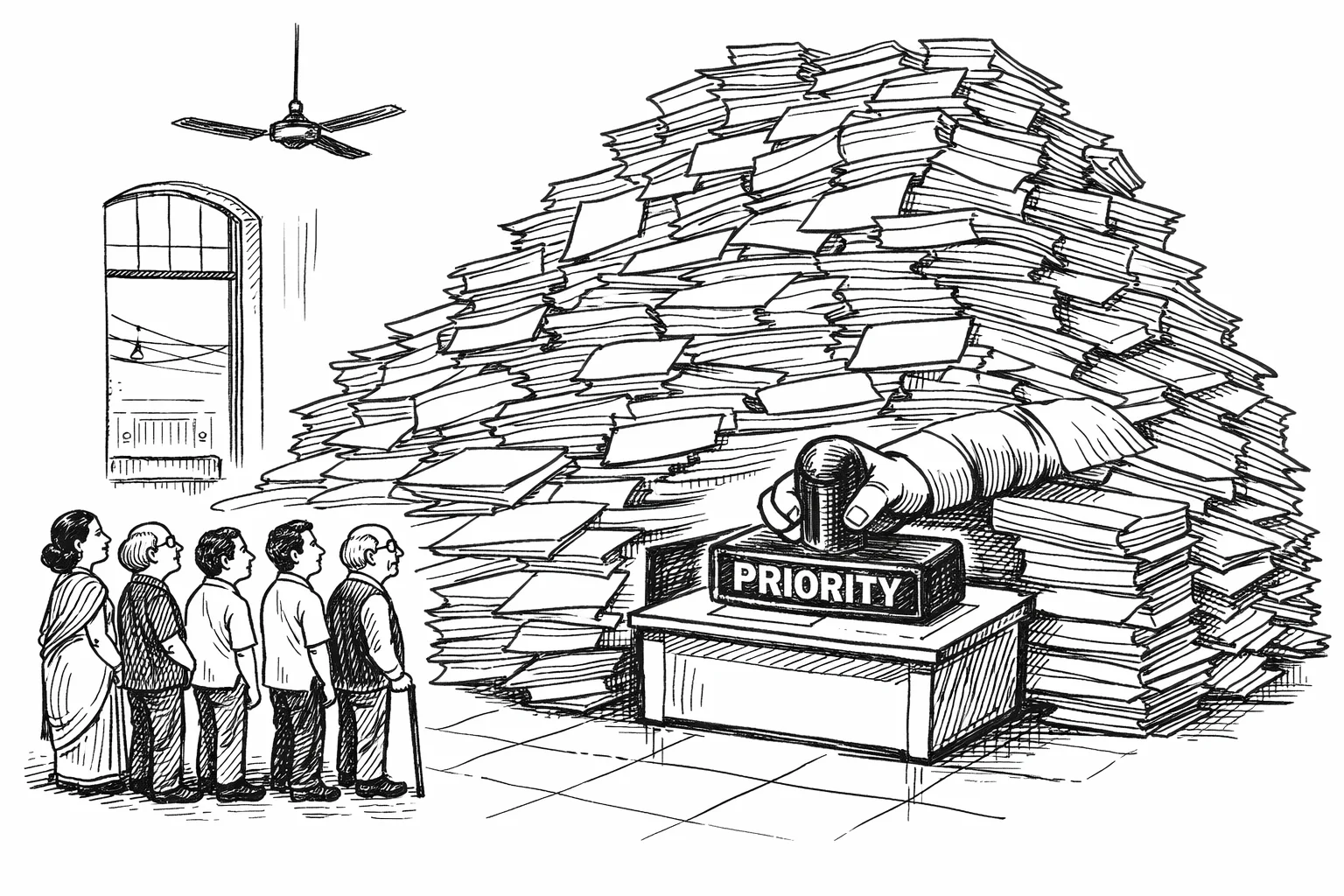
A correction system strains under the appeals it must process.
The Election Commission of India’s voter-roll “clean-up” in West Bengal has produced an administrative problem large enough to require the Supreme Court’s intervention: 38,31,429 appeals, of which 37,05,235 were still pending in the Commission’s latest reported figures.
The number needs one small correction before anyone turns it into a slogan. The appeals were not all filed by deleted voters. The ECI’s breakdown recorded 22,21,118 appeals from voters whose names were excluded or deleted, and 16,10,311 appeals against the inclusion of voters. Only 1,26,194 had been decided.
The ECI says the Special Intensive Revision, or SIR, is meant to make electoral rolls “accurate, up-to-date, and free of ineligible or duplicate entries, while ensuring that no eligible elector is left out”. It also lists door-to-door visits, repeated attempts to contact electors, recorded reasons for deletion and an appeals process as safeguards. A safeguard that leaves 37 lakh cases waiting, however, is less reassuring than the press release describing it.
On November 23, the Supreme Court directed tribunals to prioritise appeals by voters whose names were excluded or deleted. Appeals challenging the inclusion of voters could, for the time being, be deferred. The Court also directed the ECI to increase the number of appellate tribunals and identify additional premises in Kolkata to speed up disposal. The Commission has separately instructed officials to conduct a special drive for “left-out” and first-time or young electors.
The record does not prove that every deletion was wrongful or that the exercise was manipulated. It does prove that the correction machinery was not ready for the burden created by the exercise. The ECI promised clean rolls without leaving eligible voters out. It now needs a larger system to find the people its smaller system may have missed.