Modi’s 816-seat plan failed before Telangana got a number
The BJP-led Centre linked women’s reservation to delimitation, offered a model without a state-wise map and then failed to pass the bills meant to implement it.
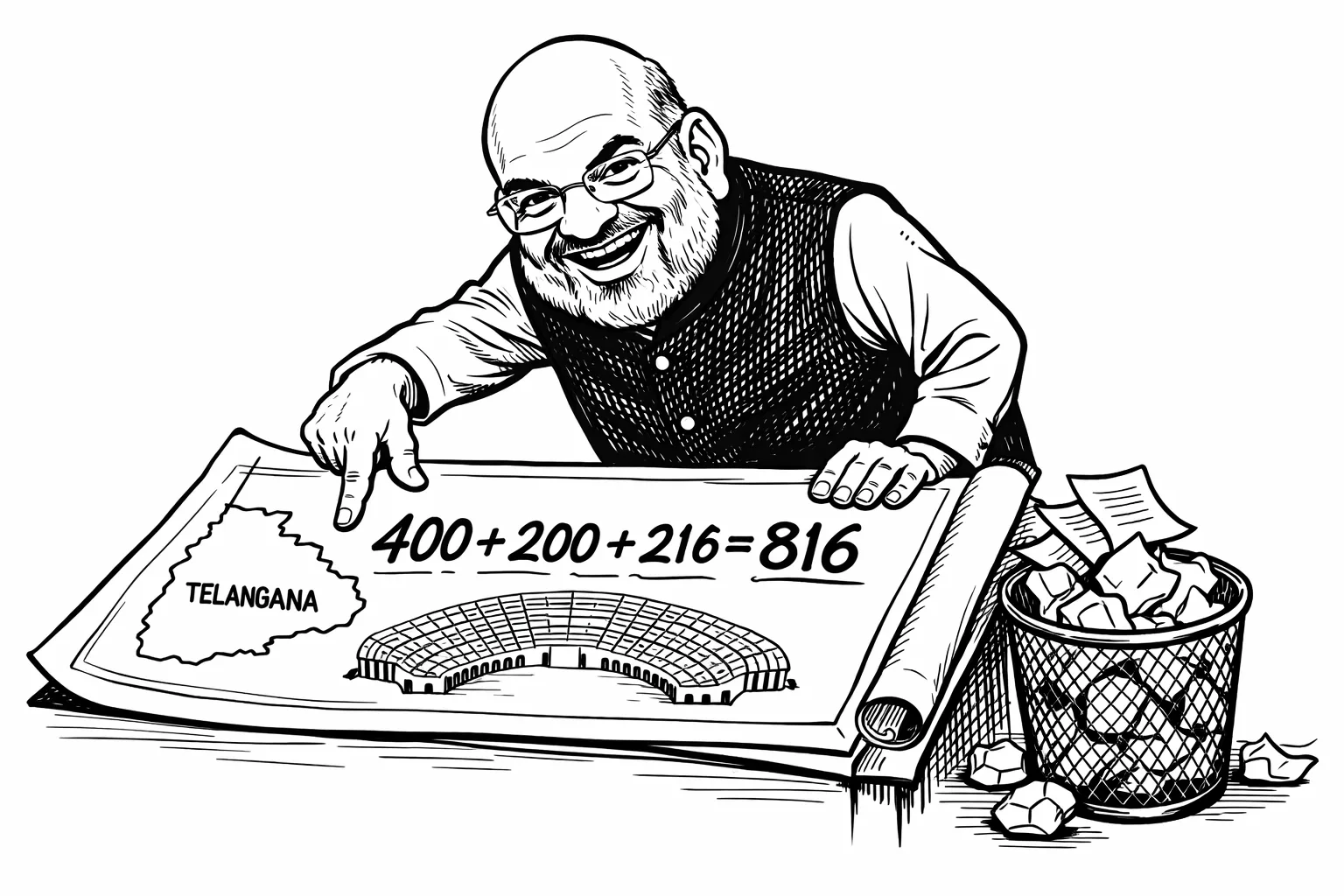
The Centre’s model has a total, but Telangana still has no number.
The BJP-led Union government spent 2026 presenting delimitation as a neat federal bargain: increase every state’s Lok Sabha seats by 50 per cent, protect the southern states’ share and operationalise women’s reservation. Then Parliament declined to pass the constitutional amendment bill, and the dependent Delimitation Bill went nowhere. A remarkably unfinished solution to a problem the Centre insisted was already solved.
The legal chain is clear. The 2023 Constitution (106th Amendment) Act provides for women’s reservation of about one-third in the Lok Sabha and state assemblies, but says rotation of reserved seats follows a delimitation exercise. The 2026 amendment bill said the reservation would become operative after delimitation based on the relevant Census. Neither 2026 bill became law. The Union government’s own session summary records that the constitutional bill failed to secure the required majority on April 17, 2026, while Parliament’s records mark the bills as not passed. (Sources: Legislative Department; e-Gazette; PIB.)
Union Home Minister Amit Shah’s published model used 816 Lok Sabha seats: a 50 per cent increase from the present 543. For Karnataka, Andhra Pradesh, Telangana, Tamil Nadu and Kerala together, the government put the current total at 129 seats and the proposed total at 195, saying their combined share would move from 23.76 per cent to 23.87 per cent. That is a government model, not a final allocation. The bill contains no state-wise table, no Telangana number and no settled national total. The much-repeated 850 figure is not in the primary bill text reviewed here.
Congress’s stated position was different: support women’s reservation, but implement it within the existing 543-seat Lok Sabha rather than tying it to delimitation. That argument is politically inconvenient for the Centre’s attempt to label every objection as opposition to the quota itself. The BJP-led government failed to pass its own mechanism, and Telangana is still being asked to trust a map nobody has published. Delhi has produced a grand arithmetic exercise, but not the number that matters to the state.