
The film arrived on a hard disk. The tax bill arrived anyway
The Bombay High Court set aside proceedings involving ₹79.72 crore in disputed GST against Dharma Productions and Dharmatic Entertainment, rejecting the idea that digital delivery alone turns film-rights licensing into IT software.
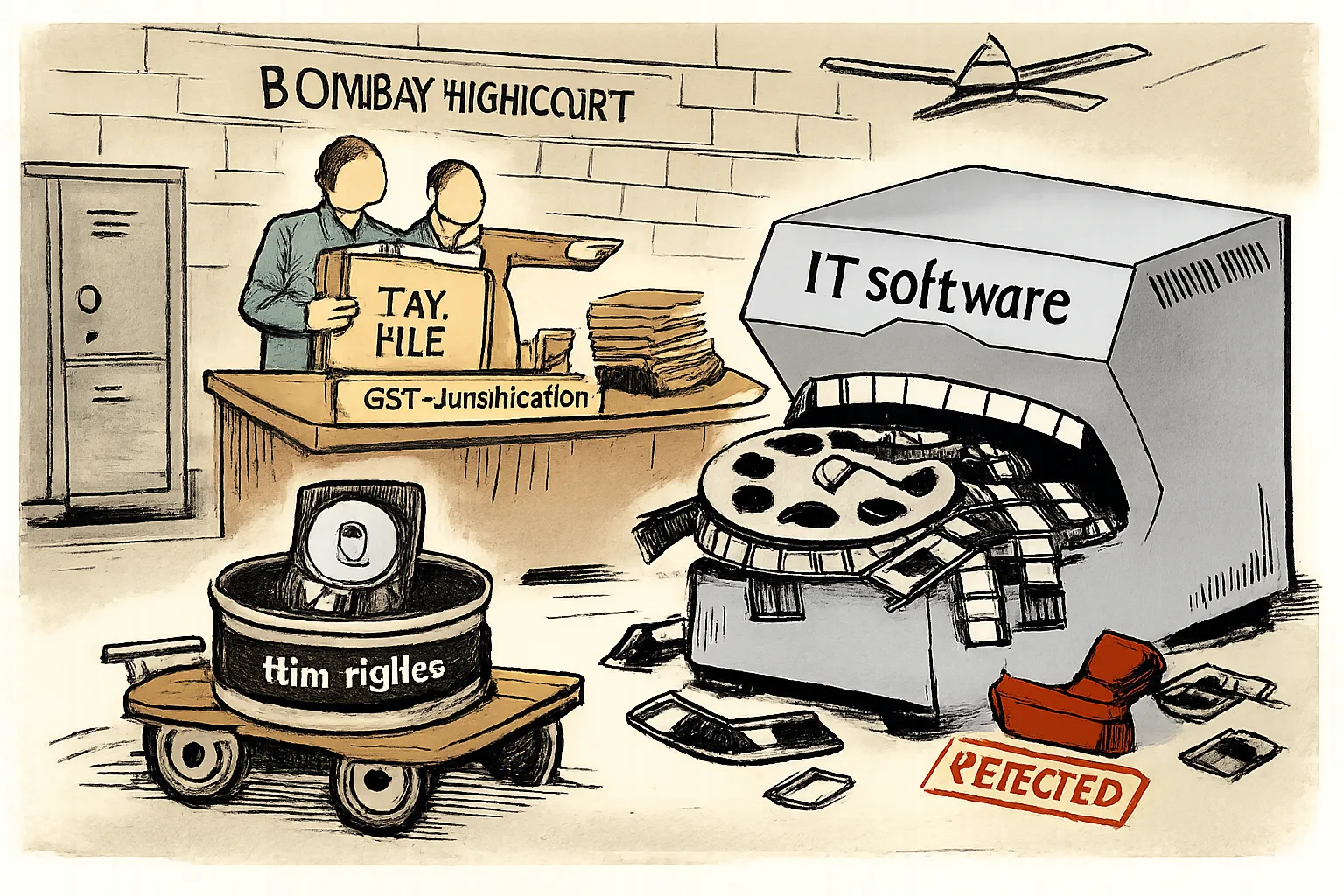
The Bombay High Court rejected the classification of film-rights licensing as IT-software services solely because the content was delivered digitally.
A film delivered on an encrypted hard disk is still a film. The Bombay High Court has now said it is not automatically IT software merely because a tax department prefers a more expensive category.
In its September 10, 2026 judgment, the court set aside GST proceedings involving disputed tax of ₹79,72,68,337, plus interest and penalty, against Dharma Productions and Dharmatic Entertainment. The dispute covered 2017–18 to 2020–21, when licensing intellectual-property rights in films attracted 12% GST, while the authorities classified the transactions as IT-software services at 18%.
The court said the essential character of the supply—not whether content travelled by encrypted hard disk or electronic transmission—must determine classification. It noted that GST separately lists licensing the right to show original films under SAC 997332, and criticised the authorities for collapsing that entry into software licensing. A film file is digital. That does not make the copyright a software licence.
The ruling concerns the records before the court and the pre-October 1, 2021 period. It does not automatically settle every producer’s GST dispute, or decide the position under the later harmonised rate. The tax department’s attempt to make delivery method do the legal work has, for now, been delivered to the wrong address.