
US judge pauses visa clock before it starts
A Massachusetts court has temporarily blocked a DHS rule that would replace “duration of status” with fixed admission periods for foreign students, exchange visitors and foreign-media representatives.
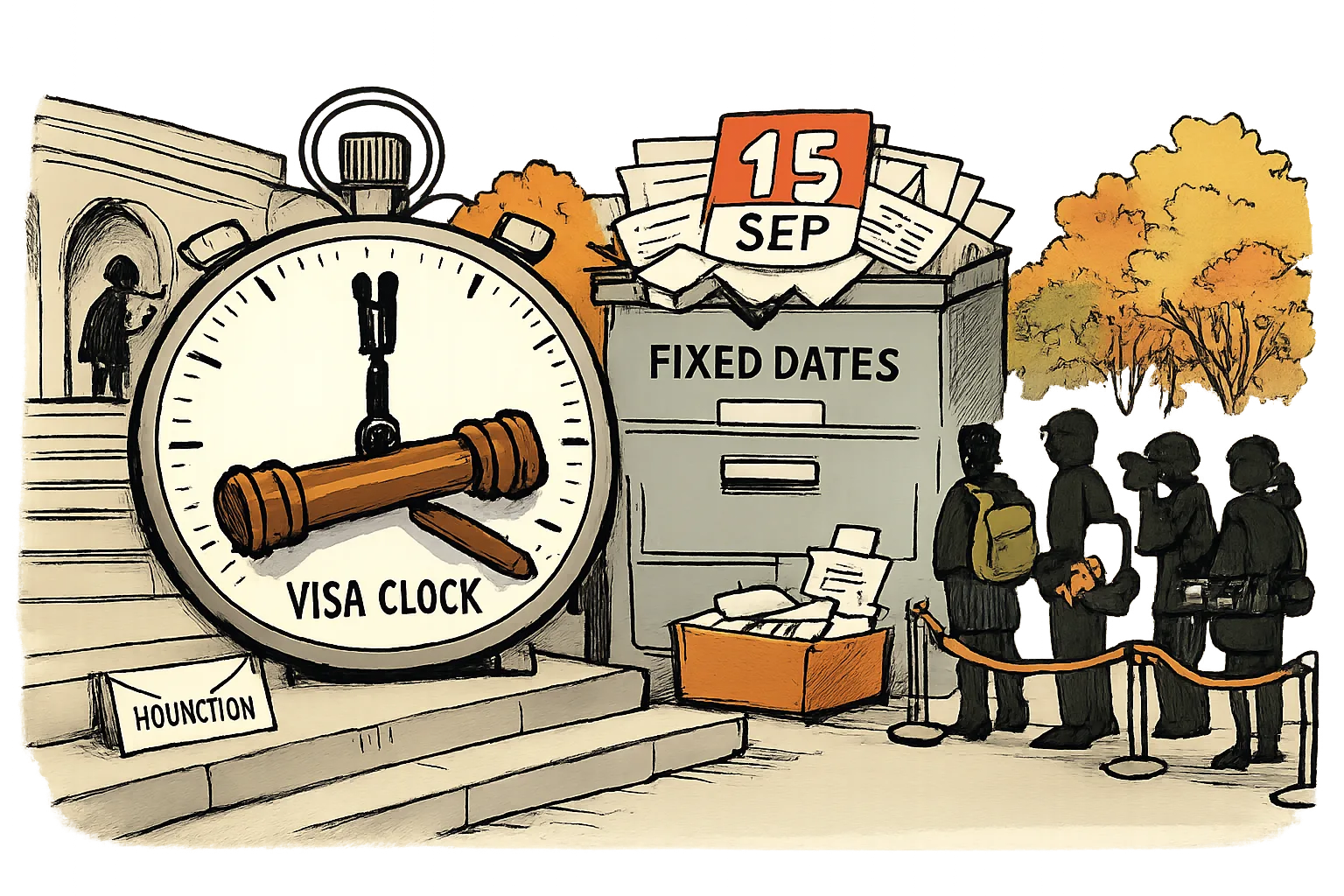
A Massachusetts court has temporarily blocked the planned visa admission-period rule.
Indian students, researchers and media workers in the United States have received a temporary reprieve from a visa rule that was due to take effect on September 15. A federal judge in Massachusetts issued a preliminary injunction blocking implementation of the Department of Homeland Security rule, according to Harvard’s International Office. The court has paused the clock; it has not ended the case.
The rule, published on July 17, would replace the existing “duration of status” system for F-1 academic students, J-1 exchange visitors and I-category foreign-media representatives with fixed admission periods and an extension process. F-1 students would generally face a maximum four-year admission period tied to their programme, while foreign-media representatives would generally receive up to 240 days. DHS said the change would improve oversight and reduce fraud, abuse and overstays.
Harvard says students’ Duration of Status designation remains intact while the injunction holds. The lawsuit, filed by higher-education organisations, unions and journalists’ groups, remains pending, and the government can appeal. The actual court order was not available in the sources reviewed, so its precise reach—including I-category workers, dependants and people already in the US—remains unclear. The administration wanted a date-certain system. The court has given it another date to worry about.