
The Election Commission Has A Form For Everything
Voters may have vanished from the rolls, but the correction window remains heroically open until tomorrow.
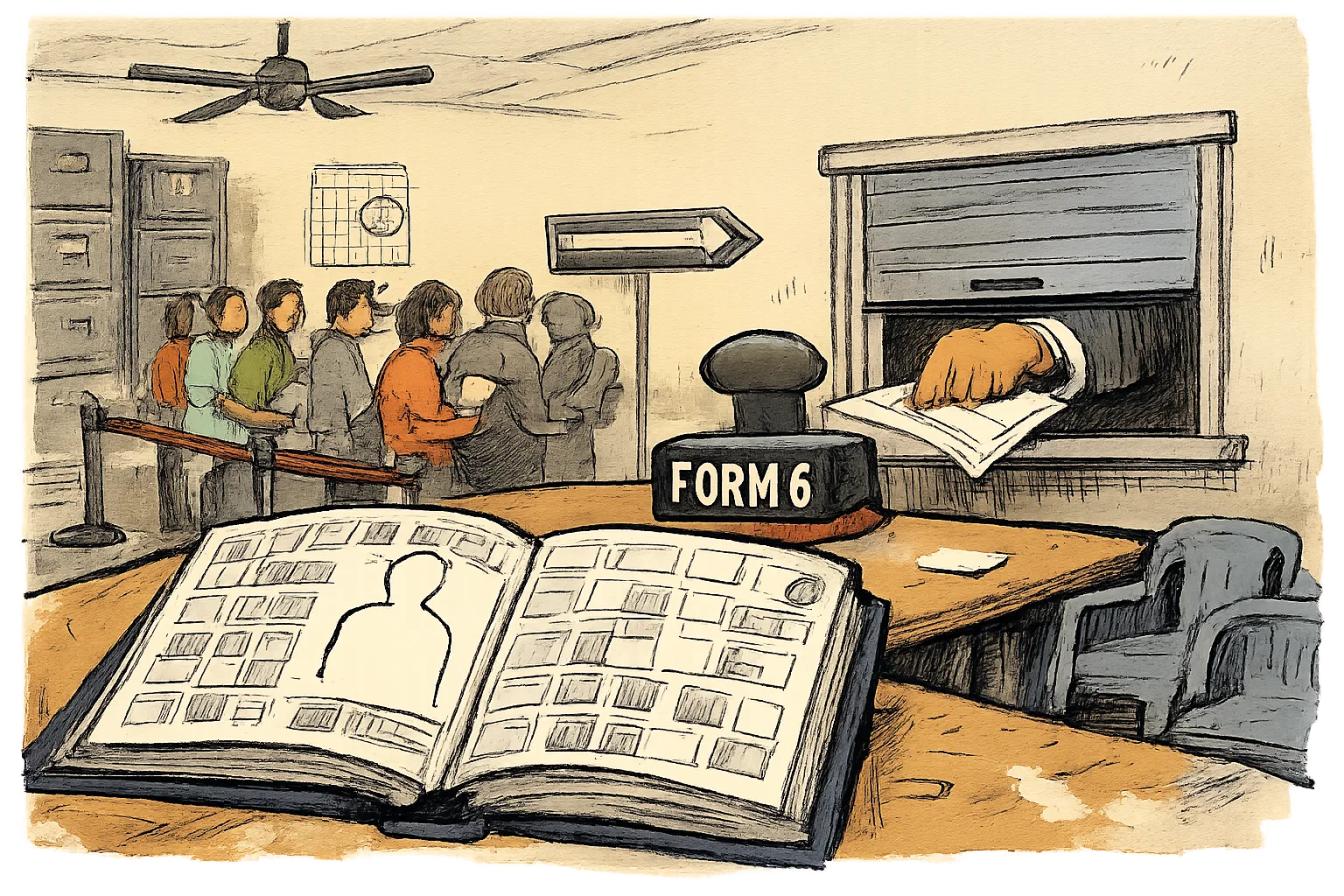
India’s voter-roll argument has reached the stage where democracy is being administered like a delayed railway refund. Rahul Gandhi says that, among 728 residents of Bela Estate near Delhi’s Yamuna bank, only one name remained on the electoral roll. The Election Commission disputes the presentation and points out that applications for inclusion remain open until September 30, with the final roll due on November 4. Nothing says constitutional confidence like telling a citizen they may have disappeared, but the helpdesk is still accepting Form 6.
The ruling-party ecosystem’s preferred vocabulary is “clean-up”. Every deletion becomes purification, every objection becomes conspiracy, and every citizen who cannot prove their continued existence before a deadline becomes an administrative footnote. The Opposition, meanwhile, has upgraded “vote theft” from slogan to nationwide campaign and is demanding Chief Election Commissioner Gyanesh Kumar’s resignation. Rahul Gandhi’s claim that 2.07 crore voters were removed from a Maharashtra draft list has itself been challenged by the Commission, which says the number should not be treated as final. The national political class has thus achieved perfect symmetry: one side says the voters were stolen, the other says they are merely pending paperwork.
The less theatrical problem is institutional. The Indian Express reported that two Election Commissioners raised objections on 14 occasions in 10 months over deletions, restorations, electoral data and Form 6, including a Goa case involving 97 voters. That does not prove a nationwide theft. It does prove that “please trust the process” is doing unusually heavy lifting. A process that can remove names at scale, invite objections later and publish the final answer after the argument has become a national election campaign is not exactly designed to calm citizens.
For Telangana, this is not distant Delhi paperwork. National parties already treat the state as a convenient battleground for arithmetic designed elsewhere. If the roll is opaque, the contest begins before the campaign, before the manifesto and before the voter reaches the booth. The question is not whether every dramatic claim is correct. The question is why the institution meant to settle the argument keeps supplying fresh material for it.
The final electoral roll is due on November 4. Democracy, meanwhile, is waiting for Form 6.
More from The Column
- Revanth’s Land Policy: Blame Everyone, Register NothingTelangana’s property owners get committees and explanations; KCR’s family land gets a 30-day countdown.
- Tollywood’s Biggest Opening Is Still the Press ReleaseIn Telugu cinema, the audience arrives last, after the trade report, victory poster and compulsory fan argument.
- Praja Palana Arrives With a Family-Sized FootnoteAfter 1,000 days, Telangana’s government has perfected the art of turning promises into commemorative furniture.
- Andhra’s Jobs-for-Youth Machine Misplaces the RulebookSixteen thousand vacancies are impressive. So is the government’s ability to make 372 appointments require a legal footnote.