Adults pick partners. Courts agree.
Allahabad HC’s record already says the State, the law and society don’t get to choose your spouse. A new report claims a fresh interim hearing said the same — but the order isn’t on the court site yet.
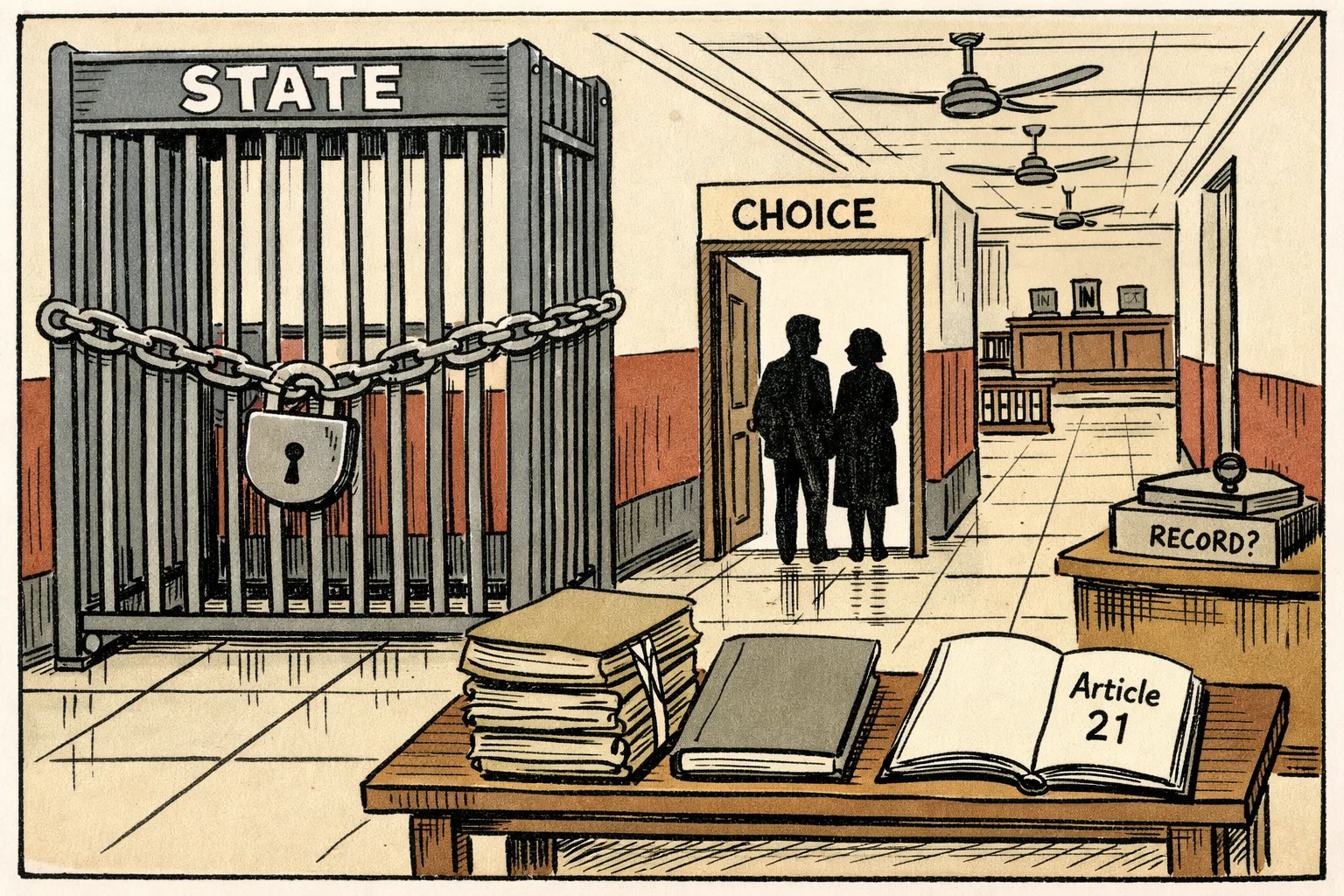
The constitutional principle is settled; the reported interim order remains unavailable on the court record.
Content type: analysis
A claim doing the rounds says the Allahabad High Court told Uttar Pradesh police and a father to produce two adult sisters who say they converted and want to marry by choice — and noted that if their decisions are voluntary, anyone interfering is trampling constitutional rights. That squares with what the court has said before. The missing piece is the actual July 30 order; it isn’t on the court’s searchable record yet, so treat this as an unverified interim proceeding, not a grand pronouncement.
On the record, the Allahabad High Court has already spelt it out: the right to live with a partner of one’s choice, across religions, flows from Article 21. “Neither State, nor law, nor society can dictate the choice of partner,” it held in Kajal Prajapati v. State of U.P., while noting that UP’s anti-conversion law doesn’t magically ban interfaith relationships; allegations still need proof, not moral panic.
That principle matters beyond Uttar Pradesh. Every time a BJP-run state weaponises “conversion” to police adults’ choices, or a Congress outpost looks away while families and cops play gatekeeper, courts end up doing basic civics duty. Telangana doesn’t need a lecture on federalism from parties that can’t manage adult agency without a FIR. The constitutional line is clear; the politics keeps trying to smudge it.
What’s still missing for the latest reported hearing: the case number, the order, and what happened on the next date. Until that lands on the record, bank the settled part: adults choose. The State — saffron, hand or cycle — does not.