Congress MLA’s bus outreach leaves one question unanswered
Malreddy Ranga Reddy calls the contact affectionate. The video documents contact; the Congress government still has not said whether it was welcome.
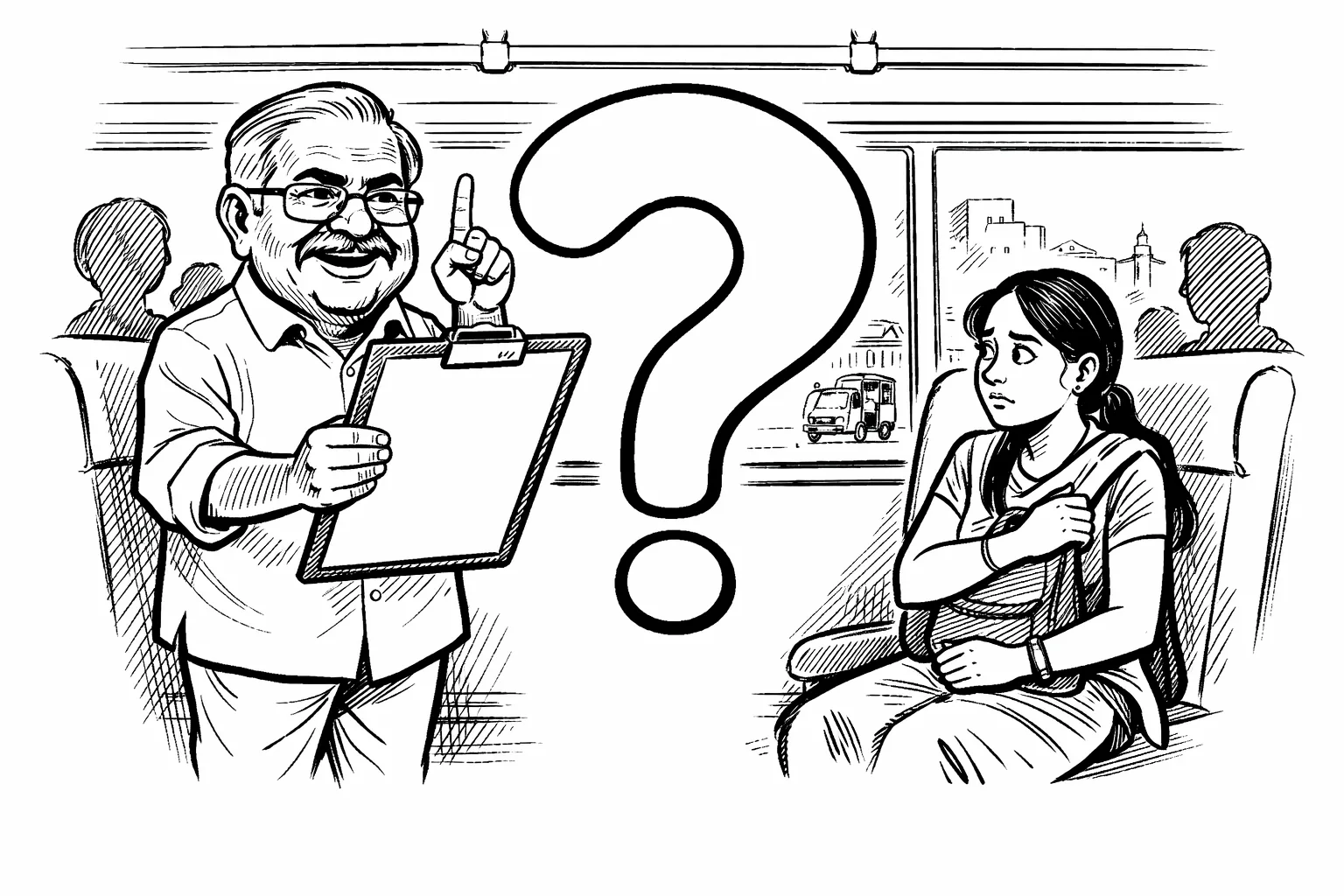
The outreach tour documented contact, but not whether it was welcome.
The Congress government in Telangana sent Ibrahimpatnam MLA Malreddy Ranga Reddy onto a moving TSRTC bus to inspect the Mahalakshmi free-travel scheme. The resulting video documented the one thing the scheme’s public-relations tour did not need: physical contact between the MLA and a female student.
Reports on the October 6 incident describe Ranga Reddy speaking with two students, holding one student’s hand and appearing to pull her closer before holding her hand again. Another account describes contact with her elbow and forearm. The footage documents contact. It does not establish the student’s age, identity, consent or whether she made a complaint. Those details should not be invented merely because the internet is impatient.
Ranga Reddy, 70, says the interaction was marked by “fatherly affection” and that the bus was turning. He said, “I hold immense respect for women and the young women in the bus were like my daughters,” and alleged that the BRS and its paid teams circulated a misleading version of the incident. R. S. Praveen Kumar called for action by the Women’s Commission and police machinery, and asked whether the conduct amounted to an offence. That is a demand, not evidence that a case has been registered.
The MLA’s explanation speaks to what he says he intended. It does not answer whether the contact was welcome or appropriate for a ruling-party legislator conducting outreach under a women-focused scheme. The Telangana Congress has not publicly supplied that answer. Nor have the Women’s Commission, police or TSRTC publicly confirmed a complaint or inquiry in the material reviewed.
This is the familiar Congress method: stage a photo opportunity, then leave the difficult accountability question on the bus. The government that wants credit for women’s mobility cannot treat women’s boundaries as an optional footnote.