
Hyderabad gets three corporations, accountability gets a draft
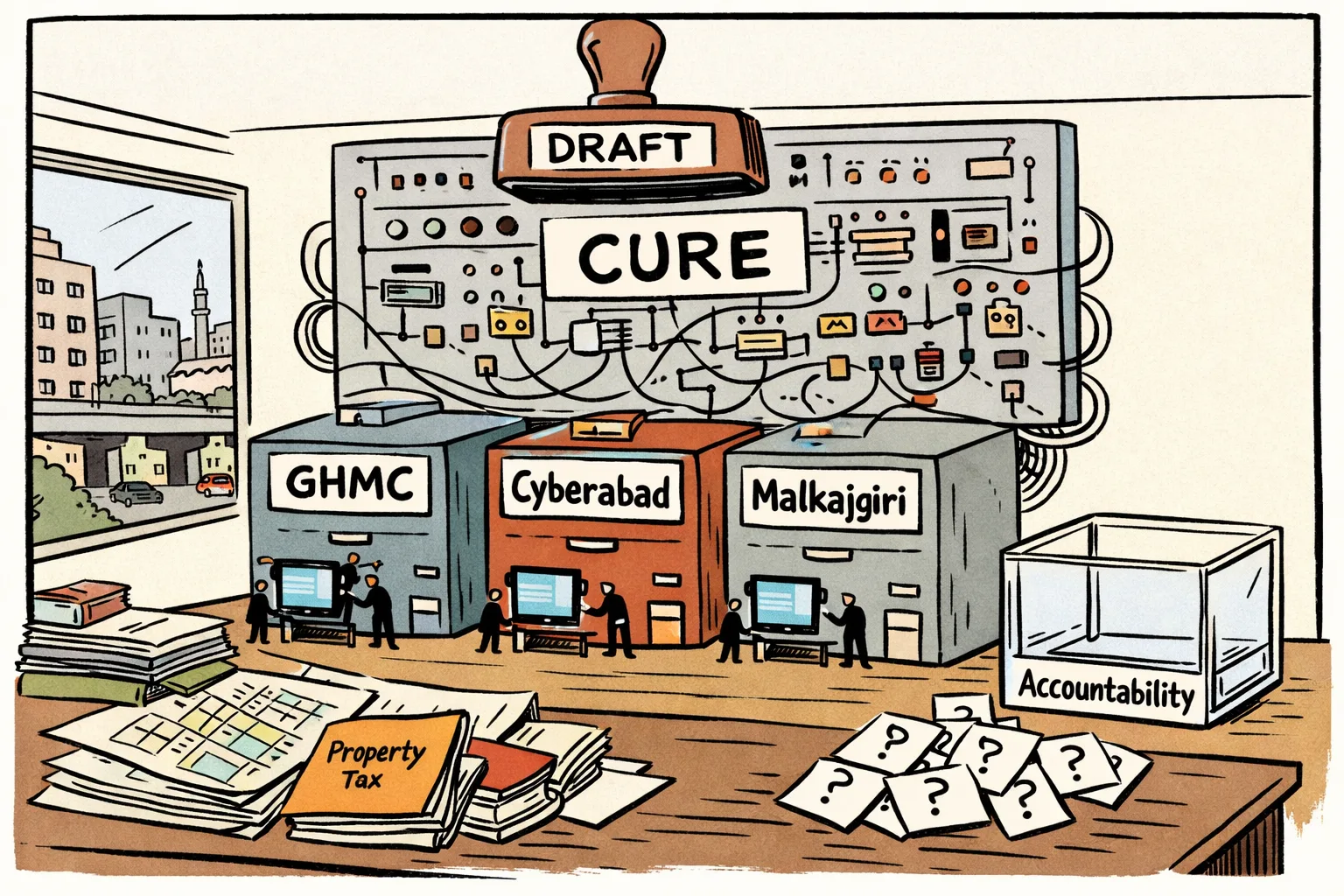
The proposed CURE Bill promises integrated governance and simpler services. Its status is still draft, while the questions about elected power, ward committees, funding and tax impacts remain unanswered.
The proposed CURE Bill is open for feedback until July 24.
Hyderabad’s civic machinery has already been split into three corporations. Now the Telangana government wants a new draft law to coordinate them — with a Chief Minister-led apex council, digital services and a new property-tax system. Accountability, meanwhile, appears to be waiting for the final version.
The Telangana Core Urban Region (Integrated Governance) Bill, 2026, was released for public feedback on July 5, with submissions invited until July 24. It proposes replacing the 1955 GHMC Act and creating a metropolitan framework around the Cyberabad, Malkajgiri and remaining Greater Hyderabad corporations. The three-corporation structure was notified separately on February 11 under the existing law. (Sources: Telangana Today; Telangana government order.)
Reports say the draft could introduce consolidated civic billing, fixed timelines for building permissions and a capital-value method for property tax. The government has not published sample tax calculations in the material reviewed. Janaagraha’s assessment gave the draft a 28% score under its city-systems framework, above the existing GHMC Act’s 23% but below Bengaluru’s 38%, and flagged gaps in local governance, participation and accountability.
Resident groups and elected representatives have also questioned centralisation and the powers left to mayors, councillors and ward-level bodies. The government invited feedback; a public, itemised response to those objections has not been located. Hyderabad has three corporations. The accountability machinery is still in consultation.