Modi’s Parliament has stayed open 88 days without an explanation
The Monsoon Session ended on August 13. Neither House had been prorogued by November 9, leaving a faster route to a possible sitting while delimitation hangs over Telangana.
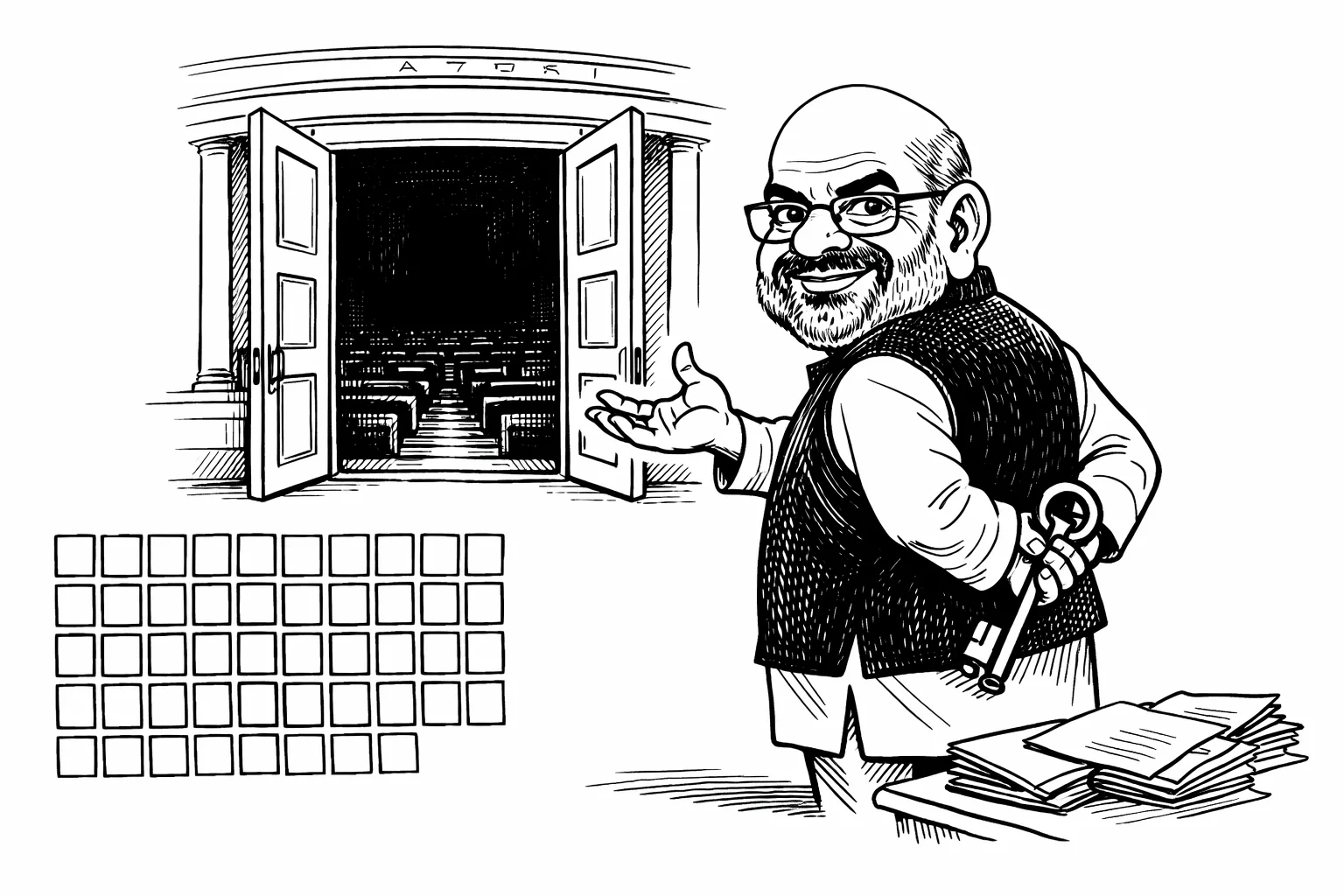
Parliament remained open after the Monsoon Session ended on August 13.
Parliament’s Monsoon Session was adjourned sine die on August 13, 2026. By November 9, neither the Lok Sabha nor the Rajya Sabha had been prorogued, producing an 88-day gap and surpassing the reported 87-day record from 2008, according to parliamentary reporting. No special sitting had been announced.
That is unusual, not automatically illegal. Article 85 sets a six-month limit between the last sitting of one session and the first sitting of the next, but does not prescribe a deadline for proroguing a House after adjournment sine die. The Ministry of Parliamentary Affairs handbook says prorogation normally follows within two to four days. Keeping the existing session alive also preserves a quicker route to reconvening it: at least two days’ notice, rather than the 14 days generally required for a fresh session.
The BJP-led Union government has not publicly explained why it has chosen to keep this procedural door open for nearly three months. Congress general secretary Jairam Ramesh alleges that the arrangement gives Union Home Minister Amit Shah time to assemble a two-thirds majority for delimitation-related bills. That motive is not established by the public record. The fact that the government has not bothered to explain the delay, however, leaves the allegation with an unusually large empty space around it.
The stakes are not abstract for Telangana. The constitutional freeze on reallocating Lok Sabha seats runs until the first census after 2026. Telangana has 17 seats, and southern states fear that a population-heavy formula could reduce their relative political leverage even if some seat counts rise. The Union government says Telangana’s seats could increase to 26 and its national share from 3.13% to 3.18%. That is a projection, not an enacted allocation.
Delhi’s legal defence may be sound. Its political explanation is missing. For a government that wants citizens to trust the delimitation exercise, leaving Parliament open for 88 days and saying nothing is not transparency; it is a procedural cupboard with the light switched off.