Mulugu’s first flood alert, then off
Ramannagudem hit the first-warning mark around 14.83 metres and Mulugu issued the alert — then withdrew it as inflows eased. The record is 2025, not “now”, and the trigger was rising Godavari from upstream catchments — the low-pressure backstory is still unproven on the record.
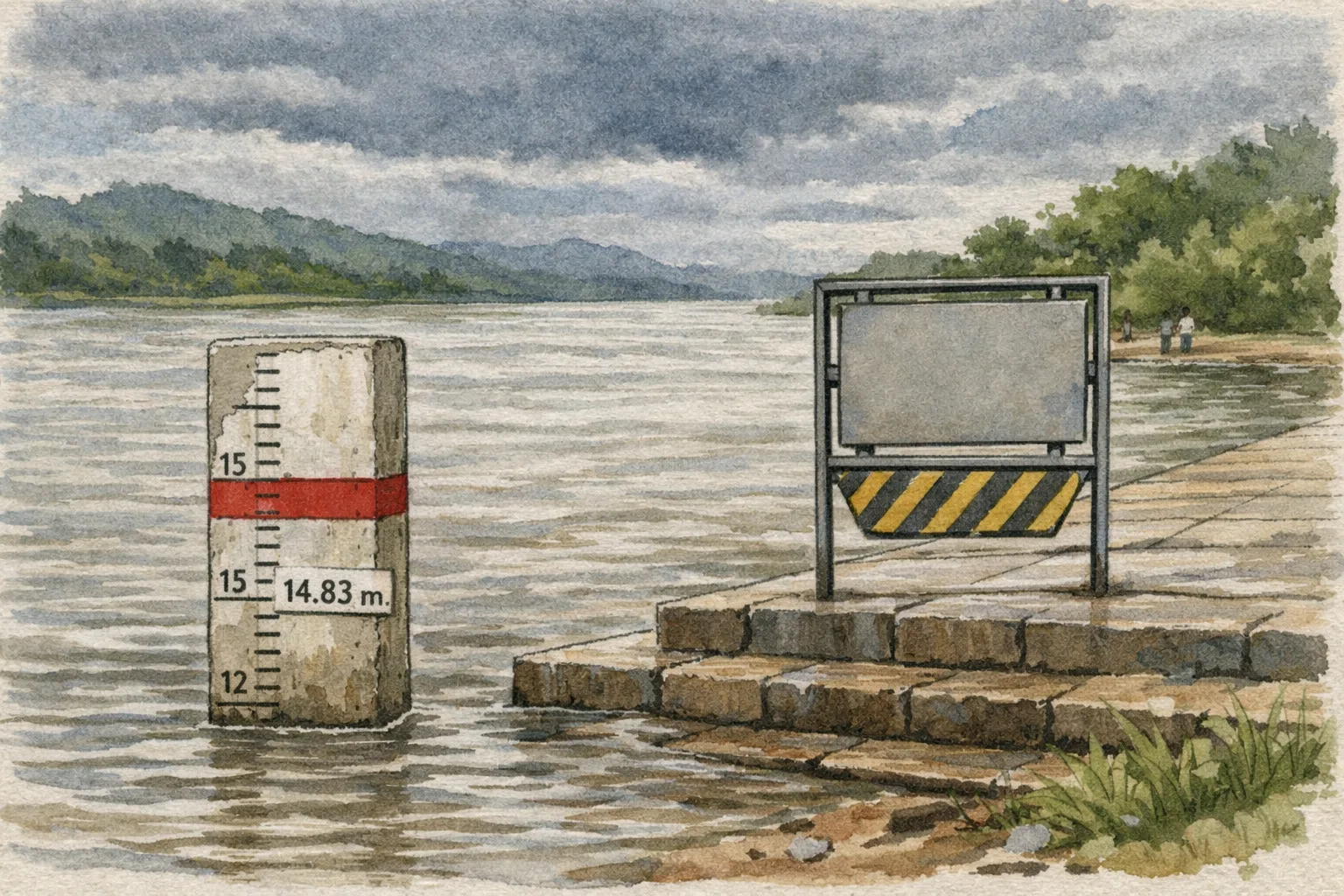
The first flood warning was issued at Ramannagudem and withdrawn after the river level receded.
Mulugu district hit the first flood warning on the Godavari after the gauge at Ramannagudem Pushkar Ghat in Eturnagaram touched roughly 14.8–14.83 metres, according to contemporaneous reports. The warning was later withdrawn once inflows dipped below the trigger level, with Collector T.S. Devakar announcing the pullback. The episode sits in late August–early September 2025, not this week, however some summaries have recycled it as current.
The figure that keeps repeating is 14.83 metres — effectively the first-warning mark. One report pegs the threshold at +73.32 ft (about 14.82 m) and notes Ramannagudem rose from 13.89 m the previous evening; another says officials were tracking inflows from the Indravati, Pranahita and Taliperu catchments as levels built. During that wider spell, upstream barrages reported heavy throughflows.
What we can say on record: Mulugu issued the first warning when Ramannagudem reached the mark and withdrew it when it fell back. What nobody serious has put their name to yet: an exact 2.05 am timestamp, a single culprit system, or a neat line from any one barrage to that 14.83 m reading. The IMD’s 31 July 2025 note does forecast rain over Telangana but does not tie a named low-pressure system to this gauge.
Public services are about timely, accurate alerts — and timely withdrawals when the water recedes. On that, Mulugu did the job. The national parties can keep shouting into the rain; the river answers to the gauge, not to Delhi or Amaravati talking points.