Resident hours: Centre talks ‘reasonable’, states stall
A Supreme Court PIL on brutal duty hours finally has Delhi saying the right word — “reasonable” — while kicking enforcement to the states. Telangana’s doctors don’t need slogans; they need rosters that obey the law.
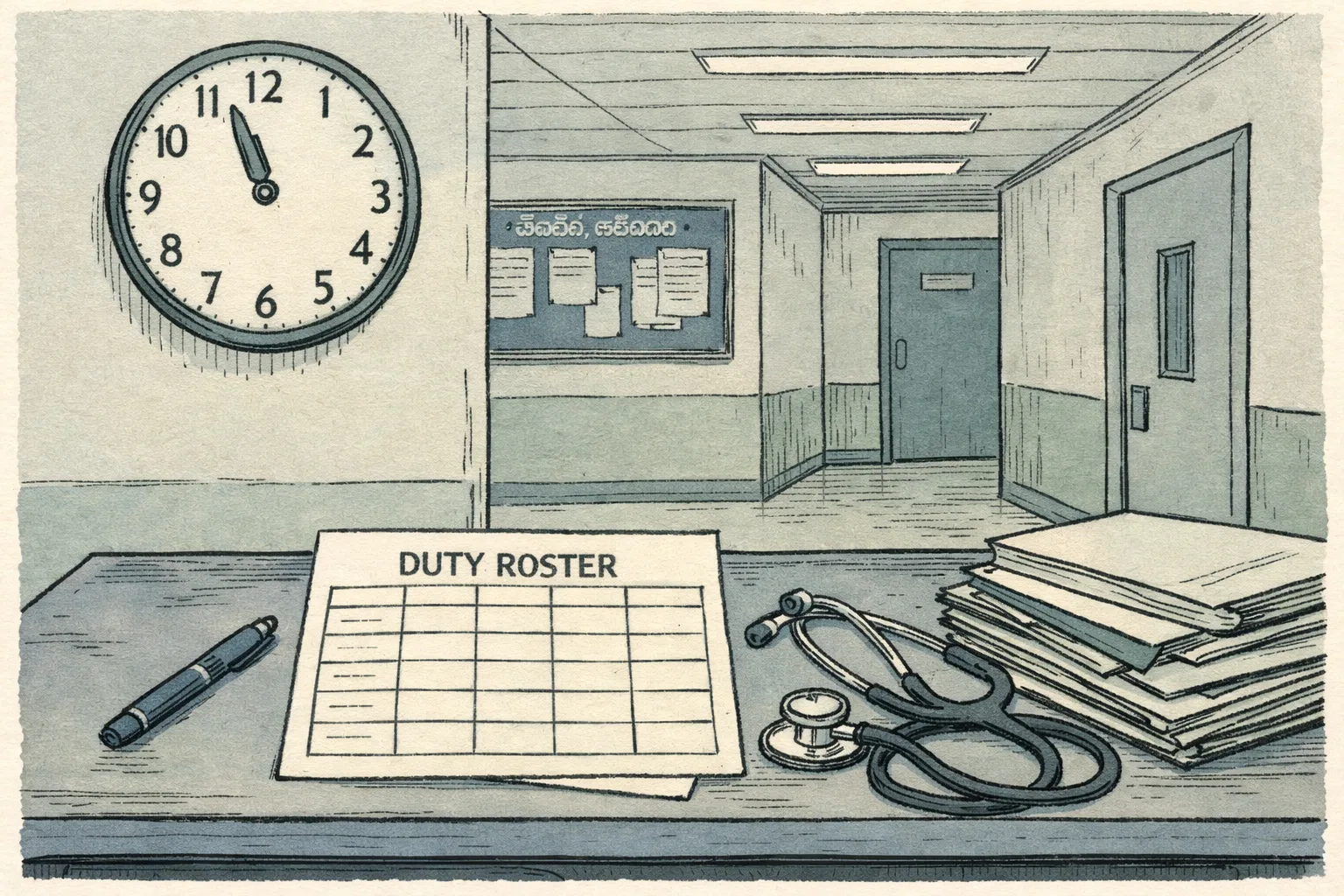
A duty roster at a Telangana teaching hospital.
News | Healthcare
Resident doctors hauled the Union government to the Supreme Court over punishing duty hours. The case — United Doctors Front v Union of India (Diary No. 21183/2025) — was listed on 22 August 2025, with notice to the Centre and the National Medical Commission, according to the Supreme Court’s cause list.
Reports on the filings say the NMC backed “reasonable working hours” and “reasonable time for rest” under its 2023 regulations, while pointing out that enforcing caps lies with state governments and individual institutions. The 1992 Uniform Central Residency Scheme, cited in case summaries, fixed ordinary limits at 12 hours a day and 48 hours a week — numbers many residents will recognise mainly from textbooks, not duty rooms.
Secondary reports describe the NMC drawing attention to exhaustion and long consecutive shifts, and record UDF’s claim of over 150 suicides in five years. Those specifics are attributed; the NMC affidavit itself was not available in the public domain when we checked.
For Telangana, the ask is simple: publish rosters, enforce caps, protect patient safety. The BJP-led Centre has discovered the word “reasonable”; Congress-run states that run teaching hospitals can try discovering enforcement next.