SC flags UAPA delay, nudges Centre
No, it didn’t order a one‑year finish. It warned that might be “far‑fetched”, and told the Union to get serious about exclusive NIA courts so trials can actually move.
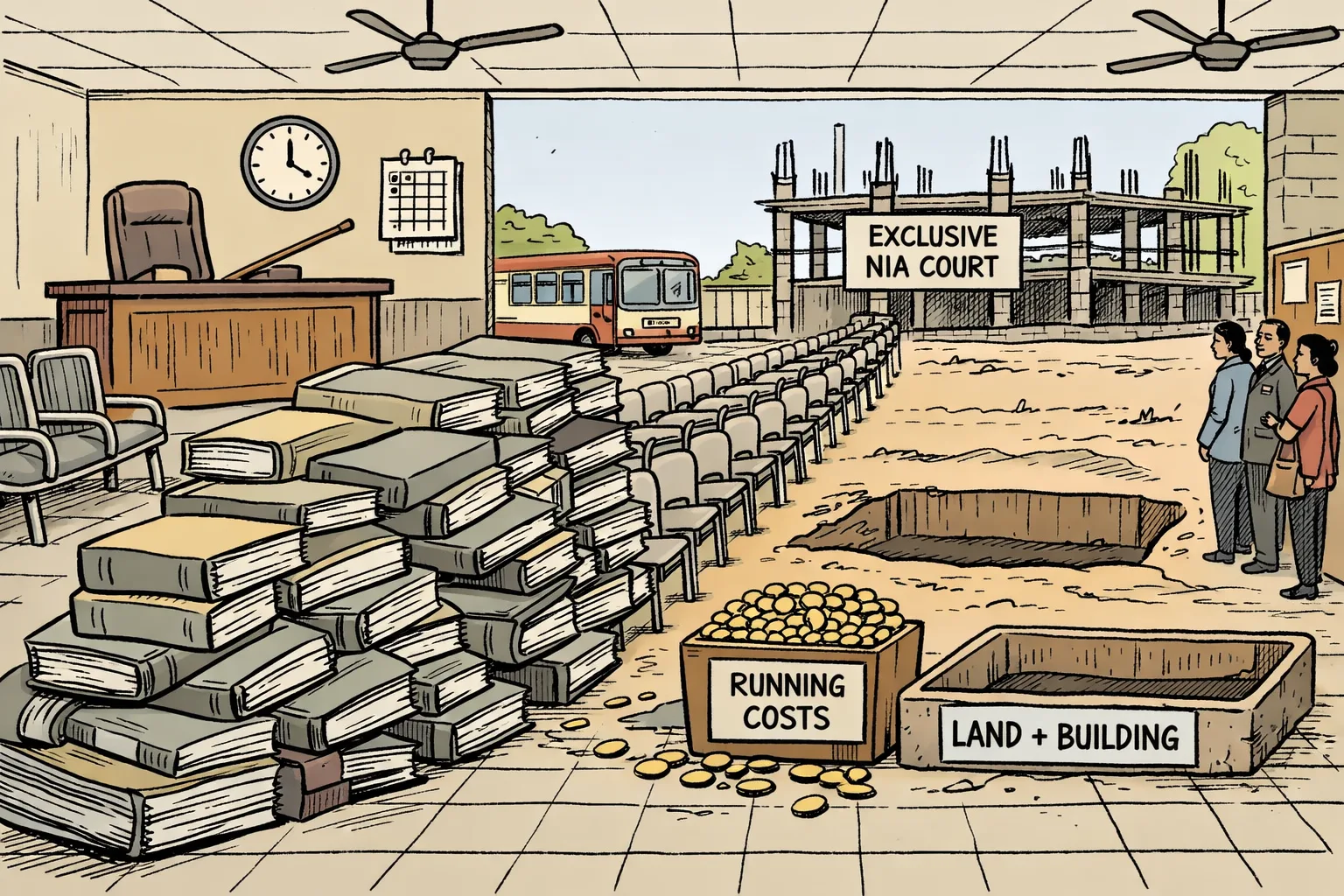
The Supreme Court has called for dedicated courts and faster capacity-building for UAPA and NIA trials.
The Supreme Court has put a clock on the system, not a deadline on a judge. In Md. Heydaitullah v. NIA — the alleged ISIS cyber‑radicalisation case — the Court noted charges weren’t even framed and the prosecution plans to examine 125 witnesses. “It may be far‑fetched to presume that the trial will be concluded within a year or so,” the order recorded. The accused has been in custody since October 2022; indefinite wait is not an option, the bench said. (Source: Supreme Court daily order, Jan 6, 2026.)
Instead of press‑conference timelines, the Court pushed for capacity: an exclusive special court to take UAPA/NIA matters day to day. On Feb 10, it registered a suo motu matter on creating such courts and issued notice to 17 states, including Delhi and Telangana, after the Union produced its reimbursement norms — which notably don’t cover land or construction. States can earmark an existing court; the Centre says it will reimburse some running costs. (Source: SC order, Feb 10, 2026.)
Two takeaways for Telangana readers: first, the bottleneck is national and structural, not local grandstanding. Second, when the BJP‑led Centre drafts norms that won’t pay for buildings and then wonders why trials crawl, the crawl is the policy. The Court has done the easy part — pointing at the jam. Clearing it now needs money and intent, not slogans.