Supreme Court closes protest FIRs; 2,873 remain
The court quashed FIRs linked to July student protests and barred fresh cases for the same incidents, while permitting one narrowly limited Delhi FIR.
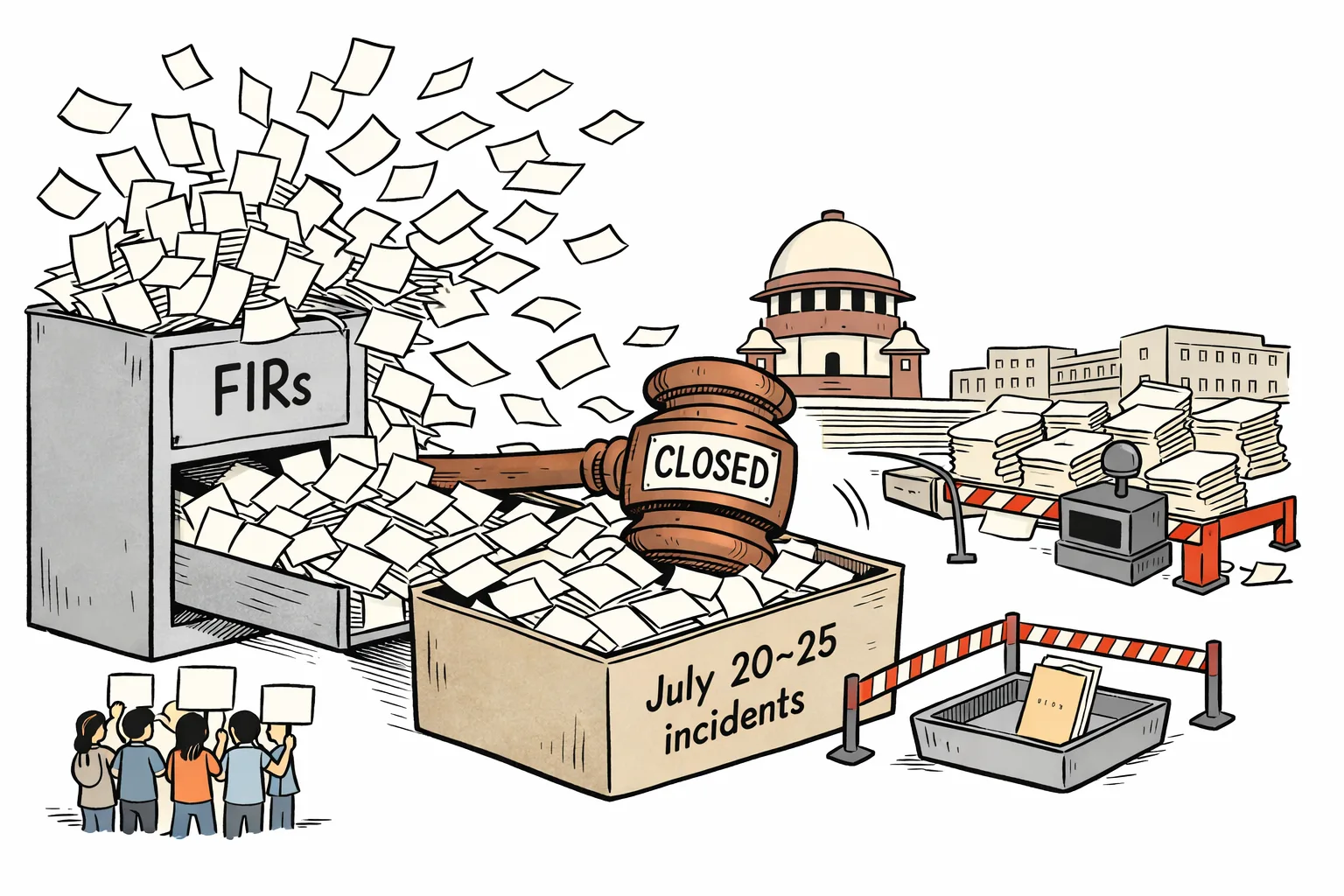
The Supreme Court closed FIRs linked to the July student protests, with one limited Delhi case permitted.
The Supreme Court has quashed FIRs linked to student protests held from July 20 to 25, including cases identified by Delhi Police and the governments of Bihar, Maharashtra, West Bengal and Assam. It also directed that FIRs arising from the same incidents elsewhere in India “shall not be pursued or investigated and shall be treated as closed for all intent and purposes”. The paperwork has, at least for once, been told to stop multiplying.
A bench led by Chief Justice Surya Kant invoked Article 142 in the case of Yashovardhan Azad and Others v. Union of India and Others. The court said the protests involved young people raising demands connected to examination issues, including the NEET-UG controversy, and cited their “future prospects”. It barred fresh FIRs for the same incidents, but allowed Delhi Police to register one new FIR involving 2,873 people, limited to allegations of bodily harm and property destruction. The court did not declare those people guilty.
The order followed assurances recorded from the Centre, including a commitment to formulate a nationwide compensation policy within three months. The Cockroach Janta Party withdrew its proposed September 5 protest march after the ruling and the assurances. The order is limited to the case’s “peculiar facts and circumstances” and is not a binding precedent—so the government has received relief from its FIR problem, not a permanent lesson in governance.