
Supreme Court examines Vande Mataram’s criminal clause
The court will consider whether refusing to sing can attract punishment. It has not said that citizens cannot be punished.
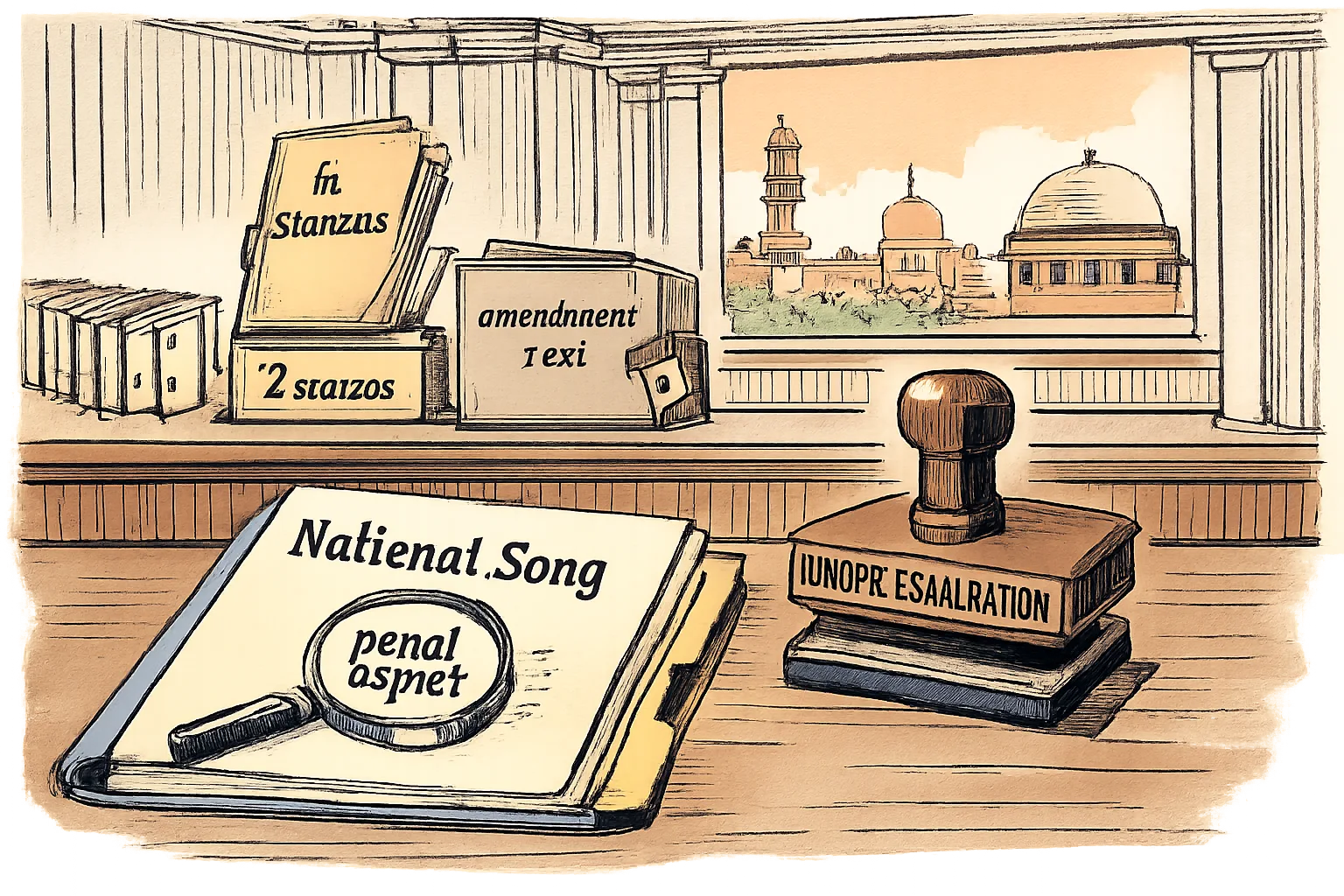
The Supreme Court is examining whether refusal to sing can attract criminal consequences.
The Supreme Court will examine whether refusing to sing Vande Mataram can attract criminal consequences. It has not ruled that citizens cannot be punished, despite a more ambitious version of the claim doing the rounds.
The petition was filed by Carnatic vocalist T.M. Krishna against the Union government’s six-stanza protocol and a 2026 amendment extending the Prevention of Insults to National Honour Act to the National Song. The bench of Chief Justice Surya Kant and Justices Joymalya Bagchi and V. Mohana reportedly said it may examine the penal aspect. The court did not decide whether the official version should contain two stanzas or six. [10net.in; Hindustan Times]
The Home Ministry’s February 6, 2026 document describes its instructions as “general information and guidance” on the official version, occasions for singing or playing it, and proper decorum. It does not, in the accessible text reviewed, say that merely refusing to sing is itself a crime. The precise wording of the amendment—and whether it targets refusal, disruption or deliberate interference—still needs confirmation from the enacted text. The Union government’s formal position in this petition has not been established. For now, the court is examining a question. It has not delivered the slogan’s preferred verdict.