Supreme Court sends 37 Mustafabad forms for checking
Officials reportedly found 36 applications false or fabricated. The Court ordered verification, not a finding of vote theft.
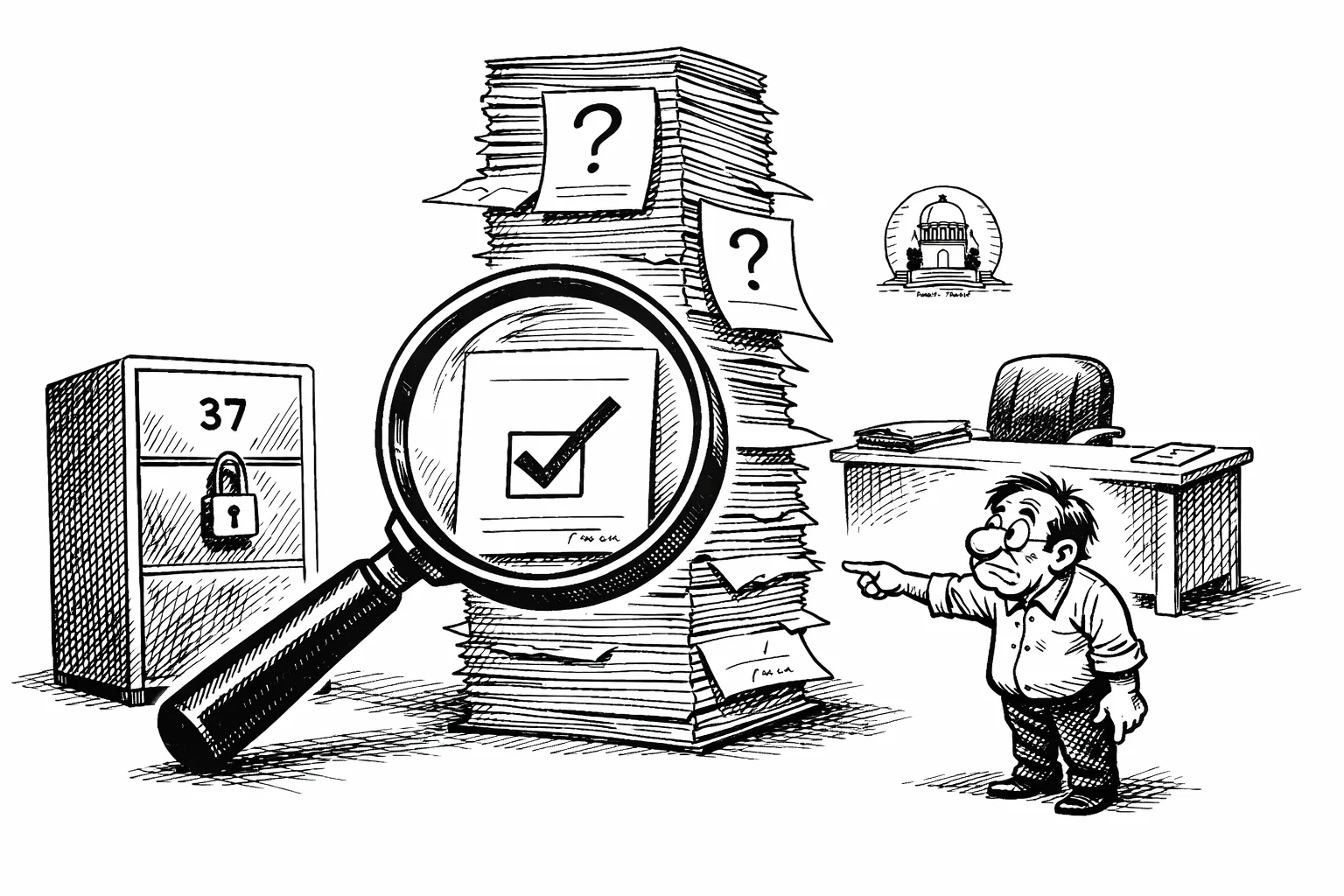
The Court ordered verification of the Mustafabad applications.
The Supreme Court has ordered the Election Commission of India and Delhi’s election authorities to verify allegations that Form 7 applications were falsely used to seek deletion of voters in Mustafabad. It did not declare the applications fraudulent, identify a political party or find “vote theft”. The Court, on 19 November 2026, disposed of Ali Mehdi’s petition without ruling on the merits and directed the authorities to verify the allegations and take remedial action if required. (LiveLaw)
The complaint concerns 37 Form 7 applications. According to reports citing the North East Delhi election authorities, officials found three voters described as dead alive at their registered addresses, and found 33 of 34 people described as absent or permanently shifted at those addresses. One case was reportedly found to be genuine, while the electoral registration officer filed a police complaint seeking action. That is a serious administrative failure if confirmed. It is not yet a judicial finding that a party engineered it.
Form 7 is the official route for objecting to another elector’s entry or seeking deletion. The Delhi Chief Electoral Officer’s form places the burden of proof on the applicant and warns that false declarations are punishable under Section 31 of the Representation of the People Act, 1950. The mechanism is not subtle: someone must state the ground, stand behind it and provide the required declaration. If identities were used without consent, the system did not merely misplace paperwork; it accepted a challenge to citizens’ voting rights without doing the elementary work of checking who filed it.
The available record reportedly links some applications to people listed as BJP booth-level agents, while some of those individuals denied filing or signing them. That is not evidence that the BJP organised the filings, and the Supreme Court has made no such finding. The next test is therefore not another television-sized accusation. It is the forms, signatures, submission trail, verification report and the ECI’s answer. Until then, the Court has ordered the election machinery to check whether the machinery itself was being gamed.