
Google’s AI Flagship Forgets The Hardware Revolution
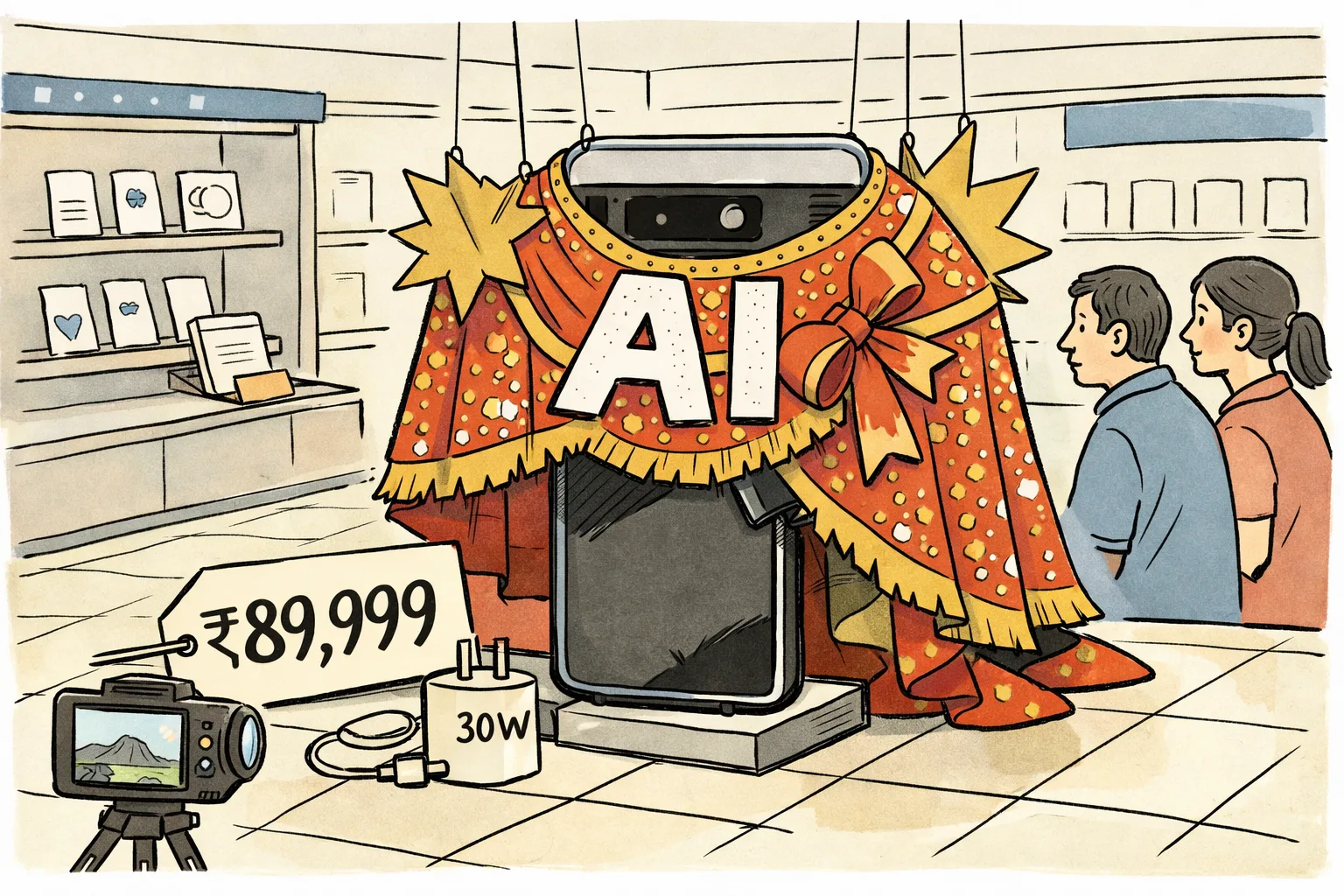
Excellent cameras and clean software cannot fully disguise a familiar phone wearing an expensive new marketing costume.
This is Telangana.Social's opinion — a house verdict formed from the trailer, cast, buzz and reception, not a substitute for seeing it yourself.
Google Pixel 11 is a very good phone with the unfortunate confidence of a mediocre corporate presentation: it keeps calling sensible improvements a revolution and hopes nobody checks the invoice.
The headline upgrade is Gemini Intelligence, joined by features such as Rambler dictation, HiLight and deeper voice interaction. Some of this is genuinely useful, particularly Google’s photography software and the clean Android 17 experience. But the AI pitch also has the unmistakable aroma of a feature list written during a brainstorming session that ran out of hardware.
The camera remains the Pixel 11’s strongest argument. Its 48MP main sensor, 13MP ultrawide, 10.8MP telephoto and 10.5MP selfie camera deliver the dependable point-and-shoot results Pixels are known for. Reviewers have praised its image quality, and rightly so: Google still understands that most people want a good photograph, not a part-time degree in computational photography. The standard model does, however, leave the more extravagant camera hardware to the Pro range, because even Google’s generosity has a product-tiering department.
The Tensor G6 is faster than before, but it is not a performance champion. Samsung and Apple remain ahead in demanding workloads, while gaming gains are modest. At ₹89,999, “good enough” performance is a rather awkward phrase to use about a flagship, especially when competitors are happy to turn benchmark charts into marketing confetti.
Battery life is improved, and Google’s claim of more than 30 hours is plausible under carefully selected conditions. It belongs in the same category as a hotel’s “short walk from the beach”: technically defensible, but best approached with sensible footwear. The 4,985mAh battery should see many users through a day, yet 30W wired charging feels distinctly undercooked at this price. A claimed 55 per cent in 30 minutes is useful, but hardly a reason to gather the family around the USB-C port.
The AI tools are clever, though their long-term value is less certain. Rambler’s promise of effortless, accurate dictation has already encountered the messy reality of actual writing, while features such as HiLight may be used enthusiastically before joining the great forgotten-app drawer in the sky. Google has built genuinely helpful software, then promoted every convenience as though it has personally taught the phone to negotiate world peace.
The seven-year software-support promise is substantial and gives the Pixel 11 a meaningful advantage for buyers who keep phones for years. The clean interface, excellent camera processing and reliable updates make this one of the more appealing premium Android options in India. The problem is that the design remains familiar, the hardware changes are restrained and the price has become decidedly adventurous.
Launch offers soften the blow with up to ₹7,000 cashback, a ₹9,000 exchange bonus and three months of YouTube Premium. That is less a bargain than Google leaving a trail of vouchers behind its pricing decision. If the effective price falls meaningfully through discounts or exchange, the Pixel 11 becomes easier to recommend. At the full ₹89,999, it asks buyers to pay for Google’s confidence as well as its phone.
The Pixel 11 is a polished camera-and-software flagship, not the hardware breakthrough its marketing would like you to believe. Buy it for the camera and long support; skip it if you want class-leading performance, fast charging or an upgrade that feels unmistakably new. Google has delivered a superb phone, then priced it like a miracle.
The verdict: Buy it for the camera, otherwise skip it at ₹89,999.