
A Brilliant Camera Wearing a Very Expensive Phone Costume
vivo builds one of India’s most ambitious camera phones, then prices the supporting handset like a luxury tax.
This is Telangana.Social's opinion — a house verdict formed from the trailer, cast, buzz and reception, not a substitute for seeing it yourself.
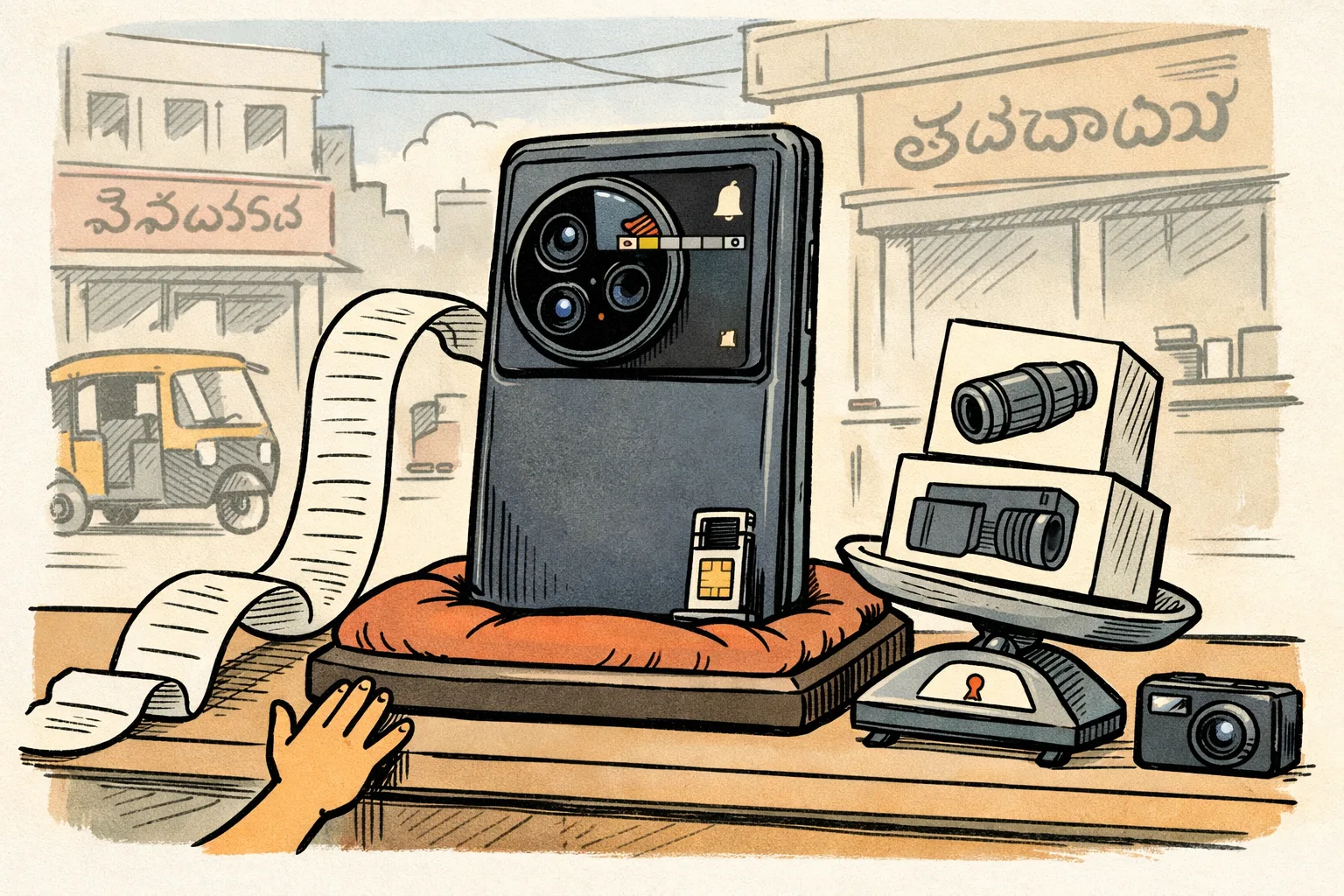
vivo’s X300 Ultra is not pretending to be a normal flagship. It is a professional camera with a SIM tray, launched in India at ₹1,59,999 for 16GB RAM and 512GB storage. Add the Telephoto Extender Gen 2 Ultra and Imaging Grip Kit and the bill climbs to ₹1,95,997, which is less a bundle than a financial cry for help.
The irritating part is that the camera claims are largely credible. The dual-200MP system, Zeiss co-engineering, 50MP ultrawide and 85mm periscope telephoto produce the sort of detail, low-light performance and reach that make conventional phone cameras look like they have been sent to cover a school annual day. Reviewers have broadly praised the imaging, and the phone’s extreme telephoto ambitions are more interesting than the usual annual ritual of making portraits slightly brighter.
The video package is even more serious: 4K at 120fps, 10-bit Log, Dolby Vision HDR, LUT support, stabilisation, Pro Video controls and teleprompter features. Digital Camera World has called it a genuine iPhone challenger for serious video work, which is a meaningful compliment in a category where many Android brands turn ‘cinematic’ into a wallpaper and a slow-motion launch film.
Performance is predictably excessive. The Snapdragon 8 Elite Gen 5, up to 16GB RAM, up to 1TB storage, a 6.82-inch 144Hz AMOLED display and a large battery with 100W wired and 50W wireless charging leave very little to complain about on paper. It has enough power for gaming, editing and multitasking, although some of that silicon may spend its life helping OriginOS decide which notifications you are allowed to see.
That software remains the X300 Ultra’s least convincing supporting actor. Reviewers have flagged bloatware and image processing that can become overly sharp and bright. User discussions also point to aggressive background-app management, unreliable notification behaviour and doubts about whether vivo’s software support is worthy of hardware this ambitious. A camera phone can forgive a large bump. It cannot demand patience every time an app wants to speak.
The design is functional rather than beautiful, and the enormous camera module makes the phone look like it has swallowed a compact camera and is refusing to discuss the incident. The optional attachments are genuinely fascinating, but they expose the central contradiction in vivo’s pitch. The company sells a phone that supposedly replaces a dedicated camera, then charges nearly ₹36,000 extra for the pieces that make it behave more like one. Liberation, now available in three separately billed boxes.
At ₹1.6 lakh, the X300 Ultra is competing with the iPhone Pro Max and Galaxy Ultra, while asking buyers to care deeply about manual video, long-range telephoto and professional imaging workflows. For photographers and filmmakers who will actually use those tools, the price is easier to defend: this is one of the most capable camera phones available in India. For everyone else, it is an extraordinarily expensive way to photograph lunch with enough optical ambition to identify the restaurant’s ceiling fan.
The vivo X300 Ultra is a remarkable imaging machine, but as a mainstream phone it is overbuilt, overpriced and held back by software that still behaves like an afterthought. Buy it only if the camera is the point; otherwise, buy a superb flagship and a small camera, because this phone has priced itself out of ordinary reality.
The verdict: Buy it only for serious mobile photography; everyone else should skip it.