BCI tried disciplining NALSAR students. The Court disagreed
The Supreme Court reportedly held that bar councils cannot discipline law students before they are enrolled as advocates, after a row involving NALSAR students in Hyderabad.
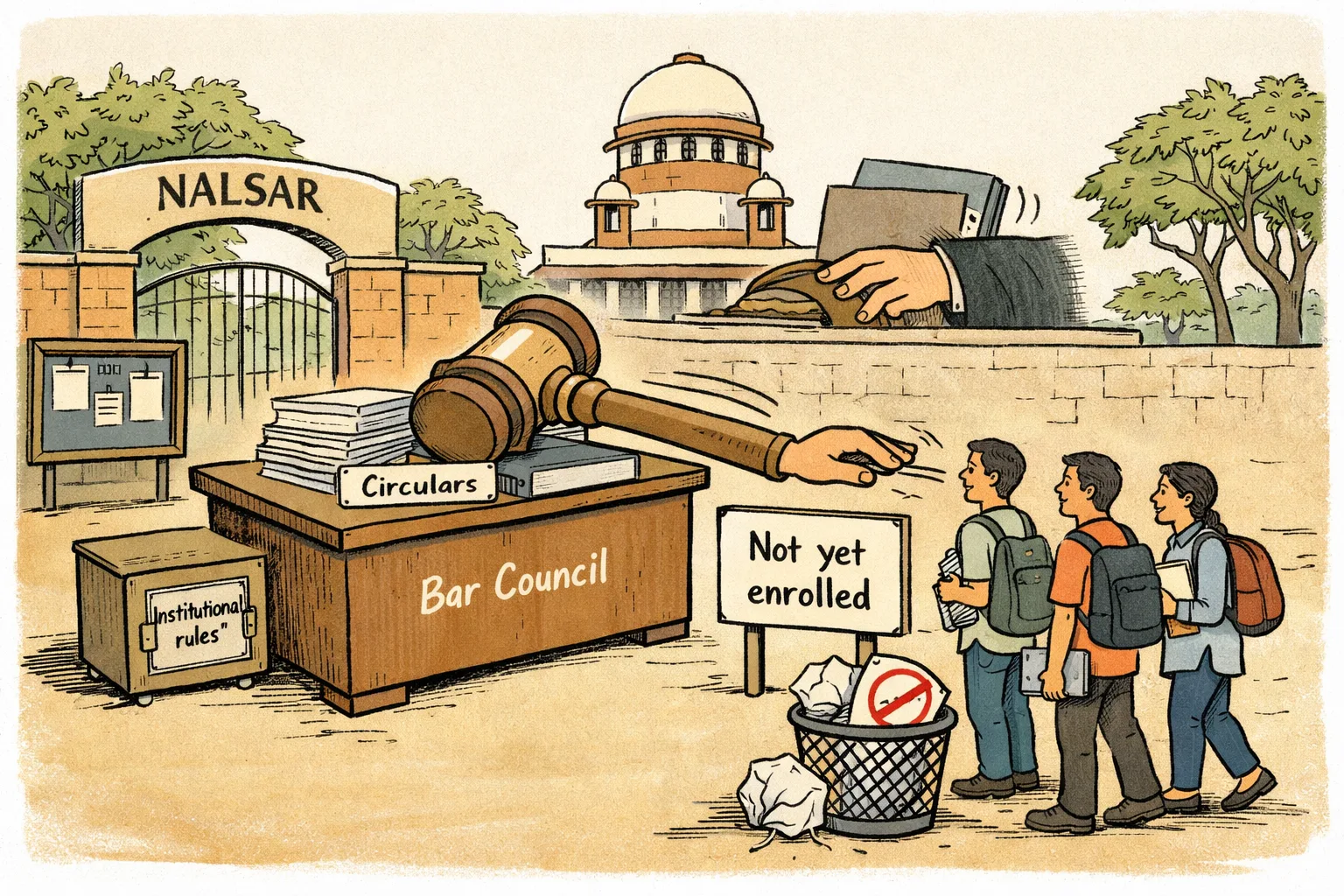
The Court reportedly held that bar councils cannot discipline law students before enrolment as advocates.
The Supreme Court has reportedly held that the Bar Council of India and State Bar Councils cannot take disciplinary action against law students before they are enrolled as advocates. The ruling came in a case brought by NALSAR alumni Mihira Sood and Abhishek Tiwari after BCI communications involving students and faculty at the Hyderabad university.
According to the reported ruling, disciplinary authority over students lies with their parent institution or an authority specified in its regulations. The Court reportedly declared communications issued on August 13, and a subsequent modified communication, “without any authority of law”, while making its interim protection absolute.
The Court’s August 14 interim order records that the BCI had withdrawn the circulars and directs that neither the BCI nor any State Bar Council take punitive action against NALSAR students or faculty over the incidents mentioned in the letters. Reports said the dispute followed student objections to the proposed participation of Chief Justice Surya Kant as chief guest at NALSAR’s convocation.
The final order was not available on the Supreme Court’s publicly searchable website during this check. The BCI’s original communications and the precise enrolment status of NALSAR’s 2026 graduating batch also remain unpublished in the material reviewed. The bar council, meanwhile, appears to have discovered that law students are not yet advocates—after requiring a reminder from the Court.