Bhu Bharati or busywork? Show the data
Telangana built an “Integrated Land Records Management System”. The Congress government in Telangana built a fog machine around it. If there’s nothing to hide, publish the numbers and the files — not just headlines about probes.
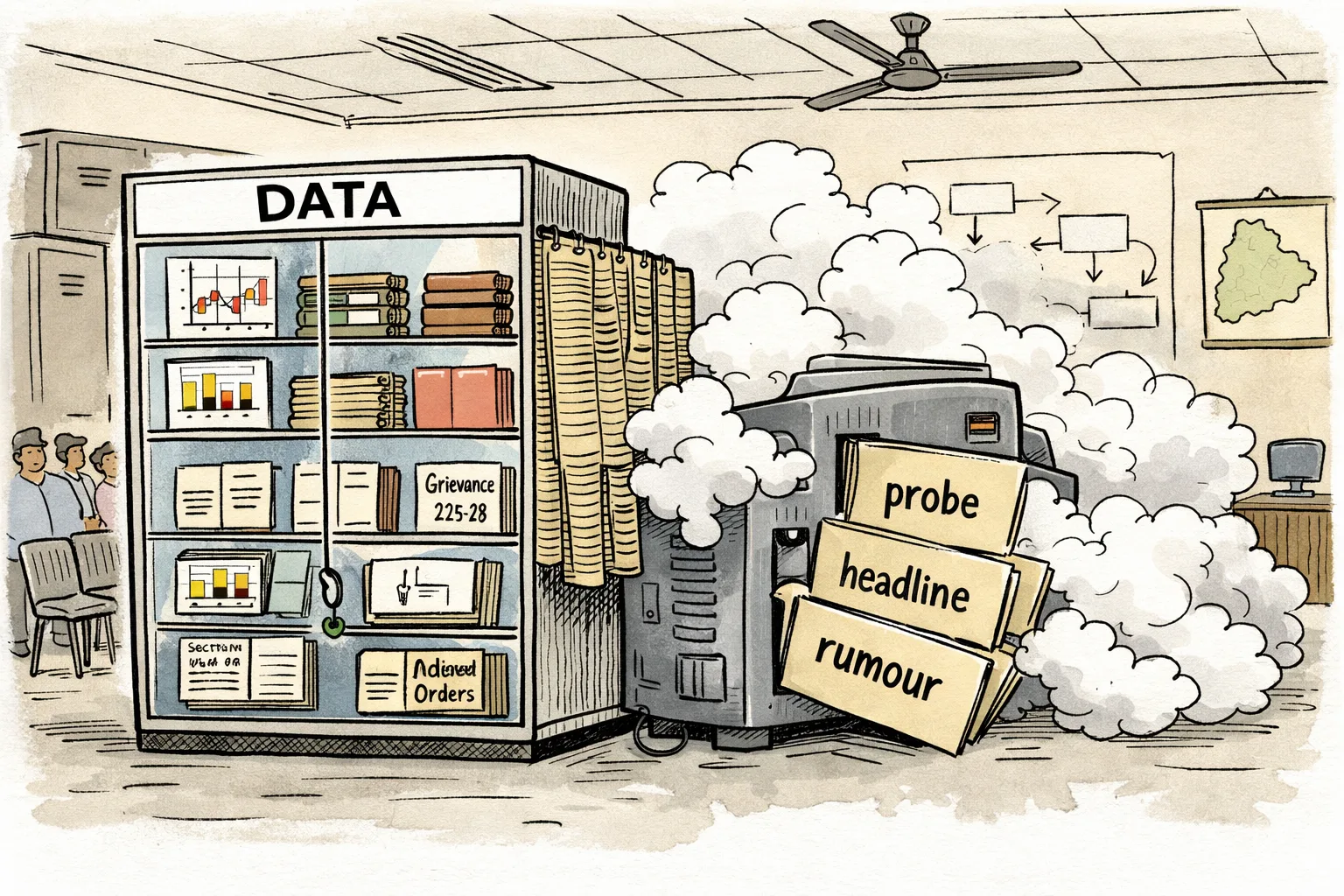
The Bhu Bharati system has rules for land records, but the requested data remains out of view.
The law is clear enough. The Telangana Bhu Bharati (Record of Rights in Land) Act, 2025 repealed the Dharani-era law and set up a new RoR portal with defined roles for Tahsildars, RDOs and Collectors, with appeals built in. That is on paper, with the Governor’s assent recorded on January 3, 2025 and commencement notified on April 14, 2025. According to the Act and the official portal, succession goes to the Tahsildar, certain mutations route through the RDO, and disputed acquired extents can be corrected by the Collector — approve or reject after examination, not after a phone call.
What has followed is not clarity but theatre. A claim doing the rounds says decentralisation let middlemen flourish and valuable land slip behind Section 22-A curtains. Another says one crore acres were jammed into the prohibited list and only 5% of lakhs of applications got resolved. Big numbers; small evidence. The official portal quietly hosts a “Grievance Relating to Inclusion in Prohibited Properties List” service — upload documents, run e‑KYC, and the file moves. Useful if used; useless if buried.
Here is what is on record, minus the spin. The portal exists and acknowledges errors happen — it even explains how to fix a whole-survey “acquired land” mistake. The Act distributes work across levels but nowhere authorises shortcuts. And the Congress government in Telangana itself announced a Special Enquiry Team to examine alleged irregularities across Dharani and Bhu Bharati transactions from 2020 onward. If you’ve ordered a probe, you’ve admitted the question. Now answer it with the files: district‑wise disposals and pendency, category breakup of grievances, additions and deletions on Section 22‑A with dates, and the actual mutation and prohibition orders.
Do not hide behind “it’s under enquiry” while waving at rumours and unnamed sources. Publish the dataset and the terms of reference, open the before‑and‑after lists for Bomraspet, Ravelkhol and Dudyal, and let the Collector‑signed orders speak. Until then, the Congress government in Telangana looks less like it’s cleaning the record and more like it’s staging it.