GHMC ‘double payments’ claim needs documents
A Telugu report alleges nearly 200 duplicate-payment cases worth over ₹140 crore in GHMC — and ₹50 crore recovered. The records behind those numbers are not public yet.
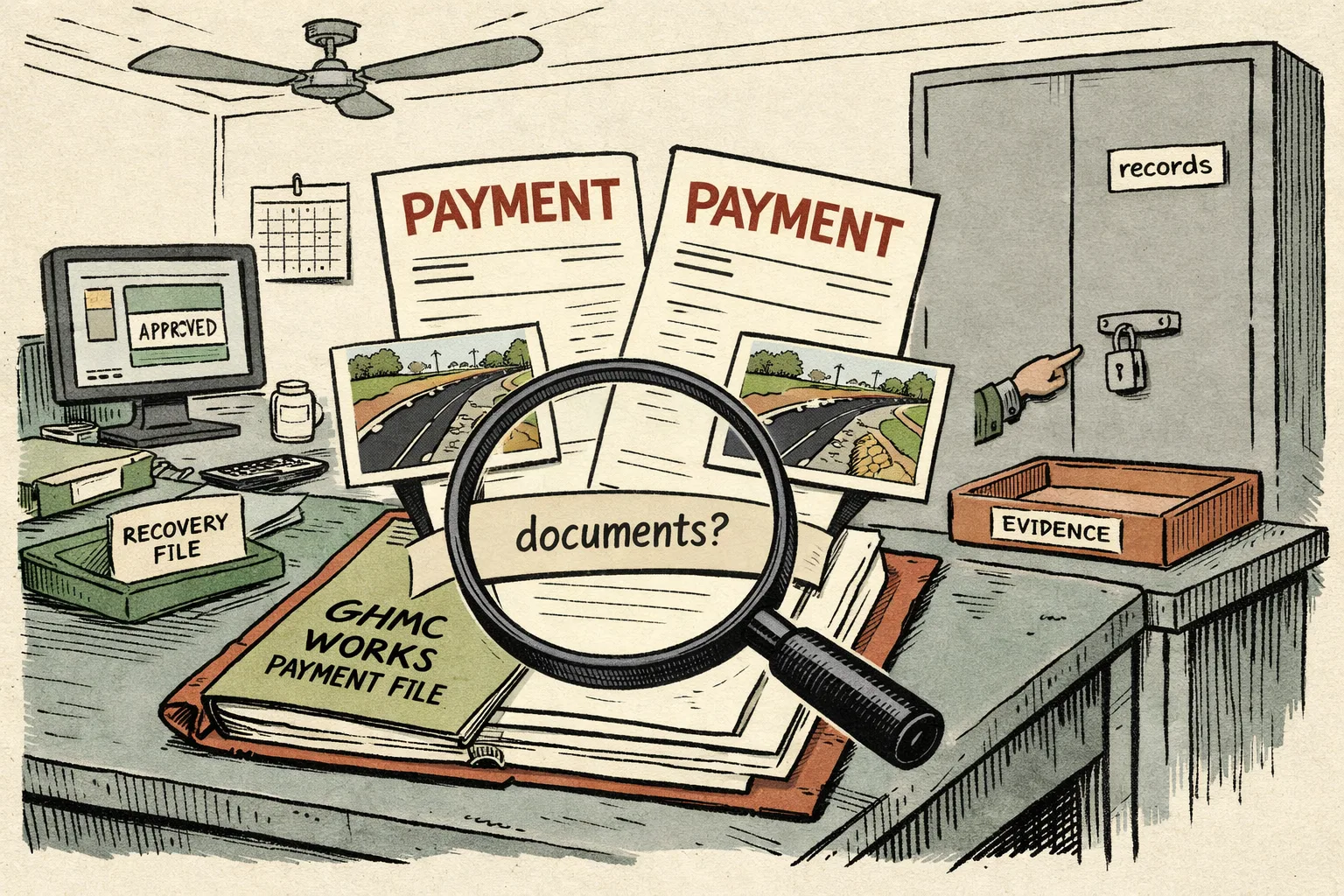
The alleged duplicate payments remain undocumented in public view.
A report in Telugu alleges GHMC paid for the same works twice nearly 200 times, exposing over ₹140 crore, and says about ₹50 crore has been recovered from contractors. It does not publish the audit, bill list, recovery orders, or even the period covered. According to the report, software and record checks “appear” to have been gamed; that is an allegation without a cited system audit.
What is on the record: GHMC contracts do allow recovery of wrong or excess payments — from running bills, performance guarantees or any sums due to a contractor — whether caused by “inadvertence, error, collusion, misconstruction or mis statement,” per GHMC tender clauses. That proves the power to claw money back exists; it does not verify that ₹140 crore walked out the door or that ₹50 crore returned.
GHMC has previously claimed ERP-linked controls to track works and payments. If those controls failed at the scale alleged, the underlying list, the recovery register, and any vigilance orders need to be made public. Until then, the numbers are a claim with an author, not the ledger.
We asked the paper trail in plain terms: What exactly are the 200 — bills, works, or contractors? Is ₹140 crore the confirmed duplicate payout, or the value under review? Is ₹50 crore demanded, adjusted, or actually deposited back? The public has paid once already; it shouldn’t have to guess twice.