Parliament sat. Debate didn’t.
19 sittings, 15% Lok Sabha time, nine Bills rushed with only the minister speaking. The BJP shouts “foreign powers”; the record says “no discussion”. Telangana needs scrutiny, not theatre.
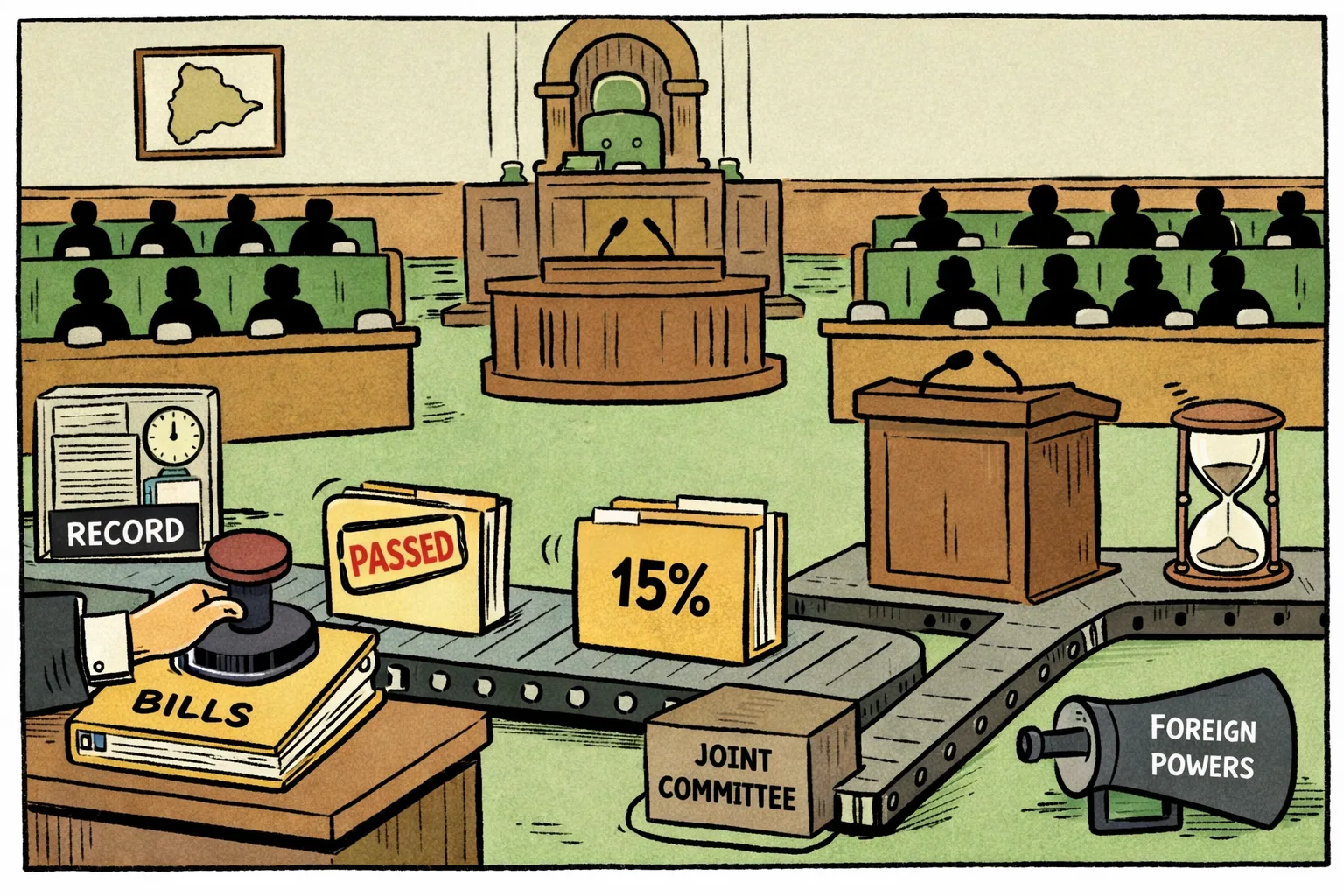
The Monsoon Session recorded 19 sittings, limited House functioning and little member participation on most Lok Sabha Bills.
BJP spokesperson Gaurav Bhatia accused the Congress of “compromising national and public interests under the influence of foreign powers”. That is his claim. The parliamentary record from the Monsoon Session says something measurable instead: Lok Sabha functioned for 15% of scheduled time, Rajya Sabha for 33%, and nine of 11 Bills in the Lok Sabha went through with no MP other than the minister speaking, taking two to 12 minutes each, according to PRS’s reading of House proceedings.
Across 19 sittings (July 20–August 13), the government says 12 Bills cleared both Houses (PRS counts 11 non-finance plus one Appropriation). One Bill — the Public Examinations amendment — actually got a conversation: 48 MPs spoke for almost 11 hours in Lok Sabha, 35 MPs for six-plus in Rajya Sabha. So the system works when leaders decide to let it.
The BJP’s allegation about “foreign powers” comes with zero evidence in the account that carried it. What does come with evidence is a session of repeated disruptions and Bills passed without member participation — including Mines and Minerals and NCDC amendments — exactly the kind of shortcut that hurts states like Telangana, which lives and dies by what Delhi rams through or actually debates.
Congress leaders, for their part, called the government “scared and rattled” after the washout and pointed out that key Bills flew without debate. The BJP prefers to wave at foreigners. Telangana prefers Parliament doing its job.
One last fact, not a slogan: the Foreign Contribution (Regulation) Amendment was sent to a Joint Committee. When even this House can still send a Bill for scrutiny, the excuse for rushing the rest sounds like what it is — convenient.