Rejinthal stay bites, admin blinks
A report says Sangareddy has withdrawn a 566.12‑acre acquisition in Rejinthal after a High Court smackdown halted NIMZ moves made without hearing farmers’ objections. The court record is clear on the stay; the exact withdrawal still needs the district’s paper trail.
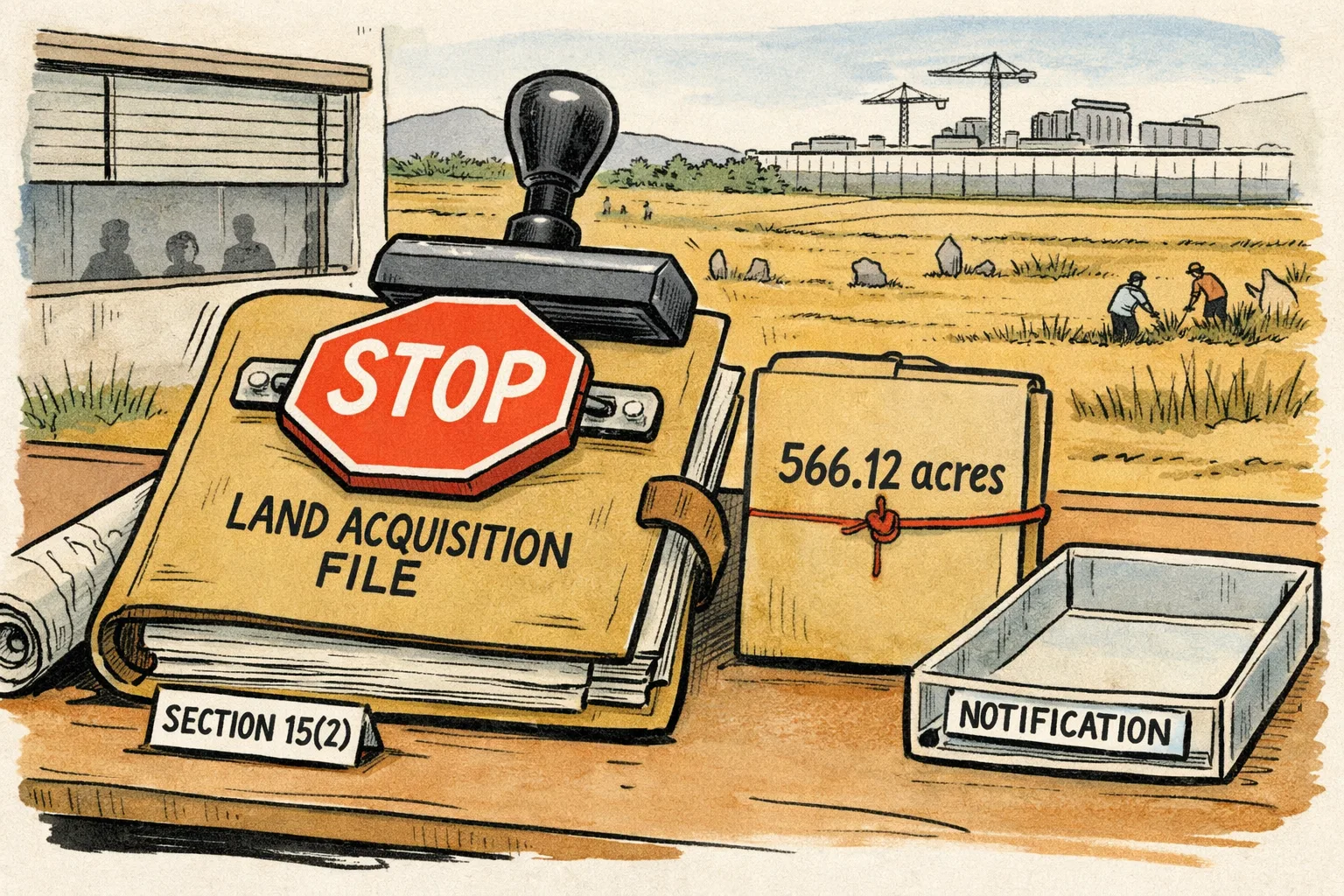
The court order halted further acquisition proceedings; the reported withdrawal awaits the district’s notification.
News, not a press note: a report says the Sangareddy administration has withdrawn a land‑acquisition notification covering 566.12 acres in Rejinthal, Nyalkal mandal — land the state had lined up for the Zaheerabad National Investment and Manufacturing Zone (NIMZ). According to that report, the Collector issued the pullback on June 29, after the High Court sided with farmers.
What the record does show, beyond a headline: in W.P. No. 18428 of 2023, the High Court stayed “all further proceedings” after finding the Section 19(1) declaration was issued without disposing of objections under Section 15(2) of the 2013 Act. The district told the court it stopped proceedings in Rejinthal following that order. That is not spin — it is in the pleadings.
Rejinthal has been inside the larger NIMZ map from the start. The tribunal record on Zaheerabad NIMZ lists a 12,635‑acre plan across villages and notes the district’s own figures on compensation and possession for parts of the project. Separate government files reference acquisition proposals in Rejinthal of 637.25 acres and 1,012.34½ acres in earlier stages — which is why the precise 566.12‑acre withdrawal now claimed needs the actual June 29 notification to reconcile the numbers.
So yes: the court put a hard stop on a procedurally sloppy move, and the administration says it obeyed. If the 566.12‑acre rollback is now on paper, Sangareddy can publish the notification and save everyone a Right to Information request. The BJP‑led Centre’s NIMZ template and the Congress’s national habit of bulldozing process both meet the same Telangana rule: you don’t get to skip the farmers and call it development.