Telangana donates; the waitlist still waits
Jeevandan built one of India’s strongest cadaver-donation systems. The gap is demand — and Delhi-scale indifference to matching it.
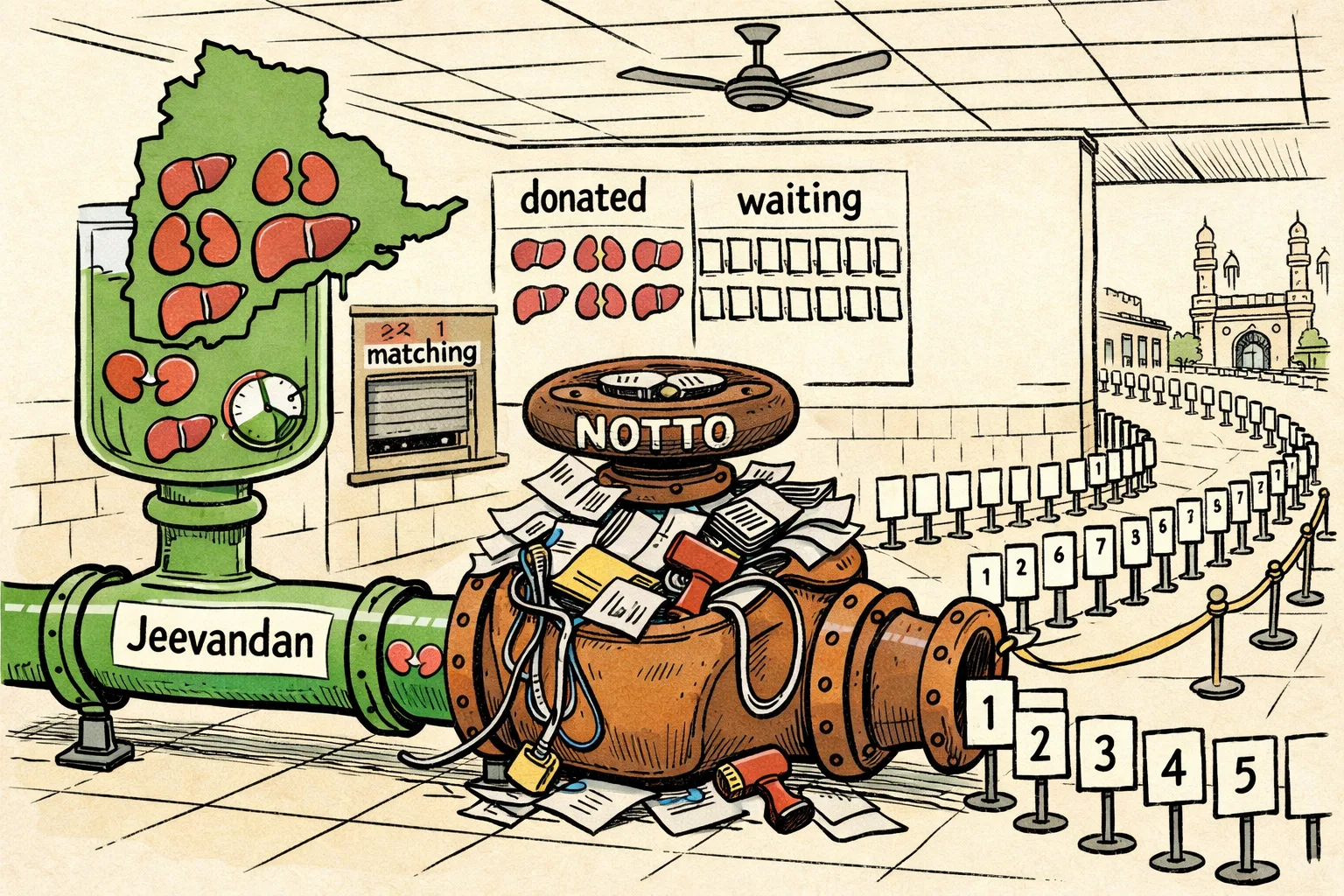
Telangana’s donation system has grown faster than the transplant queue has cleared.
Telangana’s organ-donation programme is big by any national measure — and still not big enough for the people waiting. The official Jeevandan dashboard lists 6,503 organs retrieved since January 1, 2013, including 2,586 kidneys and 1,577 livers. That is the record, not a slogan.
A recent report, citing Jeevandan data, says 19,386 patients registered for transplants in 2013–2026, with 5,307 treated, 9,413 still on the list and 4,106 reported dead while waiting. These are reported figures, not yet published on the official site; they stand as claims until the underlying dataset is released.
What the record does show is scale and consistency. A peer‑reviewed study counts 1,550 brain‑dead donors in Telangana between 2013 and 2024, yielding 4,314 solid‑organ transplants, with the state contributing an average 17.87% of India’s brain‑dead donors over a decade. Demand, however, outruns even that. Another report put 14,000-plus patients on the Jeevandan waitlist in 2024, with four to five years typical for kidneys and livers.
Definitions matter. The government’s NIC snapshot lists 14,926 recipients and 3,926 transplantations in the system at one cut of time. The official site lists organs retrieved, not patients transplanted. The reported totals of registered patients and deaths use a different lens. Until the Jeevandan/NOTTO tables are opened, comparisons will be noisy and the wrong number will keep doing the rounds.
Two things can be true together: Telangana built the country’s standout deceased-donation machinery, and families here still wait too long. That second part takes national coordination — registries that talk to each other, cross‑state allocation that works fast, and public funding that matches the queue. The BJP‑led Centre talks “One Nation” until it is time to share cadavers and budgets; then every state is on its own. Telangana has done more than its share; Delhi can try meeting it halfway for once.