
UPI stays free, except when it doesn’t
From October 15, specified merchant payments above ₹2,000 will attract MDR. The Finance Ministry says customers will not pay it. How that promise will be enforced is less clear.
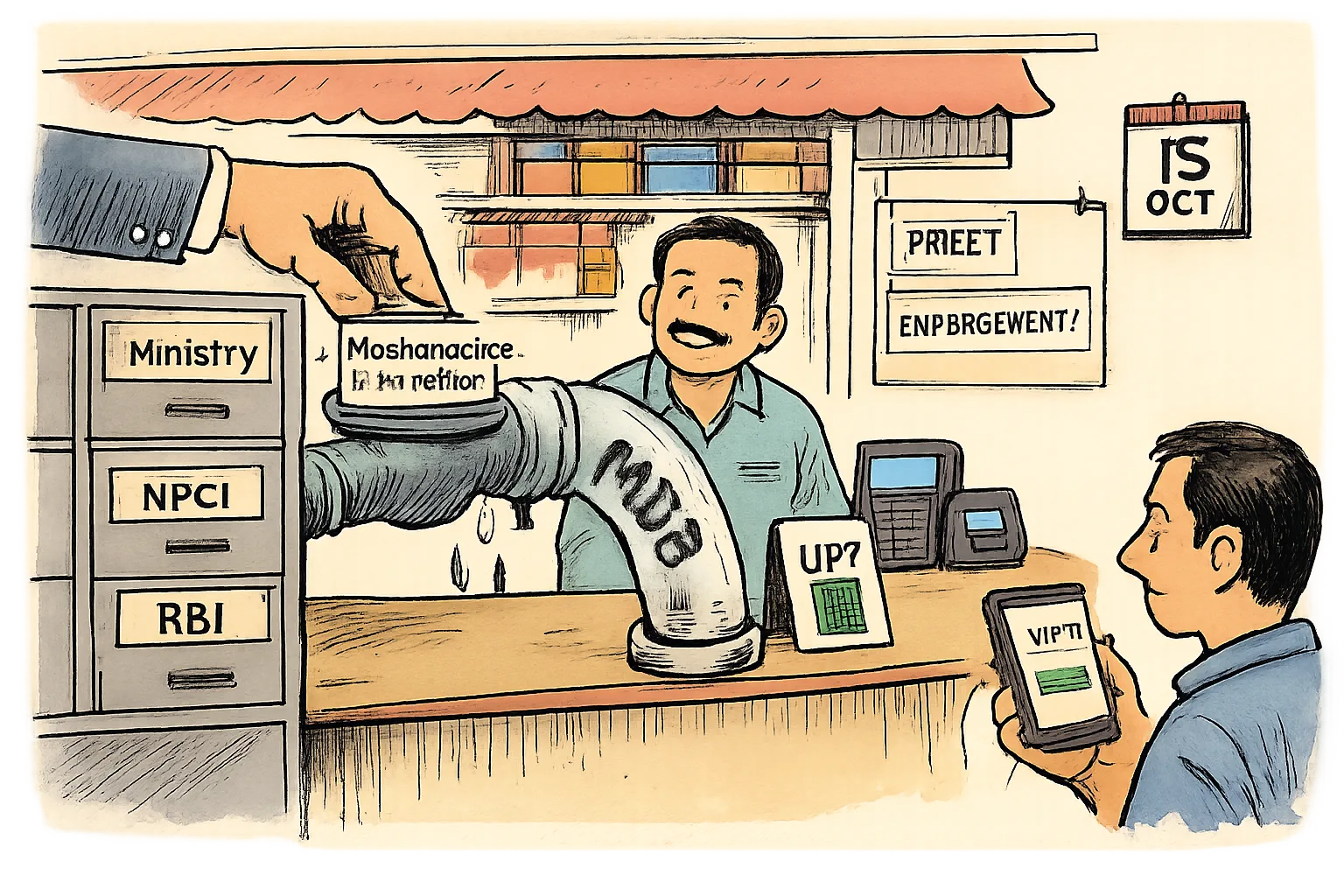
The Finance Ministry says the merchant charge will not be passed on to customers.
Telangana’s UPI users can keep paying each other for free. From October 15, 2026, however, specified person-to-merchant payments above ₹2,000 will attract a 0.4% merchant discount rate, capped at ₹300 for transactions of ₹75,000 and above, according to a September 15 Finance Ministry clarification.
The ministry says payments up to ₹2,000, person-to-person transfers and qualifying small merchants receiving up to ₹1 lakh a month through UPI QR codes will remain outside the charge. It says about 96% of merchant transactions will be unaffected. MDR, it adds, is neither a tax nor money collected by the government or NPCI; it is distributed among banks, payment-service providers and UPI app providers. NPCI describes UPI as an instant payment system operated by it as an RBI-regulated entity.
The ministry has advised banks to stop merchants passing the cost to customers. Telangana Chief Minister A Revanth Reddy and Congress leader Rahul Gandhi have warned that merchants may instead recover it through higher prices. That remains a political prediction, not an established outcome. The ministry has not published the enforcement process, penalties or complaint route, and the exact NPCI circular was not retrievable in the material reviewed.
India is not documented as returning to cash. It is documented as receiving another government assurance that the charge will not reach consumers.