Meta’s teen curbs come with a clock
US attorneys general file a proposed deal to force time limits and safety defaults on Instagram and Facebook. The money is “up to $17 billion” on paper, the penalties only bite after a judge signs.
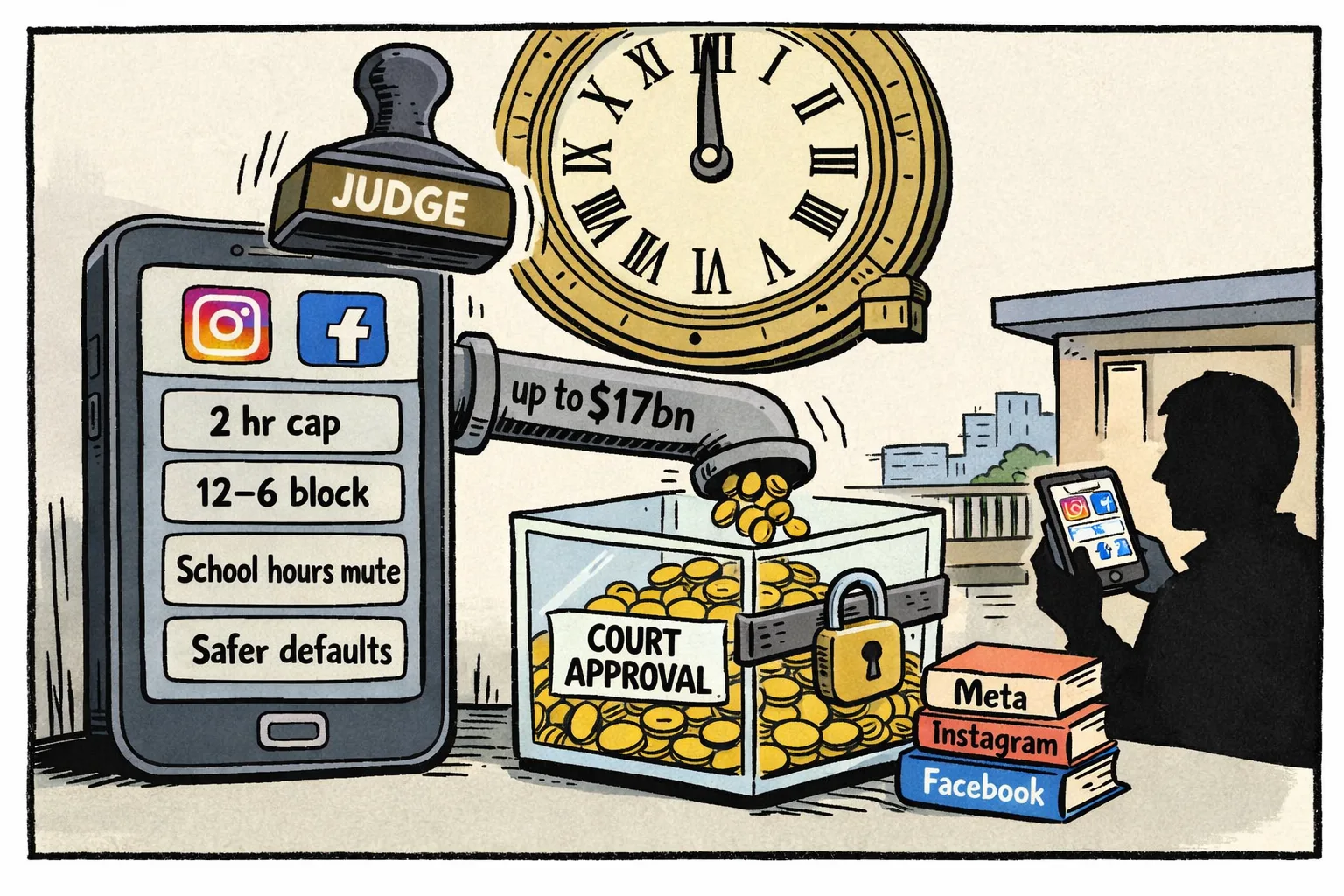
The proposed teen-safety settings take effect only after court approval.
A multistate coalition of US attorneys general has filed a proposed consent judgment to make Meta impose teen safeguards on Instagram and Facebook — timed prompts, default daily limits and school‑hour silencing — and pay up to $16.68 billion over ten years, subject to court approval. According to the filed agreement, it is not final until a judge enters it, and Meta does not admit wrongdoing. [coag.gov; oag.ca.gov]
California’s attorney general calls it “transformative”, citing a payment of up to $17 billion and changes due within months: a default two‑hour cumulative daily cap for under‑18s, an overnight block from midnight to 6 a.m., muted push alerts 8 a.m.–3 p.m. in the school year, non‑algorithmic feeds, hidden like counts, tighter age checks, and independent auditing. Messaging is carved out of some time blocks, with limits meant to stop workarounds. [oag.ca.gov; coag.gov]
Meta pitches the package as “approximately $18 billion”: about 70% (roughly $12.7 billion) regardless, and the other 30% only if TikTok and YouTube adopt comparable measures and make matching payments. If industry joins in, phase two tightens to 60 minutes per app (120 minutes total) and a 10 p.m.–7 a.m. block. Meta “denies the allegations” and any liability. [about.fb.com; coag.gov]
For Telangana parents, the headline is simple: if the court green‑lights this in the US, the default settings Big Tech ships everywhere tend to follow. Our kids use the same apps. Delhi won’t get there faster by sermon; it will import the settings once they exist. Congress and the BJP both like press conferences about “online harms” — neither has put binding teen‑safety defaults on the table here. The US states have, and a judge now gets the last word.